

ID the Future Intelligent Design, Evolution, and Science Podcast
Topic

survival of the fittest

help-concept-hands-reaching-out-to-help-each-other-in-dark-t-309576547-stockpack-adobestock
Help Concept hands reaching out to help each other in dark tone.
Image Credit: bignai - Adobe Stock

Which Origins Theory Better Explains Altruism and Morality?

Do evolutionary models adequately account for the reality of human altruism, moral conviction, and cooperation? Does intelligent design offer a better explanation? On this ID The Future, host Andrew McDiarmid begins discussing these questions and more with geologist and attorney Casey Luskin. McDiarmid's recent article exploring scientific worldview in the Marvel universe generated some lively back-and-forth in the comments section, particularly about whether evolutionary processes could account for humans looking out for other humans. Luskin tackles the question head-on, putting it in the larger context of evolutionary psychology's penchant for explaining every possible human behavior through the lens of a Darwinian past. This is Part 1 of a two-part conversation. Look for Part 2 in a separate episode. Read More ›
holding-hands-loving-couple-stands-in-the-middle-of-the-whea-299407210-stockpack-adobe_stock
Holding hands loving couple stands in the middle of the wheat field at sunrise. A young couple in love touched hands on the first date. Loving couple has a happy relationship. First love concept.
Image Credit: gorynvd - Adobe Stock

Can Meaning and Purpose Emerge From a Darwinian Process?
Did meaning and purpose arise from a bottom-up Darwinian process to give us an evolutionary advantage? Or is the universe infused with meaning and purpose for a deeper reason than survival? On this ID The Future, host Andrew McDiarmid and Dr. Emily Reeves explore whether meaning and purpose can emerge from an unguided evolutionary process. They also discuss the machine metaphor in biology and how it can help us understand and explain living systems. Read More ›
brain-hi-tech-technology-concept-of-human-intelligence-rende-118570944-stockpack-adobe_stock
Brain hi-tech technology. Concept of human intelligence. Render illustration of the human brain
Image Credit: newrossosh - Adobe Stock

Challenging Darwinian Evolution: A Medical Doctor’s Insights
On this ID The Future, host Casey Luskin concludes a two-part conversation with Dr. Uditha Jayatunga, a medical doctor and consultant in rehabilitation medicine in the UK, about the challenges that biological complexity poses to evolutionary theory. Their chat is a helpful refresher on some of the biggest challenges to a Darwinian explanation for the origin and development of life on Earth. In Part 2, Dr. Jayatunga provides more examples of purposeful complexity from the animal world and unpacks the power and complexity of the human brain as evidence for intelligent design. This is Part 2 of a two-part conversation. Read More ›
Walking Green Iguana Isolated on Black Background
Image licensed from Adobe Stock

Can Darwinian Evolution Be Rescued From Dogma?

If there's anything left to salvage from the Neo-Darwinian theory of life's origins, it must first be rescued from dogma. On this episode of ID The Future, host Casey Luskin begins a conversation with two distinguished PhD scientists who are asking tough questions of Neo-Darwinism: Olen Brown, Professor Emeritus of Biomedical Sciences at the University of Missouri, and David Hullender, Professor of Mechanical and Aerospace Engineering at the University of Texas, Arlington. Luskin unpacks three recent scientific papers written by Brown and Hullender warning that Neo-Darwinism must be updated if it has any hope of surviving as a theory. This is Part 1 of a two-part conversation. Read More ›
Image licensed from Adobe Stock

Eric Hedin on the Intelligent Design of Sleep

We’re asleep an average of about 26 years of our life! Most people have a sense that sleep is important, but many of us aren't sure exactly why. Why is sleep so crucial to survival? And how did the processes of sleep emerge in living things? Could a gradual Darwinian process be responsible, or are the systems involved another instance of intelligent design? On this episode, host Andrew McDiarmid begins a conversation with Dr. Eric Hedin about the origin and intelligent design of sleep. This is Part 1 of a two-part conversation. Look for Part 2 next! Read More ›
DISCO_Babel_1200x630_C
Science After Babel, Berlinski book cover

David Berlinski on the Immaterial, Alan Turing, and the Mystery of Life Itself
The new book Science After Babel is again in the spotlight here at ID the Future, with its author, philosopher and mathematician David Berlinski, and host Andrew McDiarmid teasing various elements of the work. The pair discuss the puzzling relationship between purely immaterial mathematical concepts (the only kind) and the material world; World War II codebreaker and computing pioneer Alan Turing, depicted in the 2014 film The Imitation Game; and the sense that the field of physics, once seemingly on the cusp of a theory of everything, finds itself at an impasse. Then, too,  Berlinski writes, there is the mystery of life itself. If scientists thought that its origin and nature would soon yield to scientific reductionism, they have been disappointed. Life’s “fantastic and controlled complexity, its brilliant inventiveness and diversity, its sheer difference from anything else in this or any other world” remains before us, suggesting, as Berlinski puts it, “a kind of intelligence evident nowhere else.” Get your copy of the book at www.scienceafterbabel.com. Read More ›
DarwinComestoAfricaBKGRND_Wide(FULL)
Darwin Comes to Africa text-free cover; Olufemi Oluniyi book

When Darwinian Racism Came to Africa, and the West

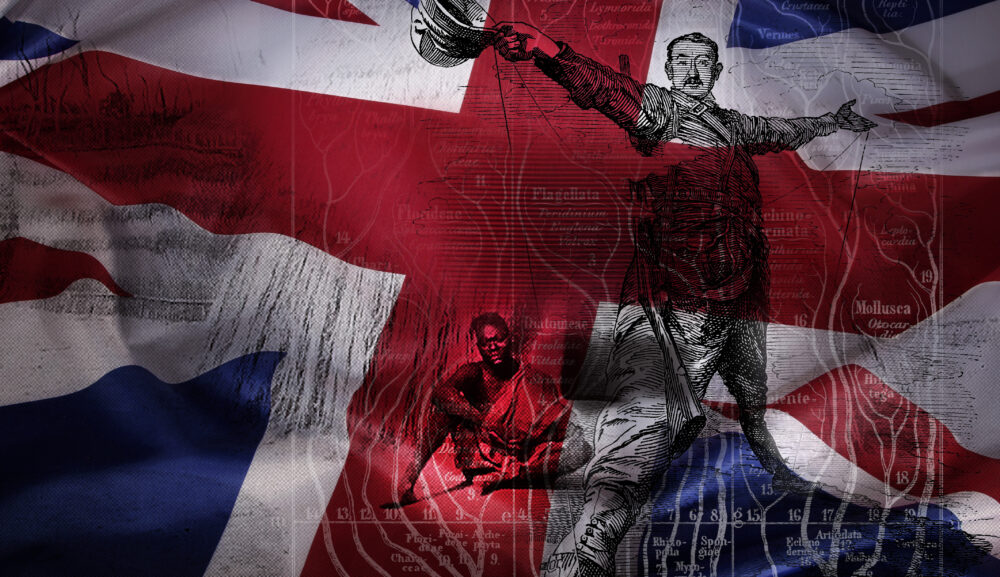
Today’s ID the Future features another reading from scholar Olufemi Oluniyi’s new book, Darwin Comes to Africa. In this excerpt we learn how Darwin himself laid much of the groundwork for social Darwinist ideas, primarily in his book The Descent of Man, and how those ideas were energetically developed in the ensuing decades by various mainstream scientists. Oluniyi further details how their work fueled pseudo-scientific racism against black Africans and other indigenous peoples outside the West. To learn more about this neglected corner of modern Western history, and for the good news that the flow of evidence has turned against Darwinism and, with it, social Darwinist principles, pick up Oluniyi’s book here.

DarwinComestoAfricaBKGRND_Wide(FULL)
Darwin Comes to Africa text-free cover; Olufemi Oluniyi book

When Darwinism Came to Africa, Horrors Ensued

On today’s ID the Future, hear a Nigerian voice-actor reading from the opening pages of Nigerian scholar Olufemi Oluniyi’s new book, Darwin Comes to Africa. In this section from the preface, Oluniyi explores the relationship of Darwinism to Social Darwinism, and some of the ways Social Darwinism fueled and justified horrific ideas and actions among European thinkers and colonizers. Oluniyi tells the story of Russian scientist Ilya Ivanovich Ivanov, who, guided by Social Darwinist thinking, “sought to produce a race of super-soldiers for Stalin’s army by impregnating French Guinea women with the sperm of a dead chimpanzee—black African women, mind you, who were presumed to be less highly evolved and thus closer to chimpanzees than were white European women.” As Oluniyi Read More ›
DarwinianRacism-scaled-1-1600x840_lighter
Weikart, Darwinian Racism, Haeckel

Darwinian Racism Webinar, Pt. 2

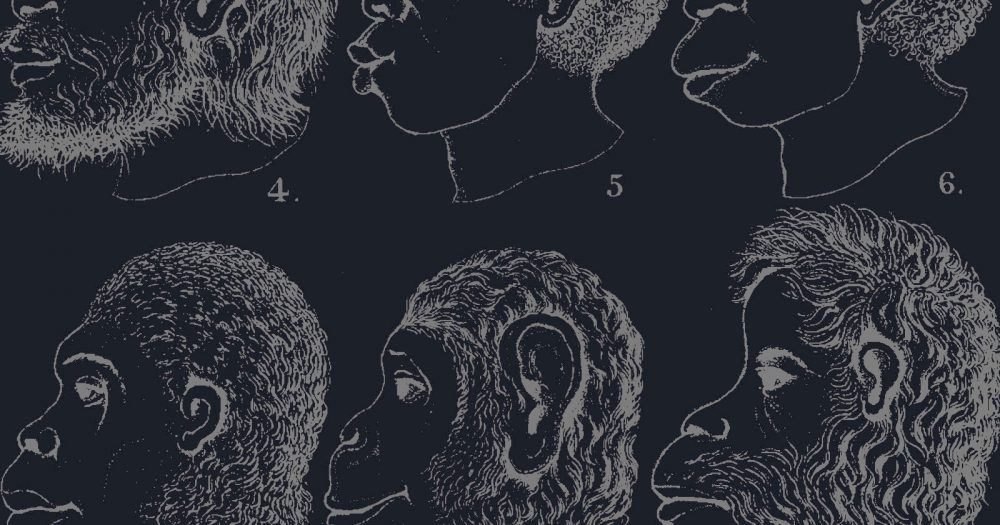
Today’s ID the Future features the second half of a recent webinar spotlighting historian Richard Weikart and his new book, Darwinian Racism: How Darwinism Influenced Hitler, Nazism, and White Nationalism. Here Weikart fields questions from the webinar audience. Along the way Weikart touches on the connection between Darwinism and scientific racism, the objection that Darwinism, properly understood, doesn’t support scientific racism (much less Nazi racism), the racism inherent in Darwin’s own writings and those of prominent early Darwinists such as Ernst Haeckel, and more recent manifestations of Darwinian-inspired scientific racism both academic and populist. This and much more is explored in Weikart’s new book, available here. And for scientific reasons to reject Darwinism along with its racists implications, jump over Read More ›
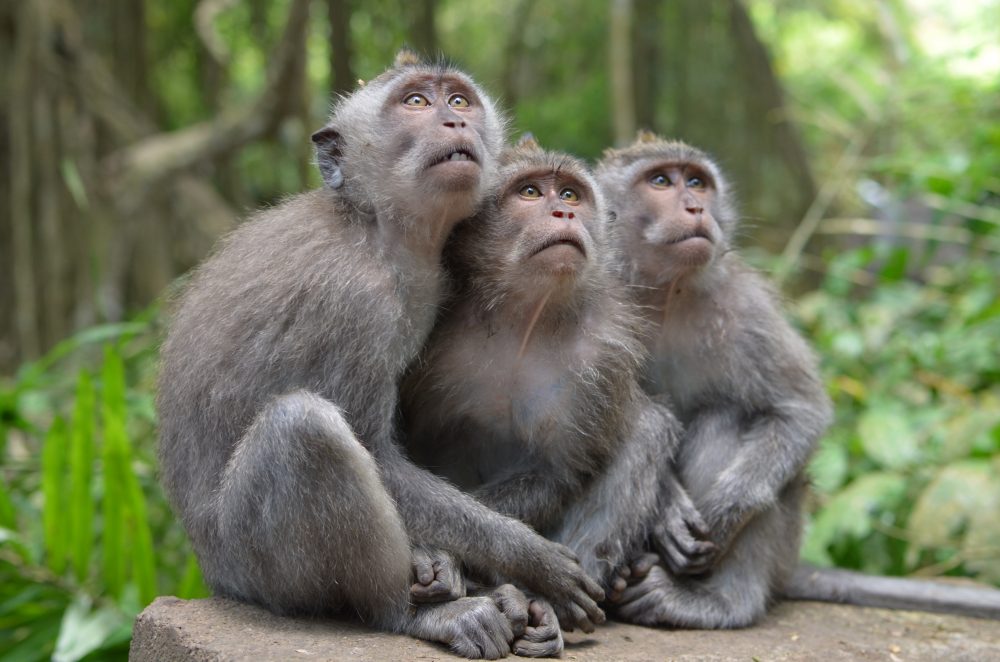
primates
Image Credit: lisa1409 - Adobe Stock

Evolutionary Psychology: Checkered Past, Checkered Present

On this ID the Future host Casey Luskin interviews science journalist Denyse O’Leary about her recent essay, “Is Evolutionary Psychology a Legitimate Way to Understand Our Humanity,” which appears in the new Harvest House anthology co-edited by Luskin, The Comprehensive Guide to Science and Faith. O’Leary, a science journalist and co-author of The Spiritual Brain, offers a withering critique of evolutionary psychology and traces its roots, beginning with The Descent of Man (1871), where Charles Darwin attributed various human behaviors to natural and sexual selection. That fed into what became known as social Darwinism, which fell out of favor after World War II thanks to Hitler and the Nazis’ application of social Darwinist ideas to defend Nordic superiority and genocide. Read More ›