Now, ID The Future listeners will get to enjoy a new episode each month (as well as a bingecast archive episode) from our sister podcast Mind Matters News, a production of the Discovery Institute’s Walter Bradley Center for Natural and Artificial Intelligence. The Mind Matters News podcast brings you interviews and insight from computer scientists, engineers, inventors, neurosurgeons, and other experts who bring sanity to the conversation about natural and artificial intelligence, going beyond the hype to explore the undercurrents of these important ideas. And although the Mind Matters News podcast will not often explicitly discuss intelligent design, it regularly explores the nature of intelligence, the origin of information, and the things that make us uniquely human, concepts that are central to the theory of intelligent design.
On this episode, host Robert J. Marks sits down with Dr. Giorgios Mappouras for a deep dive into the philosophical and technical boundaries that define the gap between human minds and silicon machines. The pair look at why the classic Turing Test is no longer a sufficient measure of machine intelligence in the age of large language models. While modern AI can convincingly imitate human conversation, Mappouras argues that true intelligence requires the ability to do more than just mimic data; it must reach what he calls a General Intelligence Threshold. In this episode, they explore Giorgio's proposal for a Turing Test 2.0, a more rigorous framework that evaluates whether an AI can actually extract new, applicable knowledge—what Mappouras calls "functional information"—from the raw data it is given. Read More ›
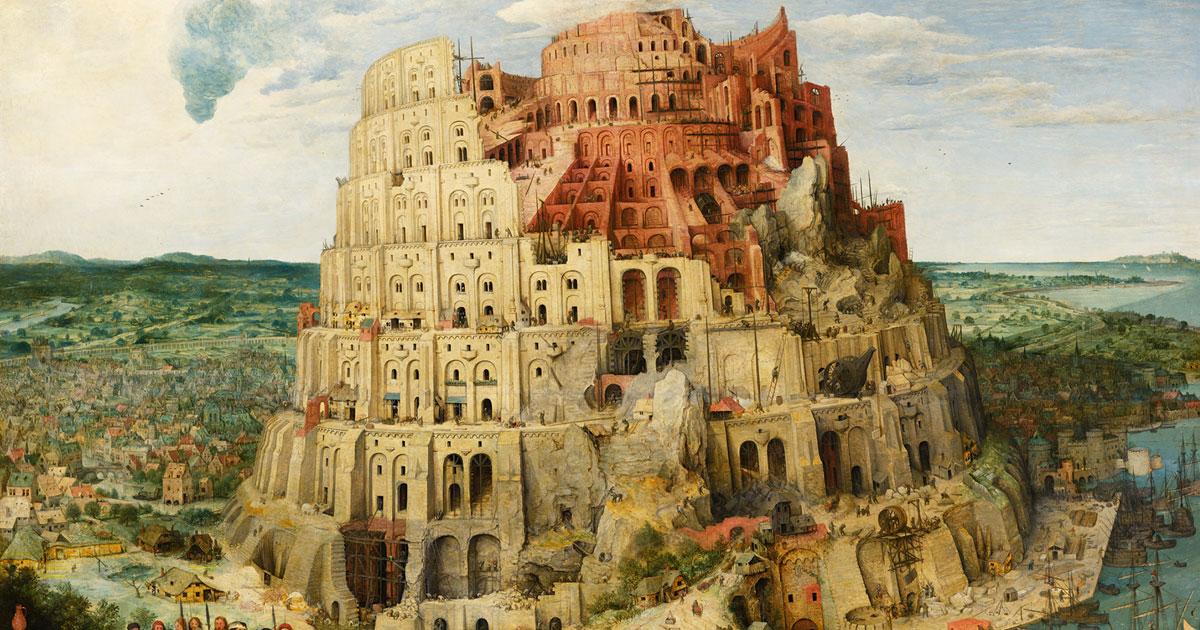
The new book Science After Babel is again in the spotlight here at ID the Future, with its author, philosopher and mathematician David Berlinski, and host Andrew McDiarmid teasing various elements of the work. The pair discuss the puzzling relationship between purely immaterial mathematical concepts (the only kind) and the material world; World War II codebreaker and computing pioneer Alan Turing, depicted in the 2014 film The Imitation Game; and the sense that the field of physics, once seemingly on the cusp of a theory of everything, finds itself at an impasse. Then, too, Berlinski writes, there is the mystery of life itself. If scientists thought that its origin and nature would soon yield to scientific reductionism, they have been disappointed. Life’s “fantastic and controlled complexity, its brilliant inventiveness and diversity, its sheer difference from anything else in this or any other world” remains before us, suggesting, as Berlinski puts it, “a kind of intelligence evident nowhere else.” Get your copy of the book at www.scienceafterbabel.com. Read More ›