ID the Future Intelligent Design, Evolution, and Science Podcast
Topic

Brian Miller

hybrid biotechnology illustration.jpg
Hybrid Biotechnology - Biomimicry - Abstract Illustration
Image Credit: GiroScience - Adobe Stock

James Tour and Stephen Meyer on the Origin of Life, Pt. 2

On this episode of ID the Future,  James M. Tour and Stephen C. Meyer begin a discussion about the hard problems facing researchers trying to discover how the first life could have come about naturalistically. Meyer is the director of the Center for Science and Culture; Tour is a world-renowned synthetic organic chemist with over 700 research publications and multiple major recognitions, including TheBestSchools.org naming him one of the 50 most influential scientists in the world today. Though he doesn’t sign on to ID theory, he says he’s sympathetic with the idea, and certainly not impressed with any naturalistic explanations for the origin of life. In this first of a three-part series, they explore problems ranging from the extreme improbabilities associated with protein assembly, Read More ›

mussels rock puddle
Mussels in rock puddle
Image Credit: Gabriela - Adobe Stock

Walter Bradley on the New Mystery of Life’s Origin, Pt. 2

On this ID The Future, guest host Robert J. Marks concludes his conversation with Walter Bradley, co-author of the seminal 1984 intelligent design book The Mystery of Life’s Origin. The book is available in a revised and expanded edition with updates from multiple contributors discussing the progress (or lack of it) in origins science in the 35 years since the book’s original publication. In this half of the conversation, Bradley and Marks discuss the book’s first release, including the cultural context that made finding a non-religious publisher an uphill battle, and discussion of some of the endorsements and early reviews, including one drive-by and four positive responses from distinguished scientists Robert Jastrow, Dean Kenyon, Robert Shapiro, and Fritz Schaefer. Bradley Read More ›

Summer-Seminar-2019-5327-6000px

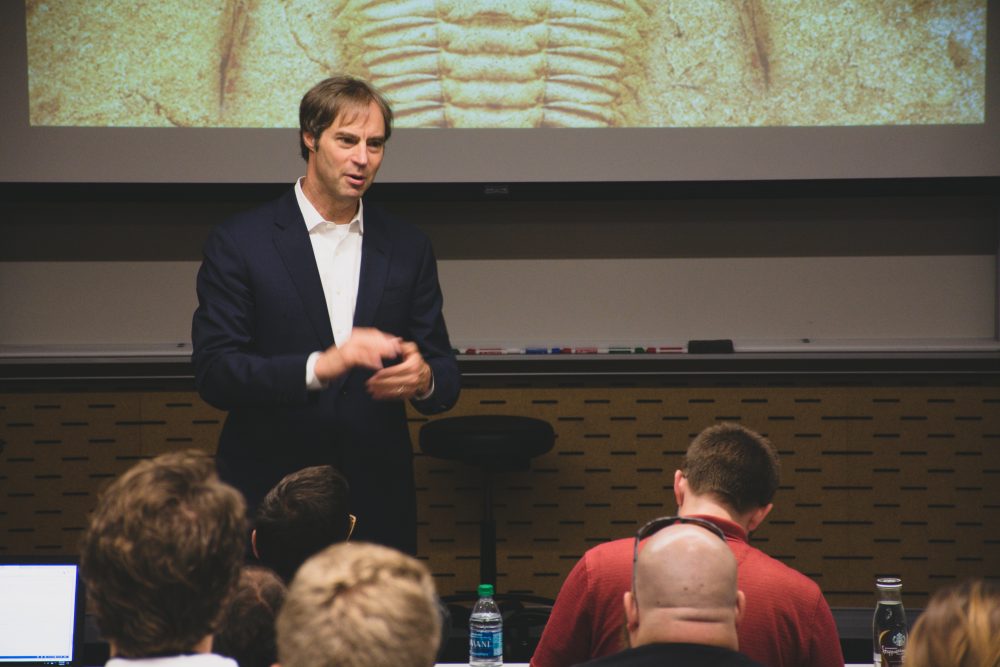
Stephen Meyer on His CSC Summer Seminar Talks

On this episode of ID the Future, Stephen Meyer, Director of the Center for Science and Culture, discusses the two lectures he gave to a private audience at Discovery Institute’s 2019 Summer Seminar on Intelligent Design. One talk focused on the fossil record, and the other on the Big Bang.

CapeTown

Intelligent Design in South Africa: Brian Miller and Ray Bohlin Report

This episode of ID the Future features a conversation between physicist Brian Miller and biologist Ray Bohlin and about their recent speaking tour in South Africa, where they made a case for intelligent design. The pair talk about the open reception they received from sympathizers and skeptics alike. South Africa, they say, is less infused with materialistic philosophy than is Europe or America’s research universities. This means an open door for ID. However, it’s a door that threatens to close, they warn. Listen in to learn more.

Read More ›
toward-digital-fractal-realms-stockpack-adobe-stock.jpg
Toward Digital Fractal Realms
Image Credit: Yay Images - Adobe Stock

Why Information is the Basis of the Universe

On this episode of ID The Future, Sarah Chaffee talks with physicist Dr. Brian Miller about a recent article that argues that the fundamental basis of the universe is information. In this episode, Miller explains how physicists have come to rethink the role of information, moving from a materialist view in which information is seen as a byproduct of matter to a view in which information is seen as fundamental to the fabric of the cosmos.

ladybug dandelion.jpg
freedom
Image Credit: blackdiamond67 - Adobe Stock

Dr. Brian Miller Explores Coevolution

On this episode of ID The Future, Sarah Chaffee interviews Center for Science and Culture Research Coordinator Dr. Brian Miller about co-evolution. Together they explore a recent paper on the subject by Winston Ewert and Robert Marks in BIO-Complexity.

chaotic liquid in space
Abstract 3d rendering of chaotic liquid in empty space. Background with dynamic fluid splash. Design element.
Image Credit: VAlex - Adobe Stock

Jeremy England’s Physics-Based OOL Theory Under the Microscope

On this episode of ID the Future, Brian Miller, who holds a Ph.D. in physics from Duke University, examines Dr. Jeremy England’s physics-based theory of the origin of life. England’s theory, based on his studies of “non-equilibrium systems,” suggests that a system driven strongly enough could create order and therefore be a potential explanation for the origin of life. Miller summarizes the theory and discusses what he sees as its fatal weaknesses.