
ID the Future Intelligent Design, Evolution, and Science Podcast
Topic

Kitzmiller v. Dover

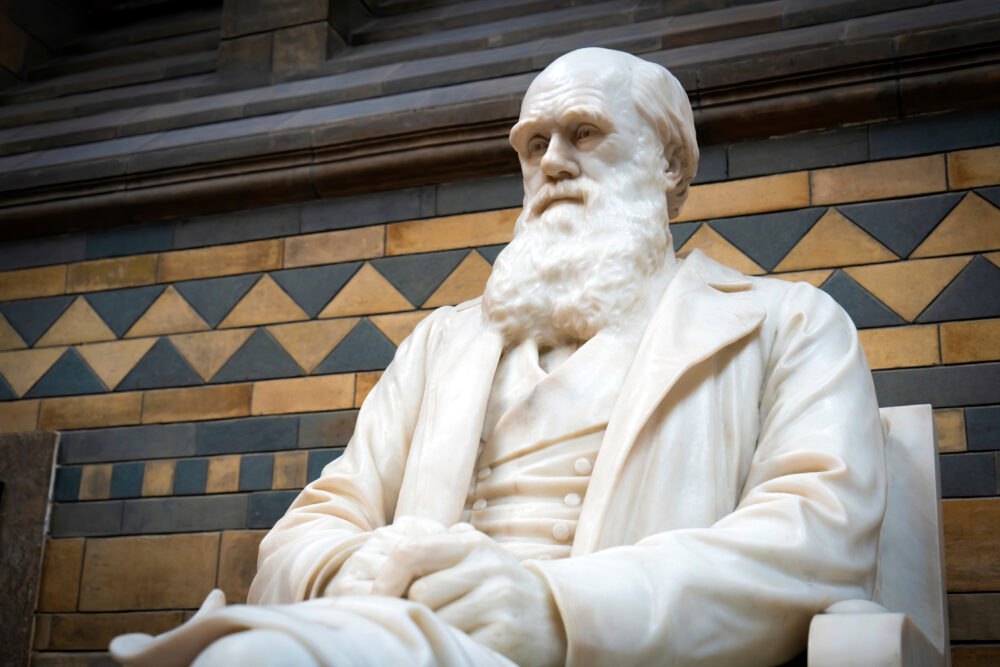
London, England - December 4, 2019: Statue of Charles Robert Darwin was an English naturalist and biologist in Natural History Museum. London, United Kingdom.
Statue of Charles Darwin. Licensed via Adobe Stock, wittayayut - stock.adobe.com

20 Years After Dover: Steve Fuller on Science, Censorship, and the “Church of Darwin”
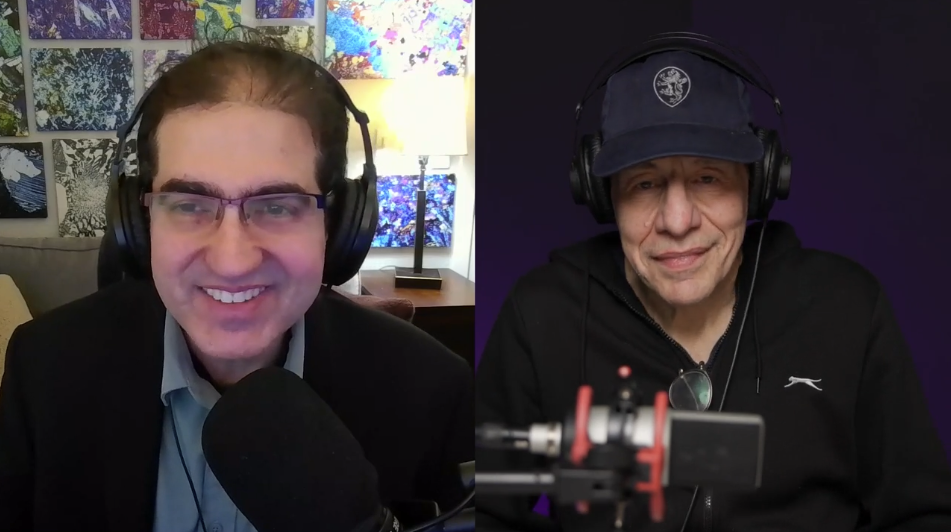
In this ID The Future, host Casey Luskin concludes a two-part conversation with University of Warwick professor and author Steve Fuller reflecting on the 20th anniversary of the Kitzmiller v. Dover trial, a case that examined the constitutionality of teaching intelligent design in public schools. Fuller discusses his experience serving as an expert witness for the defense. He defends his support of a policy that merely informed students of alternative theories to Darwinian evolution. He explains why high school is an ideal time to encourage an open mind toward science. Then he pivots to discuss the deeper issue of institutional censorship in science and how establishment science functions as a religion. He characterizes intelligent design as "anti-establishment" and suggests there's hope for a more pluralistic approach to science in the near future. This is Part 2 of a two-part interview. Read More ›
Screenshot-2026-01-05-at-12726PM

Professor Steve Fuller on the Rich Tradition of Intelligent Design

On this episode of ID the Future, host Casey Luskin begins a two-part conversation with University of Warwick professor Steve Fuller to reflect on the historical and philosophical foundations of intelligent design (ID) and the 20th anniversary of the Kitzmiller v. Dover trial. Fuller, an expert witness in the Dover trial and a scholar in the history and philosophy of science, challenges the popular "conflict thesis" that suggests that science and religion are perpetually at war. Instead, he describes a different historical understanding where modern science originated from a theological foundation, noting pioneers like Newton and Galileo, who viewed the universe as an intelligible machine designed by a divine mind. This tradition suggests that the very project of science was launched by the belief that human minds, created in the image and likeness of God, are capable of uncovering the logical laws governing reality. The conversation delves into why intelligent design should be viewed as a rich, interdisciplinary research tradition rather than a modern invention. Fuller explores the concept of biomimicry as a form of reverse engineering nature to uncover the hidden engineering elements within organisms. While Luskin notes that ID can be approached through purely scientific observations of intelligent agency, Fuller argues that theology remains a vital component because it explains why the designer uses "code" or the "logos"—be it in DNA or mathematical laws—as a creative medium. This insightful first part of a two-part series highlights how ID integrates biology, engineering, and information science to offer a comprehensive explanation for the complexity of the natural world. Read More ›
Ant action standing.jpg
Ant action standing.Ant bridge unity team carry food Concept team work together
Image Credit: frank29052515 - Adobe Stock

Scott Turner on Purpose in Nature, Part 1

Turner argues that modern Darwinism has reached a scientific dead end, unable to tell us what life is, treating many of its features — including purpose and desire — virtually as illusions. Read More ›
courtroom testimony.jpg
trial in the courtroom of the Russian Federation
Image Credit: Семен Саливанчук - Adobe Stock

A Revolutionary Look at the Dover Decision 11 Years Later

On this episode of ID the Future, enjoy an excerpt from Discovery Institute’s documentary Revolutionary. It’s been more than a decade since the judge handed down his decision in the Dover intelligent design trial. At the time the mainstream media told the world one story about the trial. Now Revolutionary tells the rest of the story – recounting Behe’s defense of the bacterial flagellum as an example of irreducible complexity, and criticisms of Judge Jones’ decision.

IDTF-thumbnail
IDTF-thumbnail

In a Three-Way Radio Debate, Stephen Meyer Takes on a Chemist and a Biologist

We often say that Darwinists are reluctant to debate advocates of intelligent design, but here are two who deserve a tip of the hat. Keith Pannell is a chemist at the University of Texas at El Paso who hosts a program, Science Studio, on the NPR station there. He invited Stephen Meyer on to talk about the science of ID, pegged to the Dover anniversary. Clearly Pannell is an ID critic so he gets kudos for being willing to have a civil and informative conversation. Perhaps feeling insecure about facing the author of Darwin’s Doubt by himself, Dr. Pannell invited a biologist colleague, Ricardo Bernal, to serve as “co-host.” So it was two against one, but no worries. Meyer is, as always, superb, and the discussion sounds like it was an education for the two Texas scientists. Listen and enjoy.

Read More ›
IDTF-thumbnail
IDTF-thumbnail

Decade after Dover, Pt 3: Judge Jones’ Judicial Activism

On this episode of ID the Future, Casey Luskin discusses the Kitzmiller v. Dover trial. Ten years ago, on December 20, 2005, Judge John E. Jones ruled in Kitzmiller v. Dover that intelligent design is religion and not science. His decision was based on faulty reasoning and misrepresentation of intelligent design. Listen to a recent lecture by Casey Luskin who covered the trial for Evolution News. Here in part three he discusses whether Judge Jones employed judicial activism.

Read More ›
IDTF-thumbnail
IDTF-thumbnail

Decade after Dover, Pt 2: Does ID Require a Supernatural Creator?

On this episode of ID the Future, Casey Luskin discusses the Kitzmiller v. Dover trial. Ten years ago, on December 20, 2005, Judge John E. Jones ruled in Kitzmiller v. Dover that intelligent design is religion and not science. His decision was based on faulty reasoning and misrepresentation of intelligent design. Listen to a recent lecture by Casey Luskin who covered the trial for Evolution News. Here in part two he discusses whether intelligent design requires a supernatural creator.

Read More ›
IDTF-thumbnail
IDTF-thumbnail

Decade after Dover: Casey Luskin Recaps Trial

On this episode of ID the Future, Casey Luskin discusses the Kitzmiller v. Dover trial. Nearly ten years ago, on December 20, 2005, Judge John E. Jones ruled in Kitzmiller v. Dover that intelligent design is religion and not science. His decision was based on faulty reasoning and misrepresentation of intelligent design. As we approach the 10–year anniversary of Dover, listen to a recent lecture by Casey Luskin who covered the trial for Evolution News in his role as then Science Education Policy Program Officer. In this first segment of a three part series Casey recaps how the trial came about.

Read More ›
IDTF-thumbnail
IDTF-thumbnail

Dover and the “ID is dead” meme

On this podcast, David Boze interviews CSC Research Coordinator Casey Luskin discussing the “ID is Dead” internet meme. They review problems with the Kitzmiller v. Dover ruling, and how ID has thrived despite the intolerant environment in the post-Dover world. Listen in as they discuss exciting recent developments in science, media, and the next generation of students who are carrying the torch of ID.

court-house-interior-stockpack-adobe-stock.jpg
court house interior
Image Credit: aerogondo - Adobe Stock

“A Masterful Feat of Courtroom Deception”: Immunologist Donald Ewert on Dover

On this episode of ID the Future, research immunologist and virologist Dr. Donald L. Ewert gives his take on the discussion of the evolution of the immune system that happened five years ago today in Dover, Pennsylvania. Was Michael Behe correct to argue in the Kitzmiller case that there isn’t a Darwinian explanation for the origin of the immune system? Listen in and find out.