
ID the Future Intelligent Design, Evolution, and Science Podcast
Author

Michael Egnor

frau-im-sonnenlicht-am-wasser-freiheit-leichtigkeit-und-lebe-1989594560-stockpack-adobestock
Frau im Sonnenlicht am Wasser – Freiheit, Leichtigkeit und Lebensfreude im Gegenlicht
Image Credit: christophe papke - Adobe Stock

Neurosurgeon and Engineer Critique a Materialist Theory of Consciousness

Today's episode of ID The Future comes from our sister podcast Mind Matters News. Today, guest host Pat Flynn welcomes Dr. Robert Marks and Dr. Michael Egnor to the show to critique Integrated Information Theory (IIT), a popular mathematical model that attempts to explain consciousness through computational complexity. Read More ›
neuron-cells-with-glowing-link-knots-stockpack-adobe-stock-666123796-stockpack-adobestock
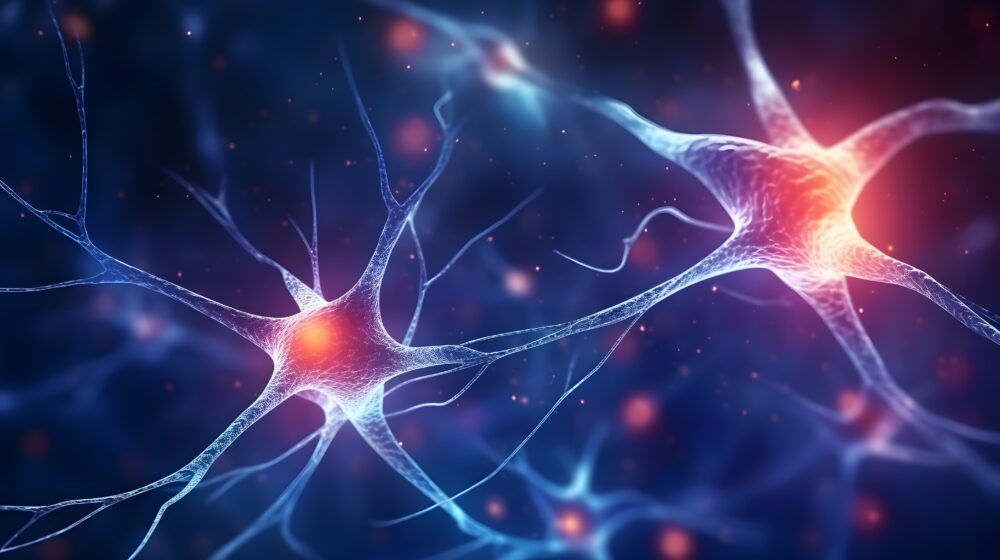
neuron cells with glowing link knots
Image Credit: Sagar - Adobe Stock

How Changing Your Mind Can Physically Alter Your Brain
Is it possible to personally alter the physical structure of your brain? Today’s episode of ID The Future comes to us from our sister podcast Mind Matters News. Host Dr. Michael Egnor sits down with fellow neurosurgeon and author Dr. Lee Warren to discuss his book The Life-Changing Art of Self-Brain Surgery. Dr. Warren shares how his medical training and Christian faith collided after the tragic loss of his son. The experience helped him realize that the mind is more than just brain activity. Dr. Warren unpacks the main thrust of his book, describing self-brain surgery as the intentional practice of choosing different thoughts to physically change the brain’s structure and improve overall health. Dr. Warren has observed the effects of such self-driven change in real-time brain scans, which deliver positive results like reducing the body’s stress response and promoting healing. Read More ›
Screenshot-2026-04-01-at-10924PM
Image of book cover of Truth, by Michael Shermer.

Egnor vs. Shermer: God, Science, and the Search for Truth

ID The Future listeners now get to enjoy two episode a month from our sister podcast Mind Matters News, a production of the Discovery Institute’s Walter Bradley Center for Natural and Artificial Intelligence. The Mind Matters News podcast features interviews from experts in computing, engineering, science, and philosophy who bring sanity to the conversation about natural and artificial intelligence. And although the Mind Matters News podcast will not often explicitly discuss intelligent design, it regularly explores the nature of intelligence, the origin of information, and the things that make us uniquely human, concepts that are central to the theory of intelligent design. On this episode of Mind Matters News, host and neurosurgeon Dr. Michael Egnor welcomes Michael Shermer, historian of science and founder of Skeptic magazine, to discuss Shermer's new book Truth: What It Is, How to Find It, and Why It Still Matters. The conversation quickly evolves into a deep philosophical debate between Egnor and Shermer over whether truths about morality and the universe are created by humans or discovered as objective features of reality. Read More ›
family-support-elderly-care-assistance-seniors-concept-grand-317922534-stockpack-adobestock
Family, Support, Elderly Care, Assistance, Seniors Concept. Grandmother In Bed.
Image Credit: di_media - Adobe Stock

Mind and Soul at the Threshold of Death
Does the brain explain the mind completely? And what can phenomena like terminal lucidity and near-death experiences reveal about the relationship between mind and brain? On this ID The Future, host Andrew McDiarmid concludes his two-part conversation exploring those questions with neurosurgeon Dr. Michael Egnor, co-author with Denyse O’Leary of the recent book The Immortal Mind: A Neurosurgeon’s Case for the Existence of the Soul, and Alexander Batthyany, a leading researcher on terminal lucidity and author of Threshold: Terminal Lucidity and the Border Between Life and Death. In the first half of the conversation, we defined terminal lucidity and explored why it’s so puzzling. Today, we look at how it relates to near-death experiences, and we ask a deeper question: what does this phenomenon suggest about the nature of the human mind? This is Part 2 of a two-part conversation. Read More ›
mri-of-head-of-elderly-woman-in-hands-of-doctor-standing-in-544305440-stockpack-adobestock
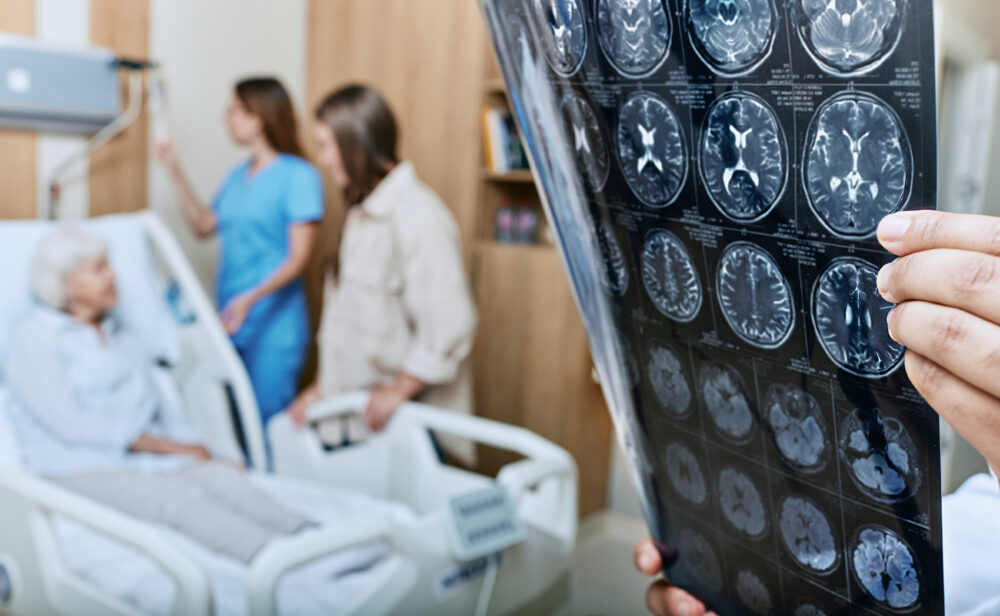
MRI of head of elderly woman in hands of doctor standing in medical ward near senior patient with relative and nurse. Recovery after a stroke
Image Credit: Peakstock - Adobe Stock

Terminal Lucidity: When the Mind Outlasts the Brain
Why would the human mind sometimes appear strongest when the brain is weakest? On today's ID The Future, host Andrew McDiarmid welcomes to the show neurosurgeon Dr. Michael Egnor, co-author with Denyse O’Leary of the recent book The Immortal Mind: A Neurosurgeon’s Case for the Existence of the Soul, and Alexander Batthyany, a leading researcher on terminal lucidity and author of Threshold: Terminal Lucidity and the Border Between Life and Death. The trio begins a two-part conversation discussing the phenomenon of terminal lucidity: what it is, what the evidence shows, and how it relates to debates about consciousness, mind, and human identity. This is Part 1 of a two-part conversation. Read More ›
Screenshot-2025-06-11-at-11016AM

Michael Egnor Reads From His New Book The Immortal Mind
On this ID The Future, Dr. Michael Egnor reads the Introduction to his new book The Immortal Mind: A Neurosurgeon's Case for the Existence of the Soul, now available from Worthy Books. In this reading, Dr. Egnor shares his journey from being a medical student who believed science could explain everything, including how consciousness emerges from the brain and whether we have a soul, to a neurosurgeon who questioned the conventional materialist view. He discusses how years of operating on and examining patients with brain damage led him to wonder how large parts of the brain could be removed without affecting a person's mind or their ability to think, reason, believe, and desire. His personal story, including a profound experience in a hospital chapel during a family crisis, became a turning point that challenged his atheism and led him to believe that the immaterial aspects of our minds are real and that nature is an open system, not a closed one. Read More ›
creative-background-the-human-brain-on-a-blue-background-the-267933363-stockpack-adobestock
Creative background, the human brain on a blue background, the hemisphere is responsible for logic, and responsible for creativity. different hemispheres of the brain, 3D illustration, 3D render
Image Credit: Aliaksandr Marko - Adobe Stock

A Neurosurgeon Pulls Back the Curtain on the Soul
On this ID The Future, host Andrew McDiarmid is thrilled to welcome back renowned neurosurgeon Dr. Michael Egnor to continue discussing his new book The Immortal Mind: A Neurosurgeon's Case for the Existence of the Soul. The book tackles provocative ideas, making a case that the human soul exists and that the mind is immortal. In this compelling conversation, we unpack some of the powerful arguments and evidence Dr. Egnor has marshaled. This is Part 2 of a two-part conversation. Read More ›
brain-head-human-mental-idea-mind-3d-illustration-background-320021976-stockpack-adobestock
Brain head human mental idea mind 3D illustration background
Image Credit: bluebackimage - Adobe Stock

The Immortal Mind: How Neuroscience Points Beyond Materialism

Is your mind more than just your brain? Does the soul actually exist? These questions have been pondered for millennia. What does the latest scientific research suggest? On this ID The Future, renowned neurosurgeon Dr. Michael Egnor begins a conversation with host Andrew McDiarmid about his new book The Immortal Mind: A Neurosurgeon's Case for the Existence of the Soul. Egnor makes a powerful case that our capacity for thought, reason, and free will points to something beyond mere brain function. After defining important terms, Egnor begins exploring the compelling evidence he has gathered across four decades of practice in neurosurgery. Along the way, Dr. Egnor also boldly challenges the Darwinian view of the mind's evolution, arguing that abstract thought and free will are immaterial and could not have arisen through natural selection. This is Part 1 of a two-part conversation. Read More ›
mystic brain
Illusion of Mind
Image Credit: agsandrew - Adobe Stock

Into the Mystic with a Neurosurgeon and a Neurotheologian

Today’s ID the Future continues the conversation between neurosurgeon Michael Egnor and neurotheologian Andrew Newberg. In this second and concluding part of their discussion, they further explore what experiments using brain scans reveal about how the brain is affected by meditation and mystical experiences, including near-death experiences. Also, what parts of the brain light up, and what parts go dormant, when someone is “speaking in tongues,” and how does someone who has this experience describe it, and does that description mesh with or clash with what turns up on the brain scans? Tune in to hear Newberg’s answer to this and other issues related to the mind-brain problem and the mystical. This interview is posted here by permission of Mind Read More ›

Franciscan nun
The Servant of God Mother Clara Zizic, Monastery of the Community of Franciscan Sisters of the Immaculate in Sibenik, Croatia
Image Credit: zatletic - Adobe Stock

The Mind/Brain Problem and the Power of Meditative Prayer

It’s hard to know where the brain ends and the mind begins. How can studying our brains give us insight into our minds? On this ID the Future, neuroscientist Andrew Newberg and neurosurgeon Michael Egnor sit down for a chat about all things brain related including neurotheology, methods of studying the brain, and research on how various forms of religious and non-religious meditation actually change the wiring of the brain, including in particular a study Newberg did on Franciscan nuns and what they refer to as “centering prayer.” This interview is borrowed, with permission, from Mind Matters, a podcast of the Walter Bradley Center for Natural and Artificial Intelligence.