ID the Future Intelligent Design, Evolution, and Science Podcast
Topic

Neurosurgery

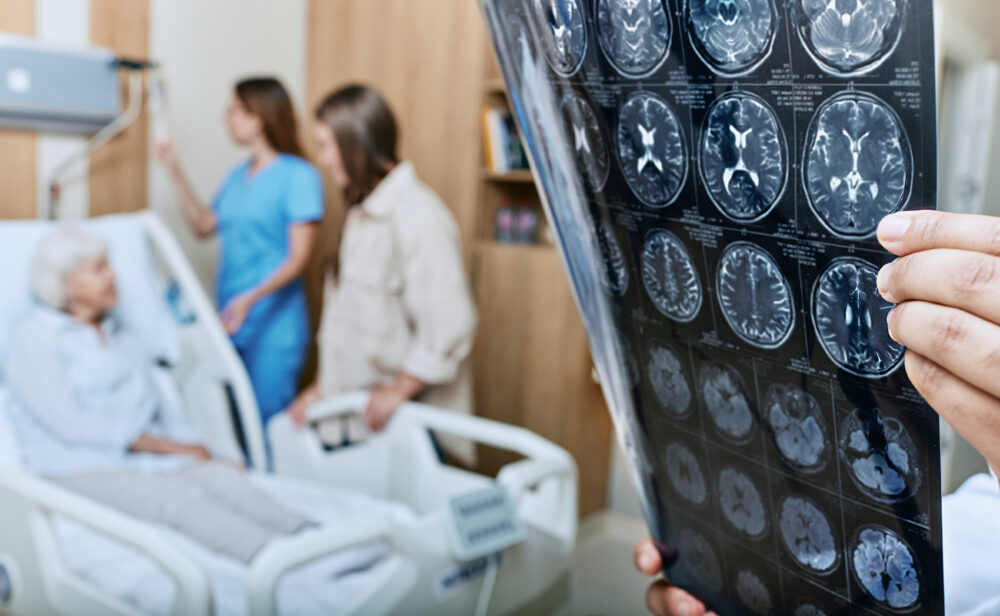
mri-of-head-of-elderly-woman-in-hands-of-doctor-standing-in-544305440-stockpack-adobestock
MRI of head of elderly woman in hands of doctor standing in medical ward near senior patient with relative and nurse. Recovery after a stroke
Image Credit: Peakstock - Adobe Stock

Terminal Lucidity: When the Mind Outlasts the Brain
Why would the human mind sometimes appear strongest when the brain is weakest? On today's ID The Future, host Andrew McDiarmid welcomes to the show neurosurgeon Dr. Michael Egnor, co-author with Denyse O’Leary of the recent book The Immortal Mind: A Neurosurgeon’s Case for the Existence of the Soul, and Alexander Batthyany, a leading researcher on terminal lucidity and author of Threshold: Terminal Lucidity and the Border Between Life and Death. The trio begins a two-part conversation discussing the phenomenon of terminal lucidity: what it is, what the evidence shows, and how it relates to debates about consciousness, mind, and human identity. This is Part 1 of a two-part conversation. Read More ›
brain-head-human-mental-idea-mind-3d-illustration-background-320021976-stockpack-adobestock
Brain head human mental idea mind 3D illustration background
Image Credit: bluebackimage - Adobe Stock

The Immortal Mind: How Neuroscience Points Beyond Materialism

Is your mind more than just your brain? Does the soul actually exist? These questions have been pondered for millennia. What does the latest scientific research suggest? On this ID The Future, renowned neurosurgeon Dr. Michael Egnor begins a conversation with host Andrew McDiarmid about his new book The Immortal Mind: A Neurosurgeon's Case for the Existence of the Soul. Egnor makes a powerful case that our capacity for thought, reason, and free will points to something beyond mere brain function. After defining important terms, Egnor begins exploring the compelling evidence he has gathered across four decades of practice in neurosurgery. Along the way, Dr. Egnor also boldly challenges the Darwinian view of the mind's evolution, arguing that abstract thought and free will are immaterial and could not have arisen through natural selection. This is Part 1 of a two-part conversation. Read More ›
IDTF-thumbnail
IDTF-thumbnail

Michael Egnor on What the Craniopagus Twins Tells Us about Mind and Brain

On this episode of ID The Future, neurosurgery professor Michael Egnor explores the case of Tatiana and Krista, the “Craniopagus Twins.” Their condition, he says, provides evidence against strict materialism.  Tatiana and Krista are connected at the thalamus (which controls such things as wakefulness, motor function and vision) through a structure called a thalamic bridge. This bridge enables them to see through each other’s eyes to and control each other’s limbs. Egnor explains how their separate personalities and thoughts nevertheless show that there is something about the mind not reducible to the brain. Egnor also goes through the mind-brain research of Roger Sperry, Benjamin Libet and Wilder Penfield.

Read More ›
IDTF-thumbnail
IDTF-thumbnail

Michael Egnor: Experiments Show that Mind is More Than Brain

On this episode of ID The Future, host Ray Bohlin talks with Michael Egnor, a pediatric neurosurgeon and professor of neurosurgery at State University of New York Stony Brook about ways modern science validates the idea that the mind is not reducible to the brain. They delve into oddities of neuroscience that indicate that there is more going on in the brain than mere chemistry, and, in particular, walk through the seminal work of Adrian Owen on MRIs and what it reveals.

Read More ›