ID the Future Intelligent Design, Evolution, and Science Podcast
Topic

Mind Matters

relaxing-at-sunset-at-top-of-mountain-stockpack-adobe-stock-253946182-stockpack-adobestock
Relaxing at Sunset at Top of Mountain
Image Credit: Ronny Friedrich - Adobe Stock

No Thinking Without a Thinker: Dr. Mihretu Guta on Consciousness

Starting this month, ID The Future listeners will get to enjoy a new episode each month (as well as a bingecast archive episode) from our sister podcast Mind Matters News, a production of the Discovery Institute’s Walter Bradley Center for Natural and Artificial Intelligence. The Mind Matters News podcast brings you interviews and insight from computer scientists, engineers, inventors, neurosurgeons, and other experts who bring sanity to the conversation about natural and artificial intelligence, going beyond the hype to explore the undercurrents of these important ideas. And although the Mind Matters News podcast will not often explicitly discuss intelligent design, it regularly explores the nature of intelligence, the origin of information, and the things that make us uniquely human, concepts that are central to the theory of intelligent design. On this archive "bingecast" episode, hosts Robert J. Marks and Angus Menuge welcome Dr. Mihretu Guta to discuss his contribution to the book Minding the Brain. Dr. Guta discusses the nature of consciousness and the challenges in understanding it from a philosophical perspective. He argues that consciousness is a unique property that is deeply subjective and personal, making it difficult to study scientifically. Guta contrasts first-order and second-order approaches to understanding consciousness, emphasizing the need to go beyond just the empirical observation of mental phenomena and examine the underlying metaphysical and ontological questions. The discussion covers a number of relevant topics, highlighting the profound and puzzling nature of consciousness and the importance of philosophical inquiry in grappling with this fundamental aspect of human experience. Read More ›
a-boy-uses-the-interactive-touchscreen-of-an-electronic-mult-432999461-stockpack-adobestock
A boy uses the interactive touchscreen of an electronic multimedia kiosk at a museum of modern history. Education, training and technology concept
Image Credit: Leka - Adobe Stock

The Accidental Inventor: An Interview with Hal Philipp
Starting this month, ID The Future listeners will get to enjoy a new episode each month (as well as a bingecast archive episode) from our sister podcast Mind Matters News, a production of the Discovery Institute's Walter Bradley Center for Natural and Artificial Intelligence. The Mind Matters News podcast brings you interviews and insight from computer scientists, engineers, inventors, neurosurgeons, and other experts who bring sanity to the conversation about natural and artificial intelligence, going beyond the hype to explore the undercurrents of these important ideas. On this episode of Mind Matters News, host Robert J. Marks is joined by Bradley Norris as they welcome Hal Philipp, the man behind the modern touchscreen and a prolific inventor with an impressive 98 U.S. patents. Hal shares his story and some of the lessons he’s learned over a career in invention. Read More ›
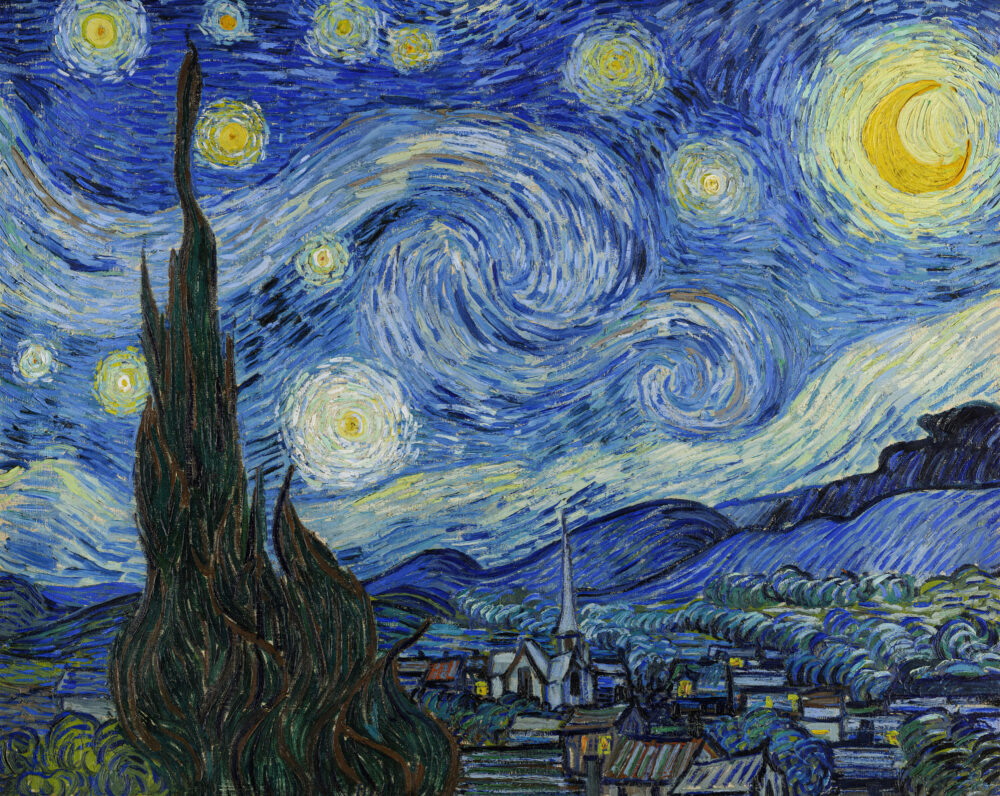
Vincent van Gogh, The Starry Night, 1889
Vincent van Gogh, (1853-1890) The Starry Night, 1889, oil on canvas. Museum of Modern Art, New York City. Licensed via Adobe Stock; GiorgioMorara - stock.adobe.com

Can Evolutionary Processes Explain Human Creativity?

On this ID The Future, we're sharing a conversation that first aired on Mind Matters News, another podcast from Discovery Institute that focuses on the intersection of artificial and natural intelligence. In this episode, guest host Pat Flynn welcomes engineer Dr. Eric Holloway and professor Robert J. Marks to discuss the information cost of creativity. The conversation is based on a chapter in the recent volume Minding the Brain, authored by Dr. Holloway and Marks. This conversation originally aired on the Mind Matters News podcast. Visit mindmatters.ai/podcast for more. Read More ›
sunrise-over-group-of-planets-in-space-stockpack-adobe-stock.jpg
Sunrise over group of planets in space
Licensed from Adobe Stock

Cosmos: Possible Worlds’ Religious Mythology

On this episode of ID the Future, science historian Michael Keas and philosopher Jay Richards continue their conversation about Neil deGrasse Tyson’s new National Geographic series Cosmos: Possible Worlds. As Keas explains, Tyson’s story of ancient superstition evolving at last into modern medicine gets both ancient and modern medicine factually wrong. His long-running “history” of the warfare between science and religion also is historically mistaken, Keas, author of Unbelievable: 7 Myths About the History and Future of Science and Religion insists. Curiously, Tyson has a future, quasi-religious myth of his own to promote: personal immortality through futuristic technology.