“Do You Believe in Evolution?” Stephen Meyer Responds to Joe Rogan
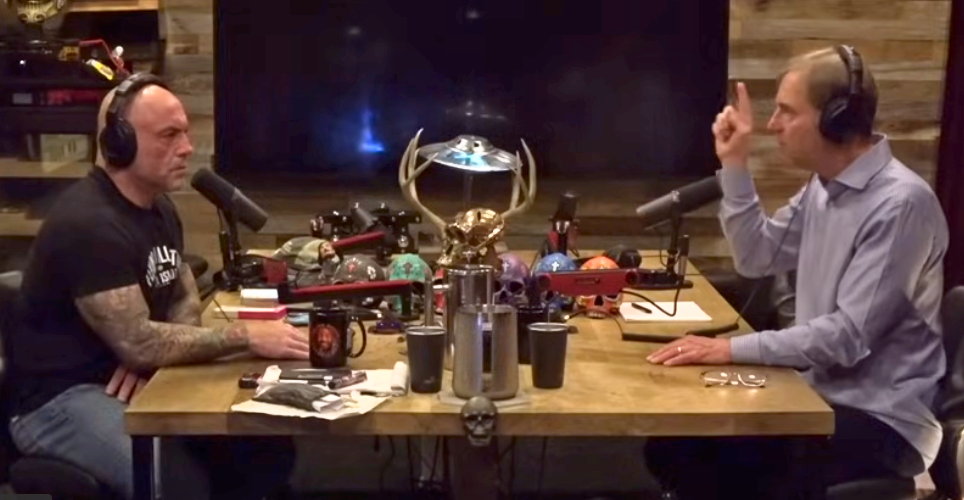
Do you believe in evolution? That’s a good question that could start a very productive conversation about the origin and development of life on Earth. But the first steps are clarifying what the word “evolution” actually means and why unguided evolutionary processes are limited in power and scope. Today, host Andrew McDiarmid invites you to revisit a segment from Dr. Stephen Meyer’s 2023 interview with Joe Rogan. Meyer answers Rogan’s probing question comprehensively. Yes, he tells Rogan, he believes in “real evolutionary processes,” but he also believes in the limitation of those evolutionary processes, and he takes several minutes to unpack and explain some of the challenges the standard neo-Darwinian account of life faces today. McDiarmid follows up by summarizing Meyer’s response and sharing excerpts from Meyer’s book Darwin’s Doubt to explain the importance of Meyer’s arguments to the debate over evolution.
In this portion of the Rogan interview, Meyer explains to Rogan why “it’s a new day in biology” and that we are now finding “distinctive hallmarks of intelligent agency” in even the simplest forms of life. He pointed out that in the nineteenth century, Charles Darwin and his contemporaries considered the cell a simple, homogeneous globule of undifferentiated protoplasm – glorified goo, in other words. They had no idea what was really going on inside the cell. Today, with more powerful technology and research techniques, we have a much better idea. We’re seeing layer upon layer of complexity and design: integrated circuits, code, information processing systems, nano-machines, transcriptional hierarchies, signaling molecules. If we saw evidence of these kinds of things anywhere else, we wouldn’t doubt the origin: a mind. But when we look inside the building blocks of life and see the same, we’re supposed to credit an undirected process? That’s why Meyer tells Rogan he’s skeptical of the creative power of the mutation/selection mechanism. And so are many leading evolutionary biologists. It can explain the small-scale variation and optimization of pre-existing forms, but it does a poor job, Meyer says, of explaining the origin or arrival of those forms.
Then Rogan asks another great question: but don’t you think with enough time those small-scale variations could become new forms? Ah, time, says Meyer, time is often cast as the hero of the plot. But no amount of time can give the Darwinian selection/mutation mechanism the creative power it needs to produce all the forms of life we see on Earth. Meyer explains why.
Dig Deeper
- Did you miss the Rogan/Meyer conversation? All three hours twenty minutes of it are available to watch!
- To dig deeper into the challenges facing modern evolutionary theory, get a copy of Dr. Meyer’s book Darwin’s Doubt!