Biologists: Cell is Factory Complex of Engineered Design
Watch Episode
You might find this hard to believe, but back in Charles Darwin’s day, the cell was thought of as little more than a piece of jelly. Thomas Henry Huxley called it a “simple, homogenous globule of undifferentiated protoplasm.” But today, thanks to discoveries in molecular biology, we’ve discovered the cell is something far more astonishing. And that begs a crucial question: if the cell is infinitely more than Darwin envisioned, can a Darwinian process really explain its origin, and how it came to produce the diversity we see in life?
On today’s ID The Future, host Andrew McDiarmid begins a two-part conversation with molecular biologist Dr. Douglas Axe and biochemist Dr. Michael Behe, two experts featured in the new movie The Story of Everything. Over two episodes they’ll discuss their participation in the movie and unpack some of the insights they share in it. We’re also sharing some exclusive clips from the movie!
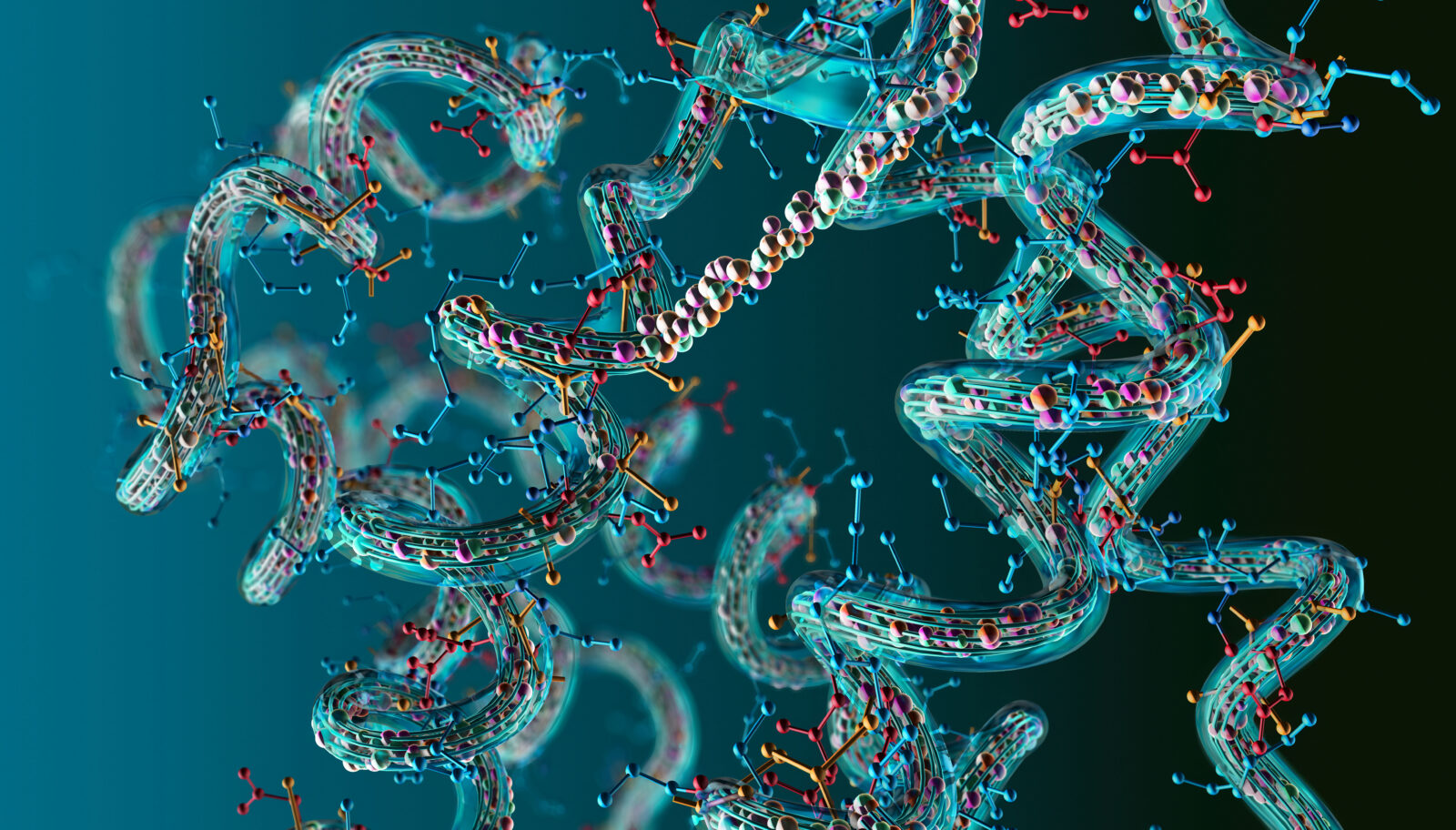
Behe and Axe challenge the outdated Darwinian view of the cell as a simple globule of protoplasm, revealing it instead to be a sophisticated nanoscale factory complex filled with intricate molecular machinery. Dr. Behe highlights the bacterial flagellum as a key exhibit of design, describing it as a literal outboard motor equipped with all the engineered parts you’d expect to find on a human-made motor, including propeller, drive shaft, and stator. Behe argues that molecular machines like the flagellum allow observers to see design directly in the purposeful arrangement of parts. He also points out that the complexity and functionality on display in cellular structures often exceeds human engineering.
Dr. Axe focuses on proteins, the cellular tools that perform exquisite chemistry to keep living things alive. He details the cell’s ability to use molecular machines to transcribe genetic instructions from DNA to build specific protein shapes. Axe asserts that this level of functional information cannot arise spontaneously and instead points to what he calls “extraordinary superhuman intelligence.”
This is Part 1 of a two-part conversation. Look for Part 2 in a separate episode!
Dig Deeper
- Watch the trailer and get tickets to The Story of Everything at the film’s official website!
- Want to take a group to see the movie in theaters? Go here for details.
- Subscribe to our YouTube channel to watch this and other interviews!