From Origins to Operations: The Broad Utility of Intelligent Design
Watch Episode
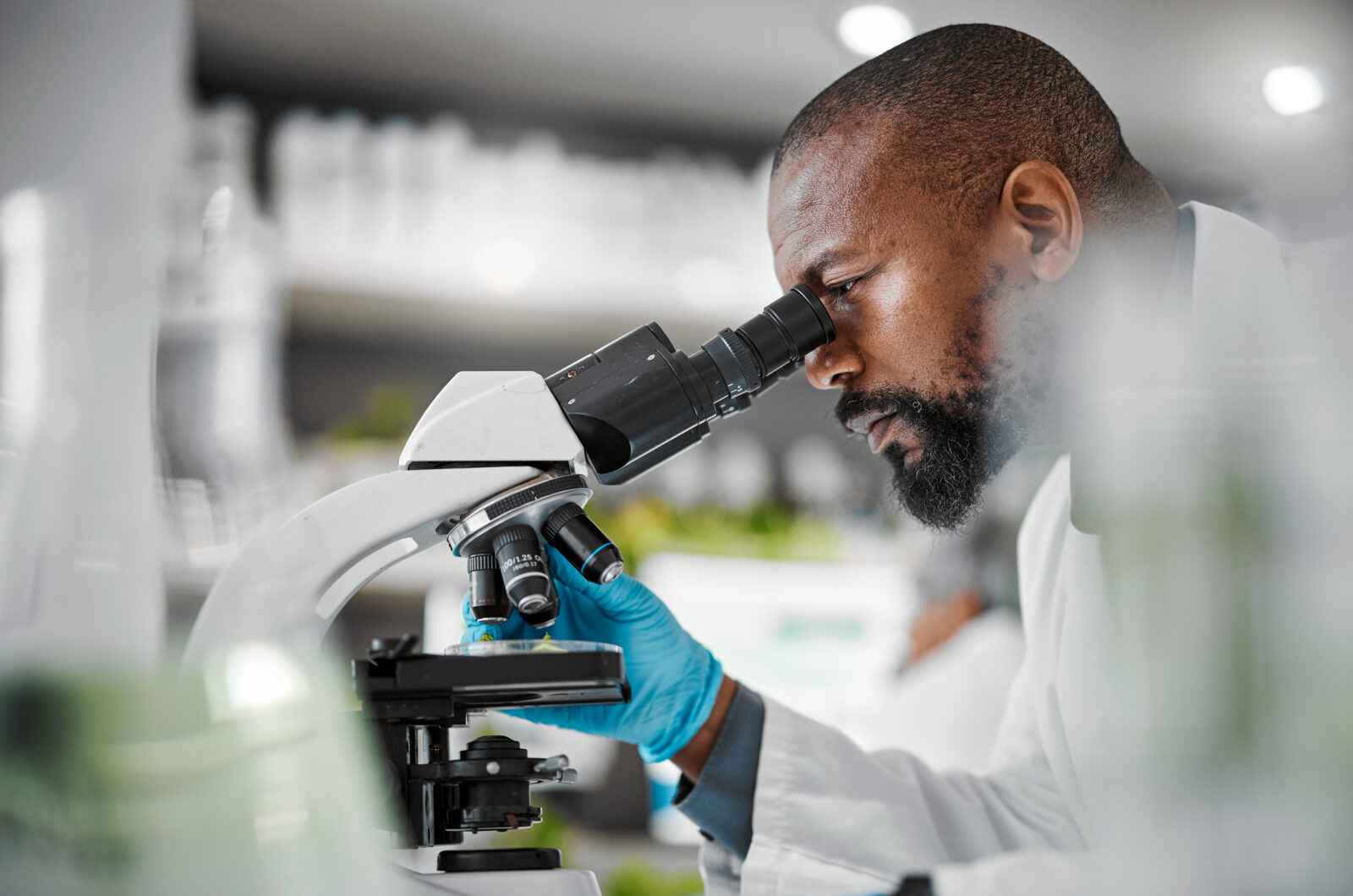
You may already know that an intelligent design framework can help us empirically detect whether an outcome in nature exhibits properties that indicate design. But did you also know an ID perspective can be applied to experimental science to guide research into how the natural world operates? On this episode of ID The Future, host Andrew McDiarmid is joined by Dr. Casey Luskin and Dr. Jonathan McLatchie, two members of the Center for Science & Culture’s team of resident scientists, to discuss a new paper co-authored by the science team unpacking how intelligent design can guide scientific research in multiple fields of science.
Dr. Luskin explains that intelligent design utilizes standard scientific methodologies, including observations, hypotheses, experiments, and conclusions, across three types of science: theoretical, historical, and experimental. By applying an understanding of how conscious agents act from their uniform and repeated experience, researchers can generate expectations and predictions to investigate not only the origins of natural systems but their every day operations as well.
Dr. McLatchie unpacks how Bayesian reasoning can be applied to intelligent design to evaluate evidence through a likelihood ratio. This approach can allow researchers to compare how probable an observation is if a given hypothesis is true versus false. McLatchie then applies Bayesian logic to the case of junk DNA. Under an evolutionary framework, nonfunctional genomic debris would be expected. Under a design hypothesis, widespread functionality should be the norm. Indeed, the latest evidence shows that large portions of the non-coding regions of DNA serve important functions, dispelling the myth of so-called “junk” in the genome. The junk DNA paradigm shift is a good example of how an intelligent design framework can serve as a productive guide to scientific research.
This is Part 1 of a two-part conversation with the science team. Look for a discussion with Dr. Emily Reeves and Dr. Brian Miller next!
Dig Deeper
- Read, bookmark, and share with others the paper that inspired this conversation! (free download)
- More conversation with the CSC science team on ID The Future: