ID the Future Intelligent Design, Evolution, and Science Podcast
Topic

ChatGPT

asian-student-doing-research-in-library-using-laptop-in-book-590689444-stockpack-adobestock
Asian student doing research in library using laptop in books, making a project and preparing for exam. Nerdy guy studying his lessons - education, self-study concept close up
Image Credit: andreybiling - Adobe Stock

Bill Dembski: Pursuing Truth and Trust in AI and LLMs

How does AI stack up when it comes to accurately representing the theory of intelligent design? Today, host Andrew McDiarmid speaks with mathematician and philosopher Dr. William Dembski about the reliability and accuracy of large language models (LLMs) like ChatGPT and Bard, particularly concerning intelligent design. This second half of the conversation highlights the importance of independent verification when using AI, as LLMs can “hallucinate” or generate false or biased information. Dembski advises an approach of verify, then trust, turning the old Russian proverb on its head. McDiarmid and Dembski also explore the potential for AI to enhance human capabilities and education if used judiciously, rather than becoming a crutch that erodes critical thinking. But that will require that we Read More ›

chatgpt-chat-with-ai-or-artificial-intelligence-technology-m-589267674-stockpack-adobestock
ChatGPT, Chat with AI or Artificial Intelligence technology. Man using a laptop computer chatting with an intelligent artificial intelligence asks for the answers he wants. Smart assistant futuristic,
Image Credit: Supatman - Adobe Stock

Can AI Accurately Portray Intelligent Design?

How accurately do AI models like ChatGPT, Grok, and Bard portray the theory of intelligent design? Can large language models rise above the biases of sources like Wikipedia to help level the playing field for intelligent design? Today, host Andrew McDiarmid begins a conversation with mathematician and philosopher Dr. William Dembski to address the relationship between AI and ID. In recent years, Dr. Dembski has been putting LLMs through their paces to see if they can accurately and fairly discuss and portray intelligent design arguments and concepts. Here, Dembski discusses what he discovered as he used various methods to interrogate these complex algorithms. This is Part 1 of a two-part conversation. Look for Part 2 in a separate episode. Read More ›
DISCO_Babel_1200x630_C
Science After Babel, Berlinski book cover

David Berlinski on the Immaterial, Alan Turing, and the Mystery of Life Itself

The new book Science After Babel is again in the spotlight here at ID the Future, with its author, philosopher and mathematician David Berlinski, and host Andrew McDiarmid teasing various elements of the work. The pair discuss the puzzling relationship between purely immaterial mathematical concepts (the only kind) and the material world; World War II codebreaker and computing pioneer Alan Turing, depicted in the 2014 film The Imitation Game; and the sense that the field of physics, once seemingly on the cusp of a theory of everything, finds itself at an impasse. Then, too,  Berlinski writes, there is the mystery of life itself. If scientists thought that its origin and nature would soon yield to scientific reductionism, they have been disappointed. Life’s “fantastic and controlled complexity, its brilliant inventiveness and diversity, its sheer difference from anything else in this or any other world” remains before us, suggesting, as Berlinski puts it, “a kind of intelligence evident nowhere else.” Get your copy of the book at www.scienceafterbabel.com. Read More ›
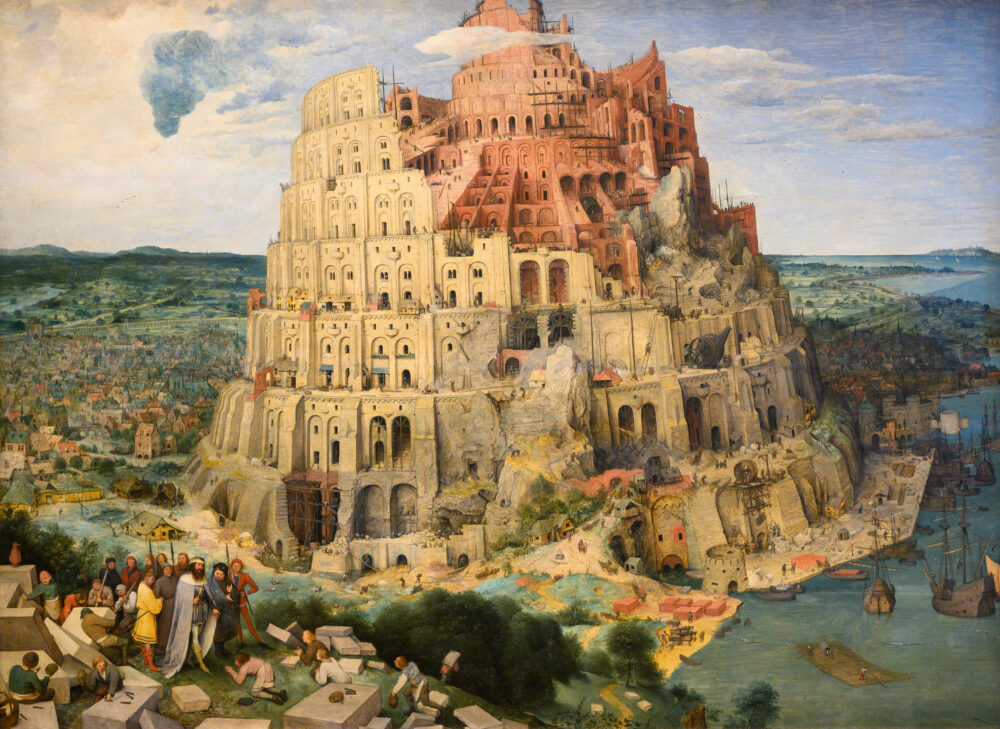
Bruegel tower of babel
Vienna, Austria. 2019/10/23.
Image Credit: Adam Ján Figeľ - Adobe Stock

David Berlinski on His New Book, Science After Babel

On today’s ID the Future, host Andrew McDiarmid rings up Science After Babel author David Berlinski in Paris to discuss the philosopher’s latest book. Berlinski is at his cultivated best as the two discuss everything from the biblical Tower of Babel as a metaphor for modern materialistic science, to his friendship with the brilliant and colorful French intellectual Marcel Schützenberger, a world-class mathematician who was self-taught and, as we learn here, came within a hair’s breadth of being swept up in the Chinese Revolution. Berlinski also reflects on the seminal 1966 WISTAR symposium, which laid out some mathematical challenges to Darwinism, challenges that Berlinski says remain unanswered to this day. At the same time, Berlinski gives the devil — here Read More ›