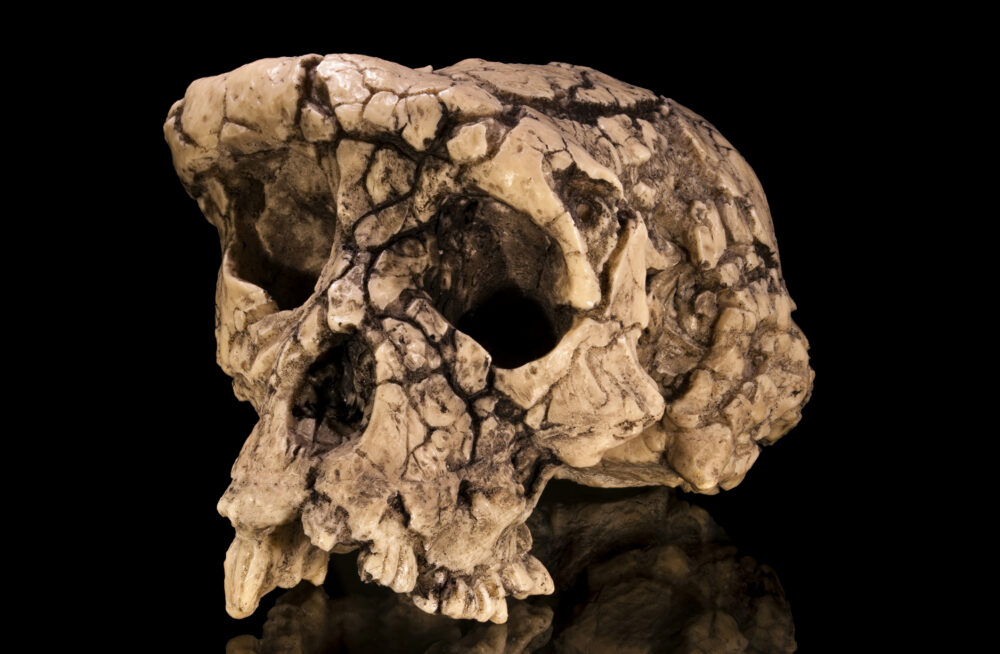
How do you separate the facts from the narrative? That can be challenging these days, and the realm of science is no exception. On this ID The Future, enjoy the second half of a conversation with Dr. Casey Luskin that originally aired on the Come Let Us Reason Together Podcast hosted by Lenny Esposito. Casey discusses the growing controversy surrounding Sahelanthropus tchadensis, a fossil often described as one of the earliest human ancestors. But what began as a celebrated evolutionary discovery has now sparked open disagreement among evolutionary scientists themselves.
In this concluding segment, Casey will discuss the telling researcher-to-specimen imbalance in the field of paleoanthropology, the nuance between error and deception in human origins narratives, and the broader implications of the controversy around the Sahelanthropus fossil. This is Part 2 of a two-part conversation. Read More ›
Survive. Reproduce. Repeat. Is that all we're here for? Some people make this claim, including noted evolutionary biologist and atheist Richard Dawkins. But does it match up with the scientific evidence? On this ID The Future, we're sharing selections from a recent talk by geologist Dr. Casey Luskin on the origin and uniqueness of human beings.
You’d be hard-pressed to find another lecture that accomplishes what Casey does here in 30 minutes: review the fossil history of hominids and humans to show the large, unbridged gap between the two, bust the myth that humans are 99% genetically similar to chimps, demonstrate the plausibility of intelligent design to explain the Big Bang origin of the genus Homo, and argue that the human race is unique and unparalleled in its moral, intellectual, and creative abilities. Read More ›