

New South Africa Book Explores Evidence of Design
Today’s ID the Future spotlights a new free online ID book from South Africa, Science and Faith in Dialogue, with contributions from Stephen Meyer, Hugh Ross, Guillermo Gonzalez, James Tour, Fazale Rana, Marcos Eberlin, and others. Geologist Casey Luskin joins host Eric Anderson to tell how the new peer-reviewed book came together and to describe the chapter he contributed, “Evolutionary Models of Palaeoanthropology, Genetics, and Psychology Fail to Account for Human Origins: A Review.” Luskin did his PhD in South Africa and had many opportunities to study various hominid fossils. Here he explains why he is convinced that intelligent design far better explains the fossil evidence than does Darwinian evolution.
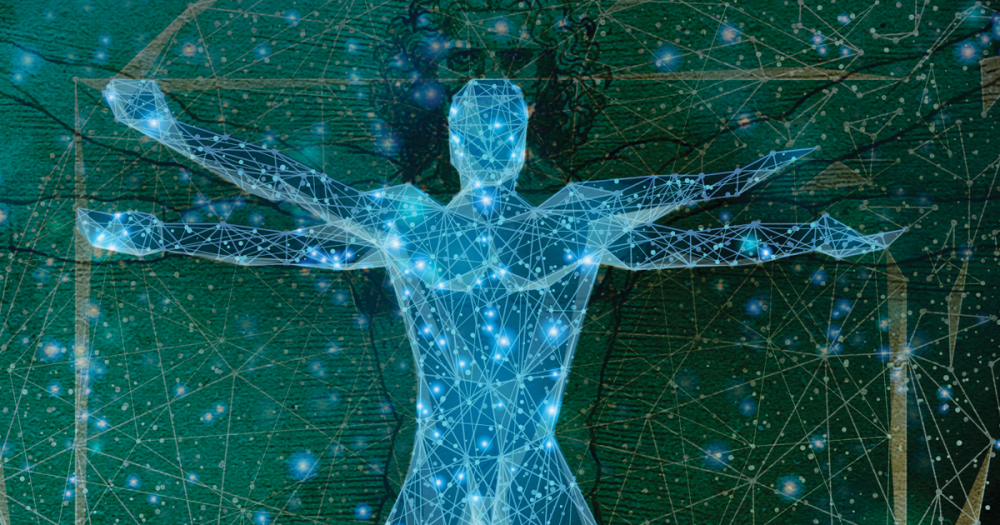
The Miracle of Man: Fine Tuning for Blood and Breath
In Part 3 of The Miracle of Man interview with author Michael Denton, the Australian biologist and MD explores with host Eric Anderson some of the bioengineering marvels of the human lung and, more fundamentally, some of the many things about chemistry, the sun, and planet Earth that had to be just so to allow our respiratory and circulatory systems to work—not merely as well as they do but at all. It’s fine tuning for creatures very much like ourselves, what Denton terms The Miracle of Man. “Denton provides the a scientific underpinning for a theistic real humanism far beyond the nihilistic implications of so-called secular humanism,” writes German paleontologist Günter Bechly. “The book deserves to become a game changer Read More ›
Michael Denton: The Miracle of Man Rests on a Primal Blueprint
This ID the Future continues Miracle of Man author Michael Denton’s conversation with host Eric Anderson about his latest book. The focus of this capstone work in his Privileged Species series is, as the subtitle explains, The Fine-Tuning of Nature for Human Existence. Here Denton and Anderson dive deeper into the book’s argument that science has uncovered multiple ensembles of fitness for creatures much like ourselves—land-going, airbreathing, intelligent bipeds capable of controlling fire and developing new technologies. In other words, it’s not just a handful of things about nature that appear fine tuned for our existence. It’s a long list of things, and indeed, a long list of interdependent ensembles of prior fitness—what Denton sometimes refers to as a “primal Read More ›