
Günter Bechly: Rich Fossil Record Says No to Insect Evolution
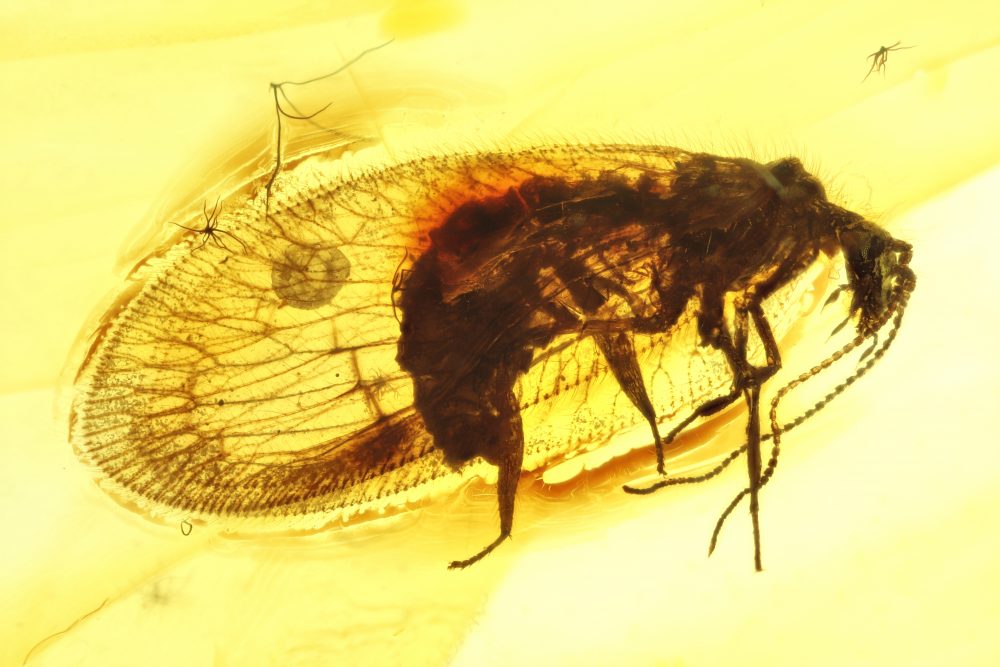
On this episode of ID the Future, Dr. Günter Bechly, paleoentomologist and former curator for amber and fossil insects for the State Museum of Natural History in Stuttgart, Germany, talks with host Andrew McDiarmid about evidence for macroevolution among insects. The fossil record is “saturated,” Bechly says. By that he doesn’t mean there aren’t new fossil forms to discover. Bechly himself has discovered several. He means we have an extensive enough sampling to confidently discern the major patterns of change and stasis in the history of life. And it shows no sign of insect evolution. It shows no transition from marine arthropods to terrestrial insects, none from wingless insects to winged insects, and no gradual evolution to insects (such as Read More ›

Dr. Michael Denton on Predetermined Body Plans and Primal Patterns in Nature
On this episode of ID The Future, medical geneticist Dr. Michael Denton discusses the implications of insect body plans as predetermined types rather than collections of adaptations. Denton questions the ability of a Darwinian process to account for the patterns found in living systems. Denton suggests that, while there are countless variations or “adaptive masks” present in organisms, they all extend from original “primal patterns.” Tune in to hear this fascinating discussion! Dr. Denton is the author of Evolution: A Theory in Crisis and Nature’s Destiny: How the Laws of Biology Reveal Purpose in the Universe.