
Debunked Transitional Fossils Just the Tip of the Iceberg
On today’s ID the Future Casey Luskin hosts distinguished German paleontologist Günter Bechly to discuss Bechly’s essay in the recent Harvest House anthology, The Comprehensive Guide to Science and Faith: Exploring the Ultimate Questions About Life and the Cosmos. Darwinian evolution predicts a gradually branching tree of living forms, with one form shading into another over long periods of evolution, with each transitional step almost too modest to notice. Does the fossil record suggest such a pattern? Quite the opposite, Bechly says. Instead the pattern of the fossil record is consistently one of sudden appearance, and evolutionists have yet to successfully construct a single robustly populated series of gradually transitioning fossils that move chronologically from one form to a distinctly different Read More ›
Günter Bechly: Rich Fossil Record Says No to Insect Evolution
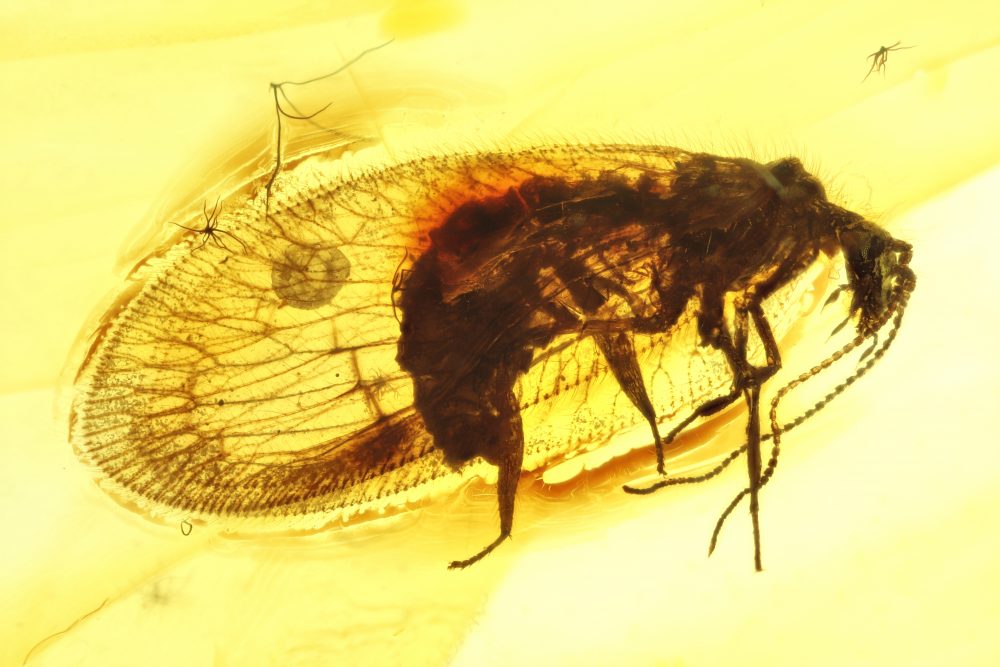
On this episode of ID the Future, Dr. Günter Bechly, paleoentomologist and former curator for amber and fossil insects for the State Museum of Natural History in Stuttgart, Germany, talks with host Andrew McDiarmid about evidence for macroevolution among insects. The fossil record is “saturated,” Bechly says. By that he doesn’t mean there aren’t new fossil forms to discover. Bechly himself has discovered several. He means we have an extensive enough sampling to confidently discern the major patterns of change and stasis in the history of life. And it shows no sign of insect evolution. It shows no transition from marine arthropods to terrestrial insects, none from wingless insects to winged insects, and no gradual evolution to insects (such as Read More ›

Exposing Darwinist Ronald Wetherington’s Bluffs About Human Evolution
This episode of ID the Future explores the many holes in SMU professor Ronald Wetherington’s testimony before the Texas State Board of Education. Listen in as Casey Luskin explains why Wetherington — and anyone else who claims that there are “no gaps” in the fossil record or “no lack of transitional fossils” in human evolution — overstates his case.
Read More ›