ID the Future Intelligent Design, Evolution, and Science Podcast
Topic

Darwinism

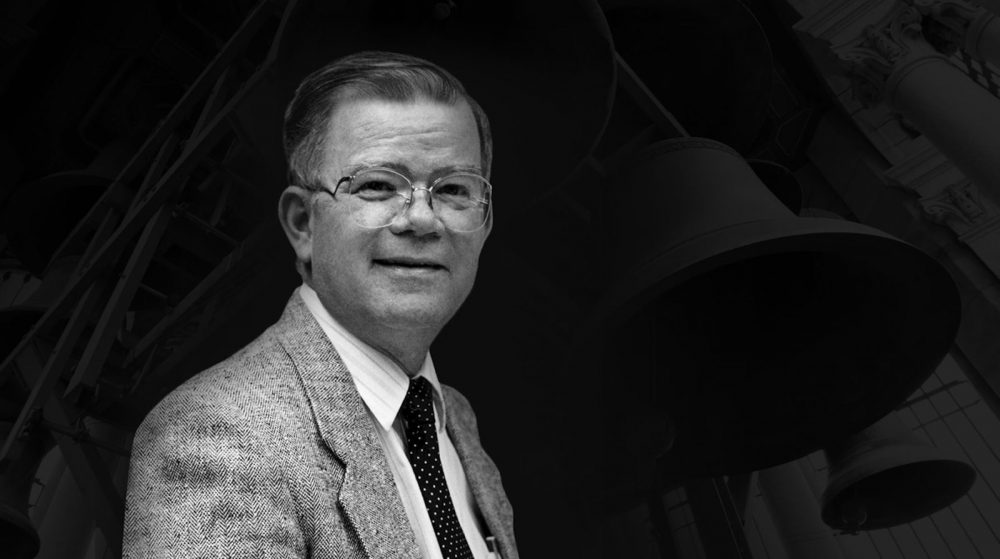
phillip-e-johnson-sather-tower-1600x894

Stephen Meyer on Phillip Johnson’s Courage

On this episode of ID The Future, Stephen Meyer, director of Discovery Institute’s Center for Science and Culture, honors Phillip Johnson, the U.C. Berkeley law professor who helped ignite the modern intelligent design movement with the publication of his highly successful book Darwin on Trial.

Read More ›

big top interior
Big Tent

Jonathan Wells Remembers Phillip Johnson

On this episode of ID the Future, Jonathan Wells remembers Phillip Johnson, “godfather of the intelligent design movement.” Johnson not only attracted scientists’ and other academics’ attention with his groundbreaking Darwin on Trial, he brought them together as a united movement, pushing for a “big tent” for ID theorists to work together.

Read More ›
Photo by Mobin Jahantark

Ann Gauger on Emerging Clues to Life’s Design

On this episode of ID the Future, Andrew McDiarmid shares biologist Ann Gauger’s recent article on emerging clues to life’s design, and how the “Darwinian Regime” tends to ignore them. One stubborn bit of biological evidence Gauger highlights is the fact that cells can’t make life-essential ATP, NAD, and other metabolic co-factors without having ATP, NAD, and the other co-factors there first. It’s a “daisy chain of causal circularity woven by what must be an intelligent designer,” Gauger comments. Or as she also puts it, “It’s chickens and eggs, all the way down.”

face smashed historic statues Torso.jpg
Detail of the face smashed historic statues. Torso of ancient statues. Lost sculpture. The effects of weathering on the artwork.
Image Credit: martinfredy - Adobe Stock

Aeschliman Talks C. S. Lewis, The Abolition of Man, and That Hideous Strength

Michael Aeschliman, author of the newly revised and expanded The Restoration of Man: C. S. Lewis and the Continuing Case Against Scientism sits down with host Andrew McDiarmid to explore Lewis’s The Abolition of Man, its defense of natural law, and its bracing takedown of scientism. Read More ›
uk-still-meyer-gelernter
Video still from Uncommon Knowledge with Peter Robinson

Gelernter, Meyer, Berlinski Deny Darwinism, Pt. 3

On this episode of  ID the Future we hear the final portion of a three-part series featuring Discovery Institute’s Stephen Meyer and David Berlinski along with distinguished Yale computer science professor David Gelernter, who recently gave up Darwinism thanks in part to their books. Led by Uncommon Knowledge host Peter Robinson, they discuss the hard problem of consciousness, how Darwinism functions as a religious dogma that punishers dissenters, and whether biology can ever “get over Darwin and move on.” This interview is presented here courtesy of Peter Robinson and the Hoover Institution.

IDTF-thumbnail
IDTF-thumbnail

Meyer, Berlinski and Yale’s David Gelernter Challenge Darwinism, Pt. 2

This episode of ID the Future features Part 2 of Peter Robinson’s conversation with Yale computer scientist David Gelernter and Discovery Institute senior fellows Stephen Meyer and David Berlinski.

Read More ›
uk-still-meyer-gelernter
Video still from Uncommon Knowledge with Peter Robinson

David Gelernter, Stephen Meyer, David Berlinski Challenge Darwinism, Pt. 1

Part one of an uncommon trio of experts speaking on the mathematical challenges to Darwinian evolution. Stephen Meyer and David Berlinski join David Gelernter with Peter Robinson moderating. Read More ›
Fractal multiverse.jpg
Fractal multiverse - astract illustration for topics such as physics and astronomy
Image Credit: Jaswe - Adobe Stock

The Modern-Day Phlogiston: Darwinism Explains Everything and Nothing

On this episode of ID the Future, Andrew McDiarmid reads an excerpt from Heretic: One Scientist’s Journey from Darwin to Design by Finnish bioengineer Matti Leisola and Jonathan Witt. It makes the case that modern neo-Darwinism is today’s “phlogiston,” a theory that explains everything but nothing, faces mounting contrary evidence, and survives only with ever more ancillary hypotheses. In the excerpt Leisola and Witt also discuss the well-documented pattern of scientists defending an existing scientific paradigm even after fresh discoveries have turned against it, with the obsolete dominant paradigm dying only very slowly. An especially dramatic and tragic example gave the name to this all-too-human tendency — the Semmelweis reflex. Listen in to learn more.

student molecular model.jpg
young students picking molecular model for chemistry lesson
Image Credit: LIGHTFIELD STUDIOS - Adobe Stock

Stephen Meyer’s Advice to Science Students

On this episode of ID the Future, Stephen Meyer, director of Discovery Institute’s Center for Science and Culture and author of Darwin’s Doubt, gives advice to students and recent graduates interested in intelligent design. He encourages students to recognize how pervasive philosophical naturalism is in the academy; master the material; do good work; and stand firm. When should you keep your head down, letting discretion be the better part of valor, and when should you speak out, publicly supporting the case for intelligent design? Meyer also offers advice about this. 

Photo by Jong Marshes

Marcos Eberlin on Evolution’s Water-Gate Problem

On this episode of ID the Future, internationally distinguished scientist Marcos Eberlin, author of the new book Foresight: How the Chemistry of Life Reveals Planning and Purpose, talks about evolution’s “water gate” problem. There’s no conspiracy here, just life’s astonishing answer for admitting water into cells through “gates” while keeping lethal acidifying proteins out. There’s also a chicken-egg problem involving proteins and molecular chaperones. That and more, Eberlin argues, add up to the conclusion that life required foresight.