
ID the Future Intelligent Design, Evolution, and Science Podcast
Topic

Dover intelligent design trial

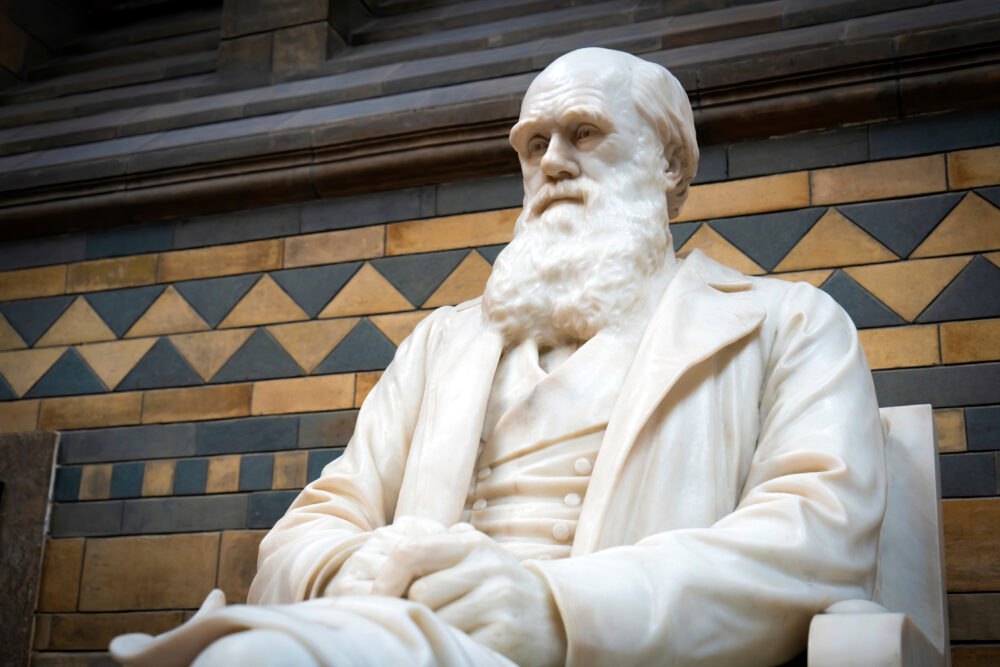
London, England - December 4, 2019: Statue of Charles Robert Darwin was an English naturalist and biologist in Natural History Museum. London, United Kingdom.
Statue of Charles Darwin. Licensed via Adobe Stock, wittayayut - stock.adobe.com

20 Years After Dover: Steve Fuller on Science, Censorship, and the “Church of Darwin”

In this ID The Future, host Casey Luskin concludes a two-part conversation with University of Warwick professor and author Steve Fuller reflecting on the 20th anniversary of the Kitzmiller v. Dover trial, a case that examined the constitutionality of teaching intelligent design in public schools. Fuller discusses his experience serving as an expert witness for the defense. He defends his support of a policy that merely informed students of alternative theories to Darwinian evolution. He explains why high school is an ideal time to encourage an open mind toward science. Then he pivots to discuss the deeper issue of institutional censorship in science and how establishment science functions as a religion. He characterizes intelligent design as "anti-establishment" and suggests there's hope for a more pluralistic approach to science in the near future. This is Part 2 of a two-part interview. Read More ›
judge-with-gavel-sitting-at-wooden-table-closeup-stockpack-a-685934129-stockpack-adobestock
Judge with gavel sitting at wooden table, closeup
Image Credit: New Africa - Adobe Stock

Casey Luskin: ID Over After Dover? Not Even Close

Over After Dover. That was the hopeful mantra of many critics of intelligent design (ID) after the Kitzmiller vs. Dover trial in 2005. They were hoping a federal judge could issue a decree from on high that would stop the ID movement cold in its tracks and neo-Darwinism could go back to being unquestioned, unchallenged orthodoxy. But was it over after Dover? Not even close. On this ID The Future, host Andrew McDiarmid marks the 20th anniversary of the Dover trial by beginning a two-part conversation with geologist, legal scholar, and Dover trial expert Dr. Casey Luskin. Luskin takes us back to 2005 to give us his unique perspective on the events that led to the Dover trial, his own personal experiences of the case, and the position the Discovery Institute's Center for Science & Culture held on the issues at stake. This is Part 1 of a two-part conversation. Read More ›
boat sailing away
Sunset in the sea, a small sailing boat at sunset away
Image Credit: Seva_001 - Adobe Stock

Bidding Adieu to Steven Weinberg’s Take on Science and Faith

On today’s ID the Future, Casey Luskin, associate director of Discovery Institute’s Center for Science and Culture, discusses his Evolution News article about the recently deceased Steven Weinberg. On Weinberg’s view, one of science’s social functions is to undermine religion, which he sees as superstition. Luskin takes the opposite view and points to skilled and successful scientists he got to know in Africa. He says these scientists are convinced that the supernatural is real and would find Weinberg’s secular Western rejection of the supernatural as blinkered. Luskin and host Robert Crowther also discuss a hopeful trend among some atheists toward a more civil and respectful way of engaging intelligent design, even to the point of acknowledging that design theorists are Read More ›