ID the Future Intelligent Design, Evolution, and Science Podcast
Topic

origin of life

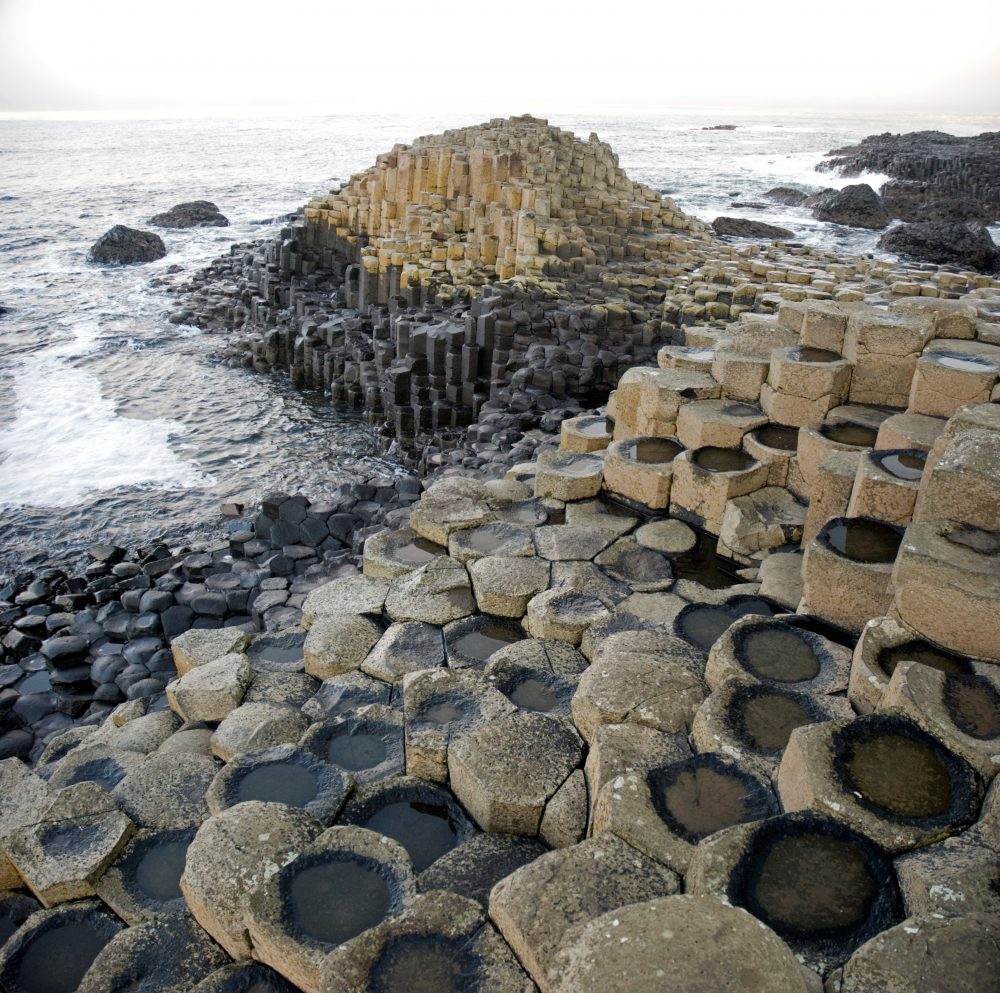
the-giant-causeway-stockpack-adobe-stock.jpg
The Giant Causeway
Image Credit: forcdan - Adobe Stock

New Book: The Stairway to Life Is Really a Cliff

On this episode of ID the Future, guest host Eric Anderson speaks with medical engineer Rob Stadler, co-author with molecular biologist Change Laura Tan of the new book Stairway to Life: An Origin of Life Reality Check. Stadler explains that it’s a “reality check” because many of the “stairway steps” that have to be mounted for chemistry to become biology must, very inconveniently, happen all at once. DNA can’t survive without repair enzymes, for example, but those enzymes are able to exist because they’re coded in DNA. The reality check is needed, says Stadler, because the media eagerly touts every oversold “advance” in origin-of-life research, ignore the mounting difficulties for an unguided origin of life posed by various fresh discoveries, Read More ›

galaxy parabola
Collision galaxies. Three-dimensional parabola with collision of galaxies. Universe with stars and stars. Starry sky
Image Credit: David Costa Art - Adobe Stock

Paul Nelson on Freeing Minds Trapped in a Naturalistic Parabola

On this episode of ID the Future, philosopher of science Paul Nelson continues sharing with host Andrew McDiarmid about pursuing intelligent design theory in a science culture committed to naturalism. Or as Nelson puts it this time, it’s about trying to communicate with scientists who are trapped in a naturalistic parabola. That parabola sets the rule and defines the boundaries for science: naturalistic answers only. And it extends to infinity, so no finite number of objections or counter-examples can force naturalistic scientists out of it. Nelson, however, offers an alternative strategy for drawing them out of the parabola.

zero chance.jpg
zero
Image Credit: frank peters - Adobe Stock

New ID Book Zeroes in on Evolution’s Zero-Probability Problem

On this episode of ID the Future, Andrew McDiarmid concludes his conversation with Eric Anderson, one of the co-authors of the new Discovery Institute Press book Evolution and Intelligent Design in a Nutshell. Today they talk about Anderson’s second of two chapters in the book, where he explores the challenges of building a self-replicating 3D printer, and the light this sheds on the origin-of-life community’s search for their Holy Grail, a self-reproducing molecule that could have kickstarted the evolutionary process on the early earth. In their conversation, Anderson suggests that there are engineering principles involved in the origin of life that may mean that a naturalistic origin of life is less like winning a long-odds lottery, and more like the Read More ›

Purple transparent molecule model.jpg
Purple transparent molecule model over purple
Image Credit: denisismagilov - Adobe Stock

New ID Book Puts “Self-Replicating Molecules” Under the Microscope

On this episode of ID the Future, Andrew McDiarmid interviews Eric Anderson, one of the co-authors of the new book Evolution and Intelligent Design in a Nutshell. The two discuss Eric’s chapters on the origin-of-life problem. There’s the problem of generating the information required of the first life form. And there’s another problem, one Anderson uses his engineering background to explore — the insuperable challenges to generating a self-replicating molecule, a hypothetical entity at the heart of some recent attempts to render plausible the evolution of non-life into cellular life.

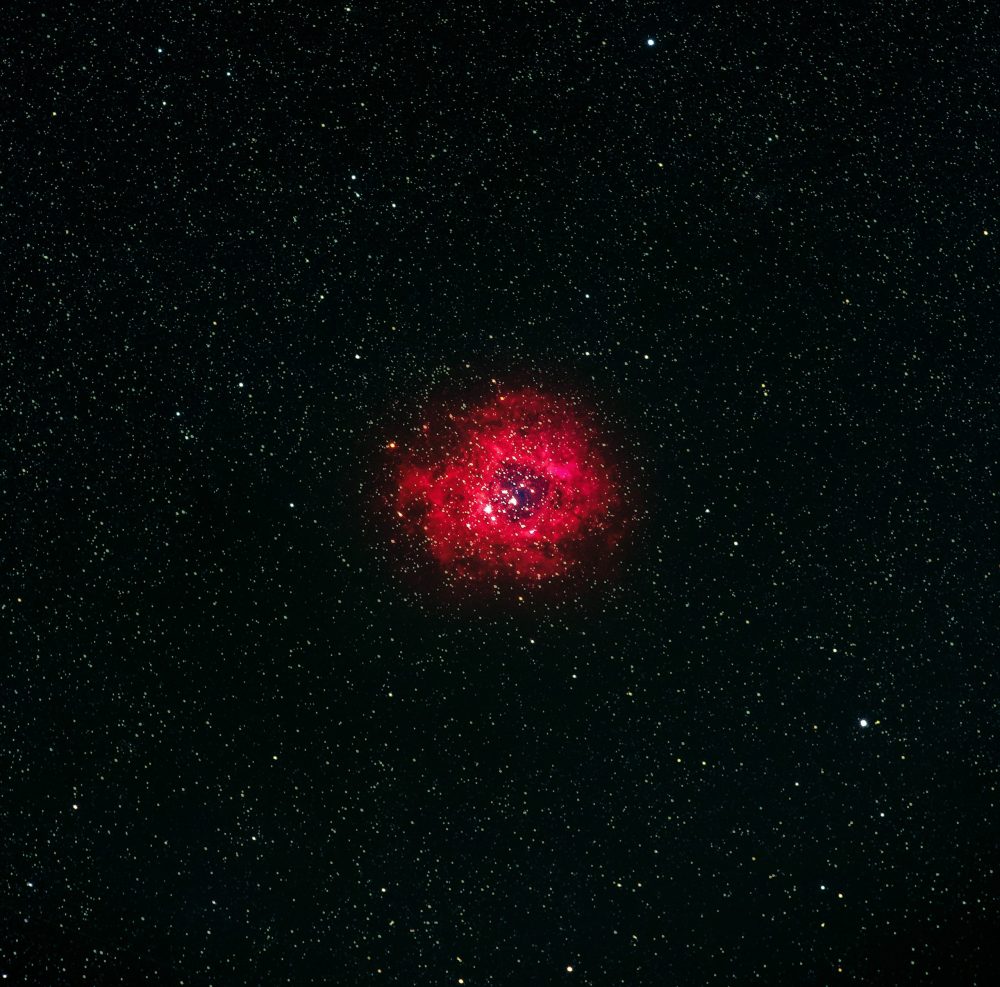
rosette-nebula-stockpack-unsplash.jpg
rosette nebula
Photo by Alexander Andrews at Unsplash

Cosmos: Possible Worlds’ ‘Most Plausible’ Creation Myths

On this episode of ID the Future, philosopher Jay Richards hosts science historian Michael Keas in another conversation about Neil deGrasse Tyson’s series Cosmos: Possible Worlds. They talk this time about what the show itself calls its “most plausible creation myth… for the origin of life,” involving hydrothermal vents in the deep ocean floor — with no mention at all of the equally deep scientific problems with the idea. Tyson’s imagination wanders from there to a moon of Saturn to the Cambrian explosion, everywhere supposing that just because one or two necessary conditions exist for life, that’s all the explanation that’s needed. Richards and Keas ably explore why this is untrue. 

microscope with lab glassware, science laboratory research and development concept
test tubes, lab, laboratory

Roger Olsen on the Mystery of Life’s Origin on the Early Earth

On this episode of ID the Future, Robert Marks interviews Roger Olsen, co-author of the groundbreaking 1984 book The Mystery of Life’s Origin. In the book’s epilogue they suggested that a designing intelligence stands as the best explanation for the origin of life. And with a revised and greatly expanded new edition of the book now available, he says that 36 years of additional research from the origin-of-life community has left their conclusions stronger than ever. Now an environmental scientist, Olsen has spent his career since then helping homes and families abroad protect children from the ravages of environmental pollution.

running athletes
Photo licensed from Adobe Stock

Charles Thaxton on The Mystery of Life’s Origin, Then and Now

On this episode of ID the Future, Robert J. Marks interviews chemist Charles Thaxton about a seminal 1984 book he co-authored, The Mystery of Life’s Origin, foundational to the intelligent design movement, and a later project, Of Pandas and People. The main body of Mystery was generally praised, Thaxton explains. It was the epilogue that proved controversial. There the three authors reviewed five proposed explanations for life’s origins and suggested that the best explanation was that the first life originated through an act of creative intelligence. The Mystery of Life’s Origin is now being re-released in an updated and greatly expanded version, with new contributions by Stephen Meyer, James Tour, and others.

Abstract neon background. luminous swirling. Glowing spiral cover. Black elegant. Halo around. Power isolated. Sparks particle. Space tunnel. Glossy jellyfish. LED color ellipse. Glint glitter
abstract, astral, aura, ball, banner, beautiful, border, bright, central, circle, circular, colorful, design, disc, effect, element, energy, event, fiber, flare, frame, glare, glow, hole, illuminated, lens, light, lucent, magic, motion, mystic, optical, orb, portal, radial, radiant, rays, ring, rotation, round, sci-fi, science, shine, sphere, spin, splash, twirl, twist, vortex, whirl

Durston on Experimental, Inferential, and Fantasy Science — Pt. 2

On this episode of ID the Future, biophysicist and philosopher Kirk Durston continue his discussion of three types of science: (1) experimental science, (2) inferential science, and (3) fantasy science. In this second of three episodes, Durston recaps the three types but focuses on inferential science. He explains how it involves, in the historical sciences, abductive reasoning (inference to the best explanation), and he explains how such reasoning can be used as we consider the best explanation for the origin of biological information, and in such a way that it is rooted in observation.

Glowing plasma background
Abstract glowing blue plasma on black background. Fusion concept. 3D Rendering

Durston on Experimental, Inferential, and Fantasy Science — Pt. 1

On this episode of ID the Future, biophysicist and philosopher Kirk Durston discusses his recent article series about three types of science — (1) experimental science, which is generally very trustworthy, with some exceptions; (2) inferential science, which can be trustworthy but often takes huge leaps into the doubtable and dodgy; and (3) fantasy science, which is essentially science fiction masquerading as actual science. In this first of three episodes, Durston focuses on experimental science. Such science is, at its best, reproducible and verifiable. Durston says he has yet to find a true conflict between experimental, reproducible scientific observations and his religious faith. The contradictions he encountered were all between his faith and the inferences that some scientists were drawing Read More ›

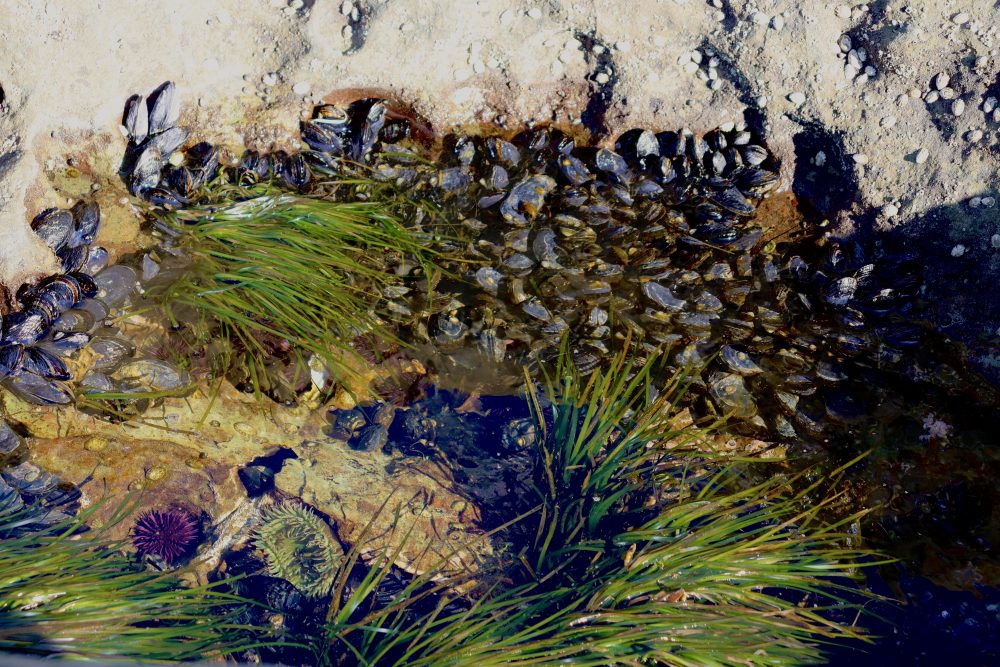
mussels rock puddle
Mussels in rock puddle
Image Credit: Gabriela - Adobe Stock

Walter Bradley on the New Mystery of Life’s Origin, Pt. 2

On this ID The Future, guest host Robert J. Marks concludes his conversation with Walter Bradley, co-author of the seminal 1984 intelligent design book The Mystery of Life’s Origin. The book is available in a revised and expanded edition with updates from multiple contributors discussing the progress (or lack of it) in origins science in the 35 years since the book’s original publication. In this half of the conversation, Bradley and Marks discuss the book’s first release, including the cultural context that made finding a non-religious publisher an uphill battle, and discussion of some of the endorsements and early reviews, including one drive-by and four positive responses from distinguished scientists Robert Jastrow, Dean Kenyon, Robert Shapiro, and Fritz Schaefer. Bradley Read More ›