
ID the Future Intelligent Design, Evolution, and Science Podcast
Topic

peer-reviewed research

classical-columns-on-government-building-with-colorful-sky-s-496190394-stockpack-adobestock
Classical columns on government building with colorful sky
Image Credit: littleny - Adobe Stock

Casey Luskin: How the ID Movement Has Flourished Since the Dover Trial

Was the modern intelligent design (ID) movement "over after Dover," as many ID critics hoped it would be? Quite the opposite. In the last two decades ID has flourished as a scientific research program and continues to gain momentum in both academia and the public square. On today's ID The Future, host Andrew McDiarmid concludes his conversation with geologist, legal scholar, and Dover trial expert Dr. Casey Luskin. In this segment, marking the 20th anniversary of the Kitzmiller vs. Dover trial of 2005, the pair examine the outcome of the Dover trial, in which a judge ruled that intelligent design was a religious viewpoint, not science, and therefore unconstitutional to teach in public schools. Luskin explains why the Dover ruling was highly flawed and unreliable and how it misrepresented the definition of science and the arguments of ID proponents. Luskin also reveals how the ID movement has flourished in the twenty years since Dover. This is Part 2 of a two-part conversation. Read More ›
Screenshot 2024-10-21 at 1.22.59 PM

Progress Since the Sternberg Smithsonian Saga 20 Years Ago

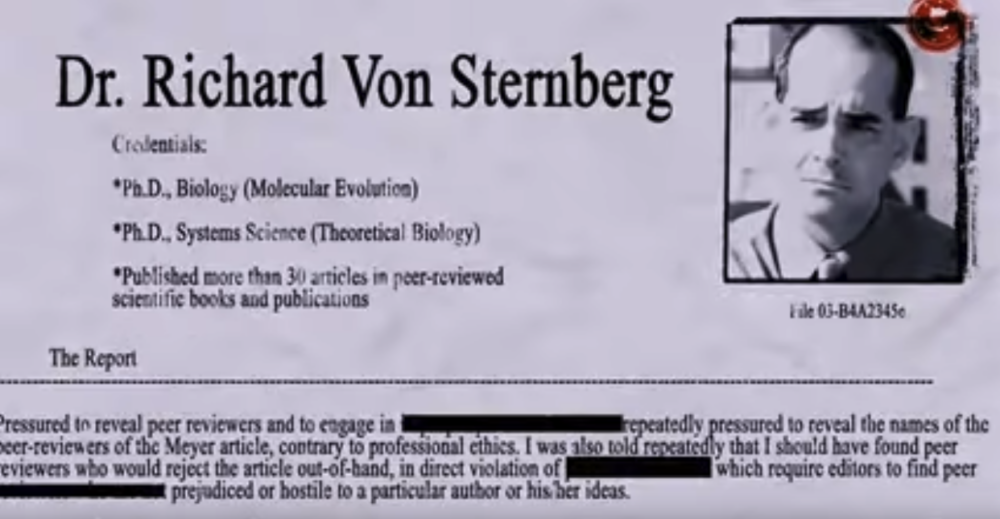
In 2004, Smithsonian Institute scientist Dr. Richard Sternberg was cancelled for daring to publish a paper by Dr. Stephen Meyer supportive of intelligent design in a peer-reviewed journal. On this ID The Future, writer and teacher Daniel Witt joins us to reflect on the controversy. Witt explains the rhetorical strategies Darwinists have used to deride intelligent design. He also reports on an encouraging trend of scientists willing to stand up to the censors and bullies who get in the way of pursuing the evidence where it leads. Read More ›
Heavenly Light
Image licensed from Adobe Stock

Not Enough Evidence: Casey Luskin on Recent Homo Naledi Claims

A recent ABC News article says the latest research about the hominid species Homo naledi "erases the idea of human exceptionalism." A new Netflix documentary suggests that humans are not that special after all. Should we believe the media hype? Or is there more to the story? On this ID The Future, host Andrew McDiarmid speaks with Dr. Casey Luskin to get an update on the Homo naledi controversy. In this episode, Dr. Luskin reviews each of the three main claims about Homo naledi made by Dr. Lee Berger and his team and gives us a summary of the strongest counter-arguments. He also gives his thoughts on the recent Netflix film. "It's very important to communicate scientific ideas to the public," says Luskin. "And I think it's great when scientists do that, when they do it carefully and responsibly and they're making sure that the evidence has been thoroughly worked out...in this case, there was a sense that they had sort of put the cart before the horse." Read More ›
eye dna biology
Image Credit: natali_mis - Adobe Stock

Casey Luskin on Successfully Defending Intelligent Design

On today’s ID the Future, Casey Luskin further discusses his recent essay, “What Is Intelligent Design and How Should We Defend It,” in the new book The Comprehensive Guide to Science and Faith. In his conversation with host Eric Anderson, Luskin rebuts the claims that intelligent design isn’t science (it is), doesn’t produce peer-reviewed research (it does), and is just a negative argument against evolution. He also offers advice on handling personal attacks and objections that you’ve never encountered before. To consider supporting the work of Discovery Institute’s Center for Science and Culture and its brave scientists, click here for options.