A Neurosurgeon and an Engineer Explore Your Designed Body
On today’s ID the Future, neurosurgeon Michael Egnor hosts systems engineer Steve Laufmann, author with physician Howard Glicksman of the new book Your Designed Body. Egnor makes the surprising confession that his medical library is full of engineering texts because at some point he discovered that engineering texts, and engineering principles, often shed more light on human physiology than did his physiology books. Egnor, then, is extraordinarily well prepared to interview Laufmann about the amazing engineering of the human body. Tune in for Part 1, and stay tuned for Parts 2 and 3.

Orphan Proteins Spell Trouble for AlphaFold 2
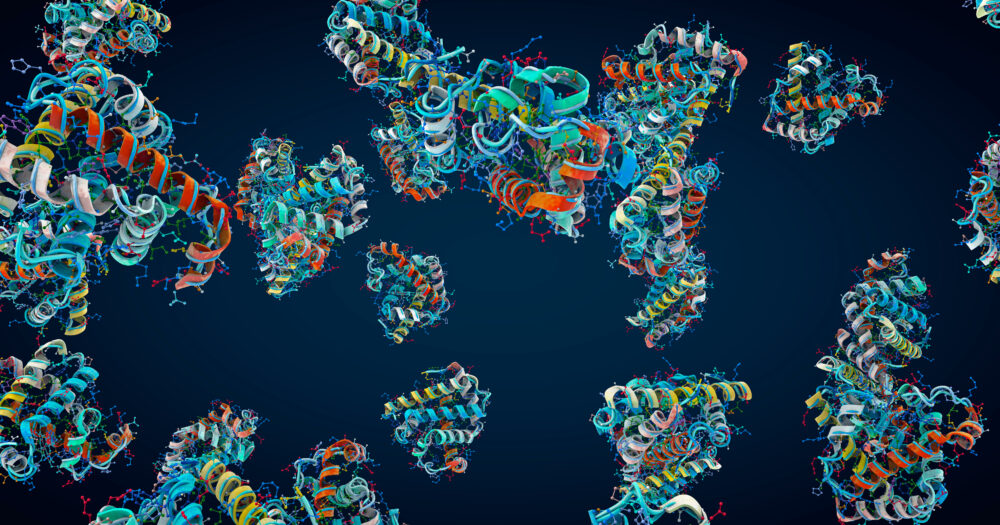
On this ID the Future, philosopher of biology Paul Nelson further explores AlphaFold 2, a cutting edge computer program from Google’s DeepMind designed to rapidly suss out important secrets in the realm of proteins, indispensable molecular biological workhorses that come in thousands of different shapes and sizes. Nelson enthuses about AlphaFold 2 but also explains why he is convinced that AlphaFold’s creators have hit a series of immovable obstacles. The watchword here—orphans. Tune in to learn what these mischievous orphan proteins are about, and what they suggest for AlphaFold, evolution, and intelligent design.

Powerful Protein Folding Algorithm AlphaFold Foiled by Singletons
Today’s ID the Future spotlights AlphaFold, an artificial intelligence program in the news for its impressive breakthroughs at predicting a protein’s 3D structure from its amino acid sequence. Philosopher of Biology Paul Nelson walks listeners through the importance of this “amazing breakthrough,” as he describes it in a recent Evolution News article; but don’t uncork the champagne bottles just yet. The reason, according to Nelson, is that while proteins, protein sequences, and protein folding promise to reveal much that is still mysterious in molecular biology, we now know that biological information involves far more than just an organism’s proteome—that is, far more than the full suite of proteins expressed by an organism. Nelson uses analogies to manmade machines and cognates Read More ›

Axe’s Not-So-Secret Guide to Making Cookies and Dragonflies
This ID the Future brings in protein scientist Douglas Axe to discuss his contribution to a new book, The Comprehensive Guide to Science and Faith. Axe and host Casey Luskin discuss Axe’s thinking on the design intuition, the evidence that it’s triggered almost universally in small children when they observe things like dragonflies or fresh-baked cookies, and why he’s convinced that this intuition is a rational one rooted in our true sense of what sorts of things require know-how for their creation. For those who retort “Science!,” Axe has some of that to offer as well. As he tells Luskin, he led an experiment at a lab in Cambridge, England, on the abilities and limits of an enzyme to evolve. The research Read More ›

New Douglas Axe Intelligent Design Course: A Sneak Peek
Today’s ID the Future offers a 20-minute sneak peek at a new online course: Douglas Axe Investigates Molecular Biology and Intelligent Design. In this podcast excerpt from the course, Dr. Axe explains why Darwinism’s idea of evolution through a series of small stepping stone mutations meets several serious problems, why the need for cleverness is inescapable for creating clever things, and how his published work in the Journal of Molecular Biology shows that the Darwinian mechanism is helpless to construct new functional protein folds, never mind whole new organisms. In the full course, he investigates proteins and how they work, the genetic code, gene recruitment, population genetics, natural selection, and much more. Along the way, he explains why natural selection Read More ›