
Stephen Meyer on the Explanatory Power of Intelligent Design

Stephen Meyer on the Intellectual Shift Away from Darwinism
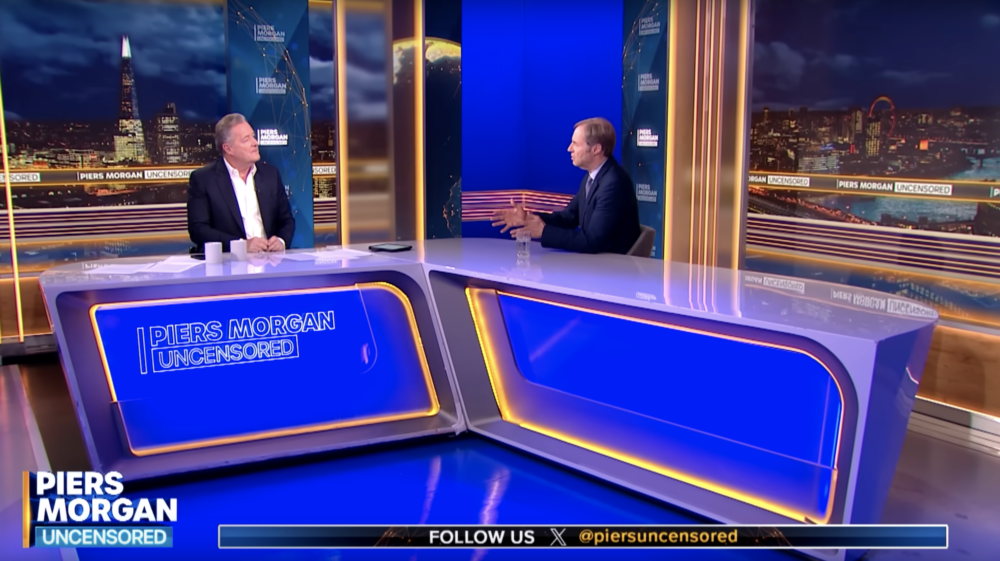
Stephen Meyer and Piers Morgan: Design, Atheism, and God
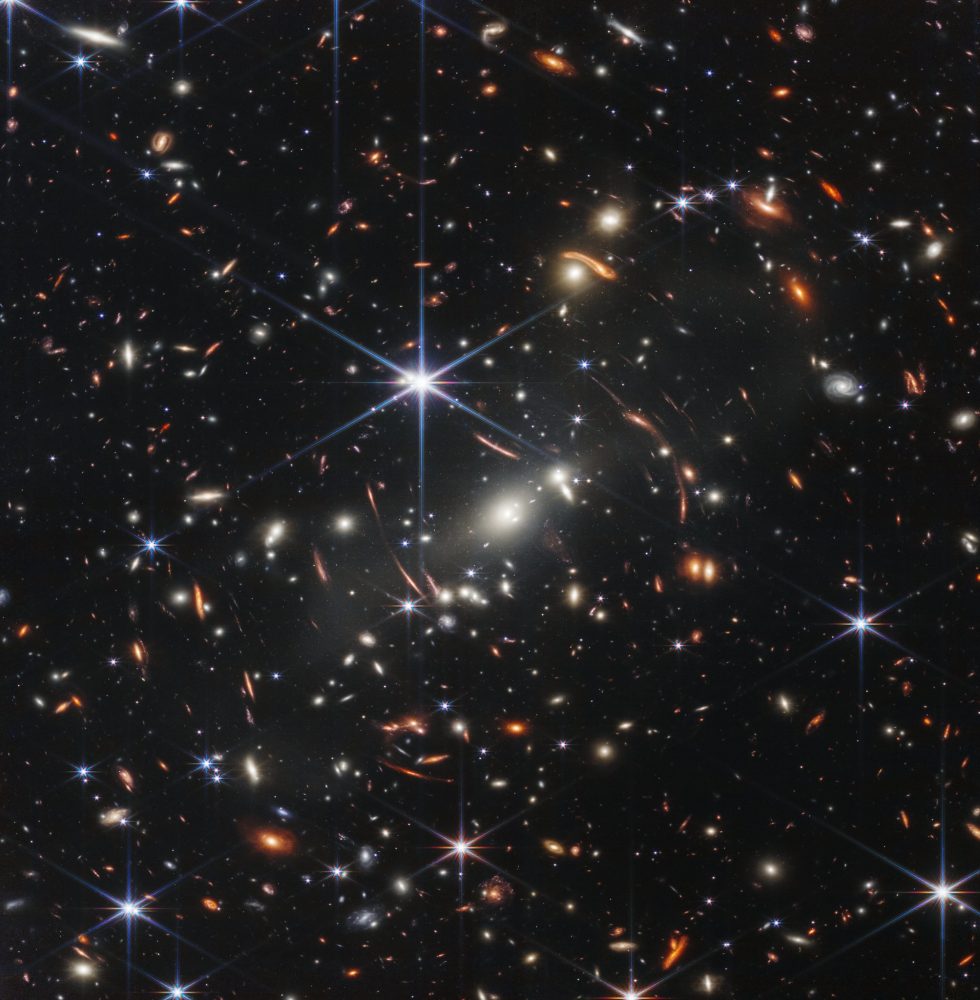
Stephen Meyer: James Webb Telescope Supports the Big Bang
On this ID The Future, Return of the God Hypothesis author Stephen Meyer again speaks with radio host Michael Medved about the extraordinarily powerful new James Webb space telescope. One researcher, Eric Lerner, has claimed that what the Webb telescope is seeing many billions of light years away (and therefore, many billions of years in the past) undercuts the Big Bang theory. But according to Meyer, the new photographs coming back from Webb actually further confirm the reality that our universe had a beginning (“the Big Bang”) and that it has been expanding ever since. What these Webb images are forcing a rethink on, Meyer says, is the conventional wisdom among cosmologists on galaxy formation in the early universe. Meyer Read More ›
Stephen Meyer: One God or Many Universes?
In this ID the Future, Stephen Meyer takes a deep dive into the case for not only intelligent design, but also for a designer of the cosmos who is immaterial, eternal, transcendent, and involved. Meyer draws on evidence for design at the origin of life, in the origin of plants and animals, and from the fine tuning of the laws and constants of chemistry and the initial conditions of the universe. He connects all this to the scientific evidence that the universe is not eternal but had a beginning—the Big Bang. What about the main materialistic alternative for explaining this suite of evidence—the idea that there is a multiverse with our universe just being one of the lucky universes with Read More ›

Casey Luskin on Why He Favors ID over Theistic Evolution
Today’s ID the Future continues intelligent design theorist Casey Luskin’s conversation with Apologetics 315 podcast hosts Brian Auten and Chad Gross. Here in Part 2, Luskin give a peek behind the scenes of ID 3.0, the current research program inspired by the intelligent design framework. Luskin is then asked to explain his reservations about theistic evolution, and Luskin points out the evidential, rhetorical, and logical problems he sees with the brand of theistic evolution advocated by Francis Collins and Biologos. What about the future of the intelligent design movement? Luskin says he’s optimistic, both because of the exciting research and publication breakthroughs of late, and because of the many converts he’s seeing to the ID framework. According to Luskin, many of these Read More ›
Andrew Klavan and Stephen Meyer Talk God and Science
On this ID the Future Stephen Meyer sits down with talk show host and bestselling novelist Andrew Klavan to discuss Meyer’s Return of the God Hypothesis. In this fast-paced conversation the pair touch on the Judeo-Christian roots of science, how fine tuning in physics and cosmology point to intelligent design, and how a great many scientists held out hope that the universe was eternal and therefore did not require a creator, but eventually threw in the towel as evidence mounted for a cosmic beginning. What about the multiverse hypothesis as an escape for atheists wishing to explain away the evidence for a cosmic designer? Meyer explains why it fails Occam’s Razor, and then he and Klavan discuss a noted atheist Read More ›

Bidding Adieu to Steven Weinberg’s Take on Science and Faith
On today’s ID the Future, Casey Luskin, associate director of Discovery Institute’s Center for Science and Culture, discusses his Evolution News article about the recently deceased Steven Weinberg. On Weinberg’s view, one of science’s social functions is to undermine religion, which he sees as superstition. Luskin takes the opposite view and points to skilled and successful scientists he got to know in Africa. He says these scientists are convinced that the supernatural is real and would find Weinberg’s secular Western rejection of the supernatural as blinkered. Luskin and host Robert Crowther also discuss a hopeful trend among some atheists toward a more civil and respectful way of engaging intelligent design, even to the point of acknowledging that design theorists are Read More ›
Pt. 4: Stephen Meyer and Skeptic Michael Shermer
This ID the Future wraps up a lively four-part series between religious skeptic Michael Shermer and Return of the God Hypothesis author and philosopher of science Stephen Meyer. Here Meyer underscores the fact that every worldview must posit something as the prime reality, and he argues that positing mind (rather than matter) as the prime reality solves far more problems in science, and not just in origins science. What about the idea of a multiverse to explain the fine tuning of the laws and constants of physics? Meyer concedes that this is a solution of sorts, but it comes at a tremendous cost, which he explains. That’s just a taste of where Meyer and Shermer go in this final segment. Read More ›