Scout or soldier? When it comes to our opinions and beliefs, there's a bit of both in all of us. But which mindset is more beneficial? On this ID The Future, host Andrew McDiarmid welcomes Dr. Jonathan McLatchie to discuss the characteristics of a scout mindset and how it relates to the debate over evolution and the evidence for intelligent design. Get full show notes at idthefuture.com. Read More ›
To understand the limitations of evolutionary mechanisms, we have to "bite the bullet of complexity," as biochemist Michael Behe writes. And to appreciate complexity, we have to experience it. On this ID The Future, Dr. Jonathan McLatchie takes us on a deep dive into the structure and biochemistry of muscles to gain a better understanding of their incredible design properties. Read More ›
Happy family together, parents with their little child at sunset.
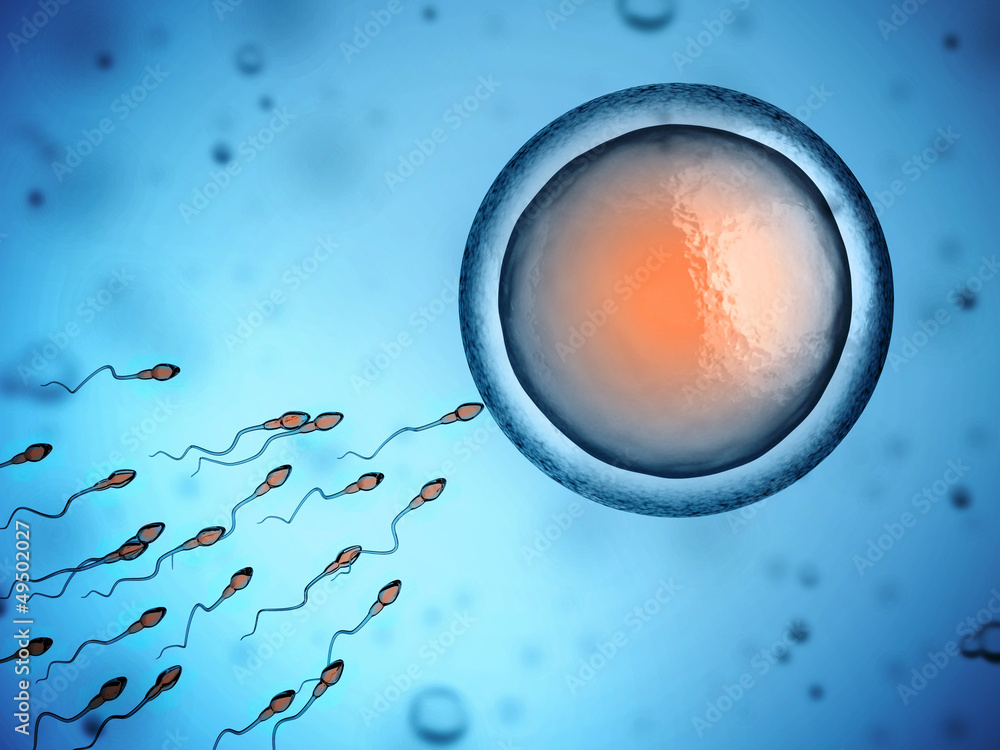
In his landmark book Darwin's Black Box, biochemist Michael Behe wrote that "to appreciate complexity, you have to experience it." On today's ID The Future, we conclude a three-part series with Dr. Jonathan McLatchie that dives into the complexity and design of sexual reproduction. In Part 3, Dr. McLatchie explains the design features of erectile function, the ejaculatory reflex, sperm chemotaxis, and the female egg cell. McLatchie reminds listeners how all separate parts work together as an irreducibly complex whole system. Be sure to catch Parts 1 and 2 of this informative series! Read More ›
IDTF 1851 McLatchie Sex Series Post Graphic Edited
Sexual reproduction depends on an irreducibly complex core of components for its success. But can we really credit a gradual evolutionary process for this remarkable system? On this ID The Future, host Andrew McDiarmid continues his discussion with Dr. Jonathan McLatchie on why sex is the queen of problems for evolutionary theory and why instead it bears the hallmarks of a system governed by forethought and engineering. Dr. McLatchie covers two more components and explains why they are beyond the reach of a Darwinian process. This is Part 2 of 3. Read More ›
Sexual reproduction ought to be a recipe for evolutionary disaster. It's a waste of resources producing no short-term advantages. It demands an entirely different form of cell division and requires highly designed interconnected components to succeed. And yet, sex reigns supreme in the biological world. On this ID The Future, Dr. Jonathan McLatchie begins a series on why sex is the queen of problems for evolutionary theory and why instead it bears the hallmarks of a system governed by forethought and engineering. This is Part 1 of 3. Read More ›
Woman listening to music at home during coronavirus pandemic
Cerumen, tympanic membranes, and ossicles, oh my! On this ID The Future, lend us your ears as host Andrew McDiarmid invites Dr. Jonathan McLatchie to give us a tour of our magnificent sense of hearing. Dr. McLatchie reviews the anatomy of the human ear with all its interconnected parts, from the oracle (ear lobe) to the curly cochlea in the inner ear. Along the way, he explains why intelligent design is a more reasonable explanation for our sense of hearing than a blind Darwinian evolutionary process. Read More ›
If the phrase "Bayesian calculus" makes you run for the hills, you're not alone! Bayesian logic can sound intimidating at first, but if you give it a little time, you'll understand how useful it can be to evaluate the evidence for design in the natural world. On this ID The Future, Dr. Jonathan McLatchie gives us a beginner's guide to Bayesian thinking and teaches us how it can be used to build a strong cumulative case for intelligent design, as well as how we can use it in our everyday lives. Enjoying the podcast? Leave a written review at Apple Podcasts to help new listeners find the show! Read More ›
The RNA world is proposed by some to explain how early life began before DNA. But is RNA capable of maintaining a life-friendly self-replication rate? On this ID The Future, host Andrew McDiarmid welcomes back Dr. Jonathan McLatchie to discuss another headache for the RNA world scenario. Before a trial and error process like natural selection can even get started, self-replicating molecules must have a minimal accuracy rate to copy genetic material effectively. The required fidelity rate is estimated to be 2%. Any error rate higher than that results in error catastrophe for organisms. The average error rate in RNA copying is estimated to be around 17%, vastly higher than the estimated maximum error threshold for survival. McLatchie explains the implications of this for chemical evolutionary theories like the RNA world hypothesis. He also explains how a Bayesian approach to this evidence can provide us with the likeliest explanation for the origin of biological life. "The sorts of features that we observe in life are not particularly surprising if we suppose that a mind is involved," says McLatchie. But things like minimal self-replication fidelity are wildly surprising on a naturalistic hypothesis. Read More ›
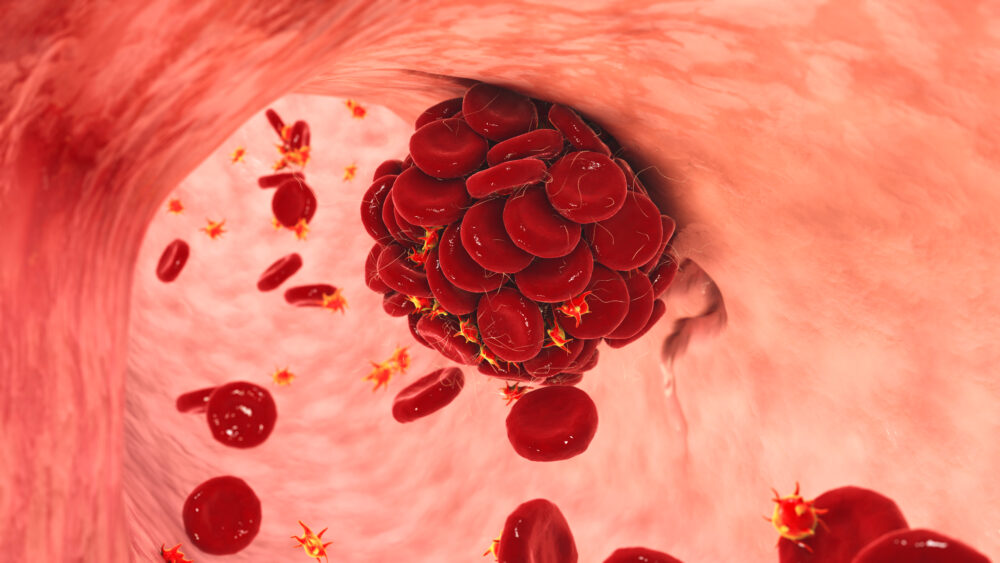
The vertebrate blood coagulation system is a delicately regulated marvel that helps maintain the integrity of the circulatory system. Over 20 years ago, Michael Behe argued it was an example of an irreducibly complex system. Does Behe's claim still hold up today? On this ID The Future, host Andrew McDiarmid speaks with fellow Scotsman Dr. Jonathan McLatchie about his new article series examining recent claims that an evolutionary pathway has been identified for this incredible process. McLatchie is a fellow and resident biologist at Discovery Institute’s Center for Science & Culture. He holds a Bachelor’s degree in Forensic Biology, a Masters degree in Evolutionary Biology, a second Master’s degree in Medical and Molecular Bioscience, and a PhD in Evolutionary Biology. In their conversation, McLatchie describes how the blood clotting cascade works and why it poses a challenge for evolutionary theory. "Evolution doesn't perform particularly well when you need to make multiple co-dependent mutations," he says. McLatchie explains just how delicately regulated the blood coagulation system is and defends Behe's argument for the cascade, saying it exhibits irreducible complexity in spades. McLatchie also critiques recent proposals by the late biochemist Dr. Russel Doolittle, who claims to show a step-by-step evolution of vertebrate blood coagulation. McLatchie notes that Doolittle helps himself to irreducibly complex components as he attempts to explain its origin, inadvertently helping to confirm Behe's arguments in the process. Read McLatchie's 3-part article series on the blood clotting cascade at evolutionnews.org. Read More ›
On this episode, Dr. Jonathan McLatchie takes us on a deep dive into two classic examples of irreducibly complex systems - the bacterial flagellar motor and the process of DNA replication in cell division. He explains the intricacies of each process and shows why each stands up to scrutiny as a true example of irreducible complexity. Along the way, he explains why the RNA world scenario isn't likely to be the answer to irreducible complexity that materialists are looking for. And near the end, be sure to listen to McLatchie explain the "likelihood ratio"of the evidence for irreducible complexity, a top-heavy ratio he says strongly supports a design hypothesis. This is Part 1 of a 2-part interview. Read More ›