An Excerpt from Marcos Eberlin’s Groundbreaking New Book Foresight
On this episode of ID the Future, Andrew McDiarmid reads from Foresight: How the Chemistry of Life Reveals Planning and Purpose by distinguished Brazilian scientist Marcos Eberlin. In this excerpt, Eberlin introduces the necessity of foresight and planning in nature by showing how every cell needs a sophisticated barrier around it that knows how to keep harmful substances out and let helpful ones in. That membrane’s job is complicated by the fact that oxygen, like many other substances, can be harmful or helpful depending on when, where, and how much. So even the very first cells’ success could only be explained by a designer’s foresight. Foresight, it’s worth noting, has been endorsed by three Nobel Laureate scientists. It’s available for purchase at Amazon and other stores.
Read More ›
Eric Metaxas on the Miracle of a Fine-Tuned Universe, Pt. 2
On today’s episode of ID the Future we hear the second half of a talk by bestselling author Eric Metaxas at the January 2019 Dallas Conference on Science and Faith. He’s continuing his discussion on the wonder of our fine-tuned universe, as he explained in a Wall Street Journal article that is “unofficially, the most popular article in Wall Street Journal history,” and in his book Miracles: What They Are, Why They Happen, and How They Can Change Your Life. He also tells what he learned through the response to his WSJ article: People are hungry for this kind of information.
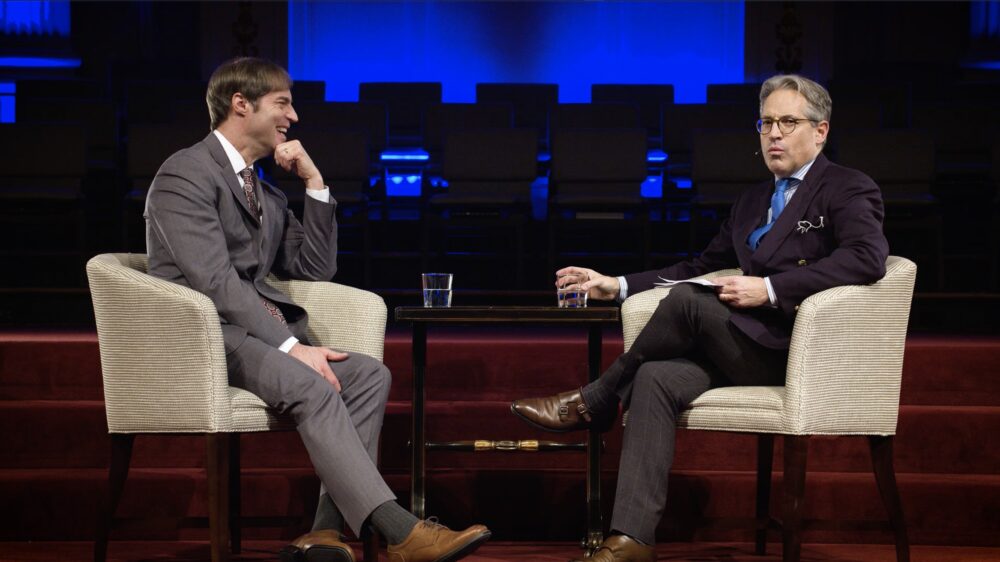
Eric Metaxas on the Miracle of a Fine-Tuned Universe, Pt. 1
Today’s episode of ID the Future features Part 1 of a talk bestselling author Eric Metaxas gave at the 2019 Dallas Conference on Science and Faith in Dallas. His topic was the miracle of our fine-tuned universe, taken in part from his book Miracles: What They Are, Why They Happen, and How They Can Change Your Life. Metaxas also discusses another thing he finds amazing: that so many people think the progress of science means the retreat of religion.
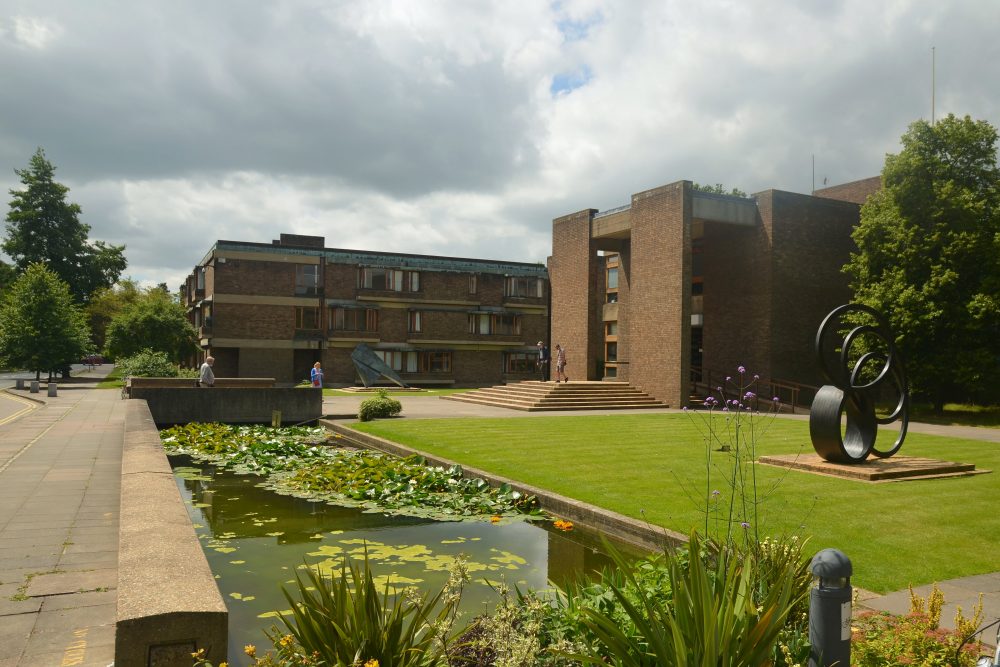
First the Royal Society Meeting, Now Cambridge’s “Evolution Evolves”: Paul Nelson Reports
On this episode of ID the Future, intelligent design proponent and philosopher of biology Paul Nelson reports on a recent conference he attended at the University of Cambridge, “Evolution Evolving: An International Conference on the Evolving Mechanisms and Theoretical Framework of Evolutionary Biology.” Scientists from around the globe gathered under the operating assumption that the modern evolutionary synthesis is sorely lacking. As with many of the biologists who attended the 2016 Royal Society meeting “New Trends in Evolutionary Biology,” many of the attendees of the Cambridge event find themselves disenchanted with Neo-Darwinism and weighing their options. They’re still not looking outside the walls of the “City of Naturalism,” Nelson says, but it’s fascinating and encouraging to witness the increased openness Read More ›
Marcos Eberlin: For Water, Lightning and a Living Planet, Just Add Foresight
On this episode of ID the Future, biologist Jonathan Wells speaks again with distinguished Brazilian scientist Marcos Eberlin about Eberlin’s new book Foresight: How the Chemistry of Life Reveals Planning and Purpose.
Read More ›
Guillermo Gonzalez and Jay Richards on Recent Discoveries Supporting The Privileged Planet
On this episode of ID the Future, Jay Richards and astrobiologist Guillermo Gonzalez discuss several discoveries made in the past 15 years supporting their conclusions in The Privileged Planet: How Our Place in the Cosmos Is Designed for Discovery. Gonzalez shows how the book’s thesis — that conditions for life and scientific discovery meet on earth to a fine-tuned degree that strongly points toward design — has been confirmed multiple times.
Distinguished Chemist Marcos Eberlin Explains How Life’s Problem-Solving Engineering Requires Foresight
On this episode of ID the Future, Jonathan Wells speaks with distinguished Brazilian chemist Marcos Eberlin about Eberlin’s new book Foresight: How the Chemistry of Life Reveals Planning and Purpose. Eberlin is a world leader in the field of mass spectrometry, and the book is endorsed by three Nobel laureates.
Read More ›
Günter Bechly on the Latest Fossil Find Confusing the Human “Evolutionary Tree”
On this episode of ID the Future, Andrew McDiarmid interviews paleontologist Günter Bechly about the latest hominin fossil that’s once again “rewriting human evolutionary history.” News of the find reached the media early this month. Dubbed homo luzonensis due to discovery on the Philippine island of Luzon, it poses yet another challenge to neo-Darwinian theory. A fossil like this one should have been found in Africa, not the Philippines. It should have been a lot older than it is, and it confuses the human evolutionary tree even more than before. “Darwinian theory predicts there should be one true tree of life that should converge,” says Bechly, “but the fossil record respectfully disagrees, again and again.”

Guillermo Gonzalez on What’s Changed in the 15 Years Since The Privileged Planet
On this episode of ID the Future, host Jay Richards and astronomer Guillermo Gonzalez, authors of The Privileged Planet: How Our Place in the Cosmos Is Designed for Discovery, discuss what’s changed in the 15 years since the book first appeared. One big change, the number of exo-planets discovered has exploded from 200 or so to several thousand. Gonzalez walks through this and other exciting recent advances in astronomy, and the two discuss how these new discoveries bear on the predictions and arguments they advanced in their book. Please consider donating to support the IDTF Podcast.