
ID the Future Intelligent Design, Evolution, and Science Podcast
Author

Andrew McDiarmid

Screenshot-2026-03-30-at-10408PM

The Cultural Mythology and Scientific Frailty of Darwinism

Why has Darwin’s theory of evolution succeeded so dramatically? The official story, of course, is that it provides a sweeping and complete explanation of the development of life on Earth, with the claim that it’s rock solid because it’s grounded in an abundance of evidence. But when we take a closer look at that official story, we see that it actually resembles more of a myth, a legendary origin story that has been championed and propped up successfully for over 160 years. On this ID The Future, host Andrew McDiarmid treats you to a reading from False Messiah, a book by Neil Thomas recently published by Discovery Institute Press. The book provides valuable insight around the mythology of Darwinism as well as the mythical figure of Charles Darwin himself. To help us understand why Darwinism has persisted for so long, it’s helpful to take a closer look at the forces that moved it forward and upheld it, lest we be tempted to think it has succeed purely on the strength of its scientific arguments. Read More ›
wormhole-or-black-hole-abstract-scene-of-overcoming-the-temp-102725684-stockpack-adobestock
wormhole or black hole, abstract scene of overcoming the temporary space in cosmos
Image Credit: kerenby - Adobe Stock

Why the “Universe From Nothing” Model Points to Intelligent Design

Did our universe come from nothing, as some physicists have proposed? On this ID The Future, host Andrew McDiarmid critiques the audacious claim that our universe popped into existence out of nothing. What is nothing? What isn’t nothing? And how does the universe from nothing claim actually imply intelligent design? McDiarmid shares audio from the Science Uprising video series, as well a portion of an interview with Dr. Stephen Meyer, to help answer these questions. Read More ›
woman-locking-bicycle-with-combination-lock-stockpack-adobe-250900812-stockpack-adobe_stock
Woman locking bicycle with combination lock
Image Credit: Budimir Jevtic - Adobe Stock

Why Evolution’s Selection/Mutation Mechanism Fails
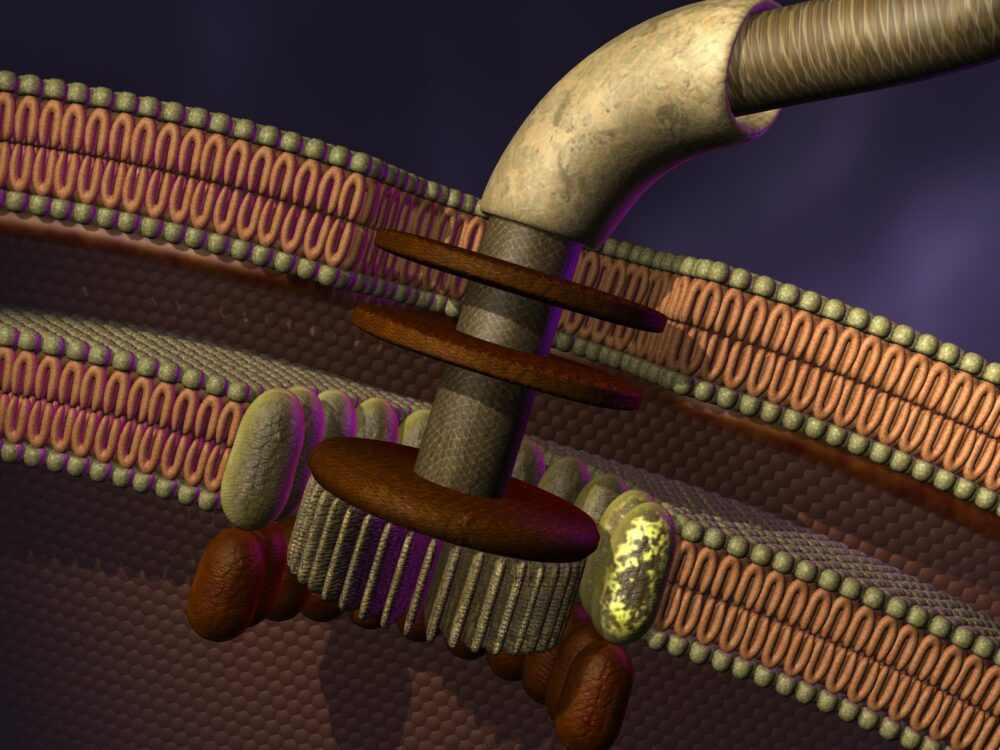
What part of neo-Darwinian evolution is actually random? Can random mutational processes account for the new information needed to drive the diversity of life on Earth? On this ID The Future, host Andrew McDiarmid reads selections from Dr. Stephen Meyer and Dr. Casey Luskin to find answers to these questions. If you want the confidence to be able to tell your friends, family, and associates why modern evolutionary theory fails to account for the origin and diversity of life on Earth, you’ve got to, as Michael Behe says, “bite the bullet of complexity” and learn why evolution’s selection/mutation mechanism fails to deliver the goods. This commentary reviews a key tenet of the evolutionary perspective and shows why it weakens the argument for a naturalistic explanation for life on Earth. Read More ›
statue-of-charles-darwin-stockpack-adobe-stock-623495976-stockpack-adobe_stock
statue of charles darwin
Image Credit: Nick - Adobe Stock

Wrestling with Darwin: A Reading From Fr. Martin Hilbert’s New Book
When Charles Darwin formulated his theory of evolution, he offered up a new god and a new understanding of mankind. But does his creation myth satisfy the scientific evidence we have today for the design and complexity of life? I'm Andrew McDiarmid. On this ID The Future, I read an excerpt of a new book that exposes the inadequacy of Darwinism and dispels the darkness of Darwinian materialism. A Catholic Case for Intelligent Design, by Father Martin Hilbert, is now available from Discovery Institute Press. Read More ›
IDTF 1968 McDiarmid Reading of Samuel Wilberforce Review of Origin of Species Post Graphic

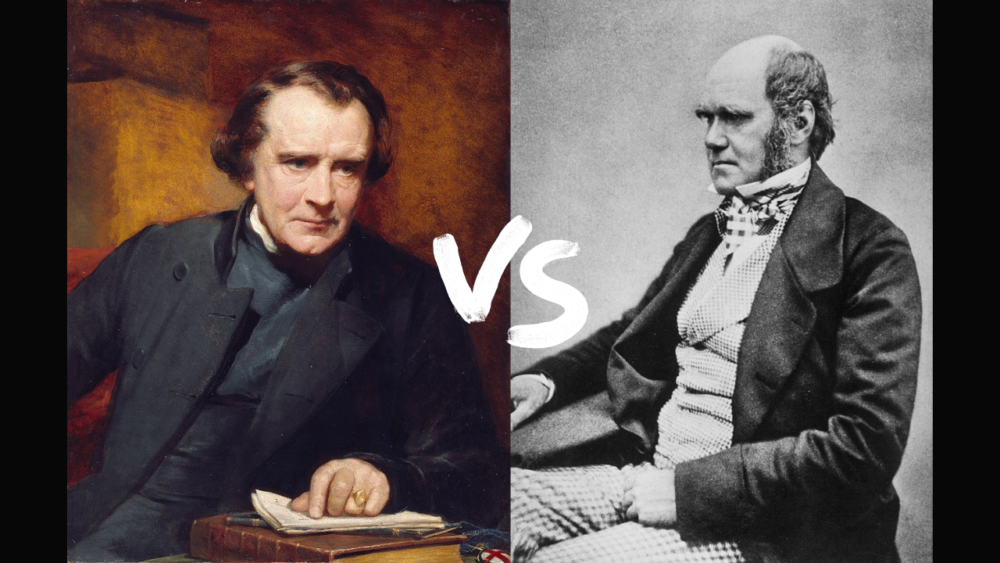
Samuel Wilberforce Critiques the ‘Unbounded Assumptions’ of Darwin’s Theory of Evolution

In June 1860, just seven months after Charles Darwin published On the Origin of Species, three men hotly debated the merits of Darwin's argument at a meeting of the British Association. Biologist Thomas Henry Huxley and botanist Joseph Hooker defended Darwin's theory. English bishop, speaker, and writer Samuel Wilberforce critiqued it. And though he was a man of the cloth, Wilberforce did not build a theological case against Darwin. Rather, he evaluated the argument for natural selection on scientific grounds, exposing its "loose statements and unfounded speculations" by weighing it "in the simple scales of logical examination." On this ID The Future, host Andrew McDiarmid treats you to excerpts from Wilberforce's powerful critique, published as a review a month after the debate in Quarterly Review. Read More ›
happy-family-travel-in-mountains-at-sunset-stockpack-adobe-stock
happy family travel in mountains at sunset
Image Credit: nadezhda1906 - Adobe Stock

No Place Like Home: A Reading From The Privileged Planet

On this episode of ID The Future, host Andrew McDiarmid reads an exclusive excerpt from the newly revised, rewritten, and updated twentieth anniversary edition of The Privileged Planet. In 2004, astronomer Dr. Guillermo Gonzalez and author Dr. Jay Richards issued a daring hypothesis: that a pattern exists between the requirements for advanced life in the universe and the requirements for fruitful scientific discovery. They argued that this pattern was more conspiracy than coincidence. Now, twenty years later, a new edition of The Privileged Planet brings fresh analysis, new supporting evidence, and a completely revised text. In this episode, McDiarmid reads the Foreword to the 2024 Edition and the Introduction to the book. Read More ›
man-in-field-with-question-mark-stockpack-adobe-stock
Man in field with question mark
Image Credit: Alexandr - Adobe Stock

The Imploding of an Atheist Professor’s Worldview

For 25 years, Dr. John D. Wise considered Darwinian evolution the most plausible explanation for life's origin and development. But as he studied the latest evidence in molecular biology, genetics, astronomy, and other fields, he began to realize that modern science was confirming many of the predictions and arguments of intelligent design. On this ID The Future, host Andrew McDiarmid talks with professor and author Dr. John D. Wise about his surprising journey from atheism to Christianity. Read More ›
Exotic orchid set. Botanical vector vintage illustration. Design elements. Colorful.
Image licensed from iStock

A Reading From Darwin’s Bluff

Charles Darwin penned three-quarters of a sequel to his famous book On the Origin of Species, but he never finished or published it. Why not? On this ID The Future, we're pleased to bring you an exclusive excerpt from author and professor Dr. Robert Shedinger's new book Darwin's Bluff: The Mystery of the Book Darwin Never Finished. This exclusive reading covers the Introduction to the book and a portion of Ch. 6. Get your copy at www.discovery.org/bluff. Read More ›
Parables From Nature Getty Profile 1600x900px Graphic
Images in the Public Domain

Parables from Nature: A Profile of Margaret Gatty

She was born the same year as Charles Darwin. Like him, she studied nature and wrote books. But while Darwin staked his life's work on the power of natural selection, she recognized the evidence of intelligent design in nature and living organisms. On this ID The Future, host Andrew McDiarmid shares his profile of 19th century naturalist and children's author Margaret Gatty. Here, McDiarmid reports on Gatty's life and work within the framework of Darwin's, to show where both were similar as well as where they diverged. The result is a better understanding of 19th century Britain during a crucial chapter in the history of biology, and indeed, in the history of human ideas. Read More ›
bull
illustration of a fighting bull, smoky environment, image generated by AI
Image Credit: Jorge Ferreiro - Adobe Stock

Ruminants, Moon Watchers Bedevil Darwin

On today’s ID the Future host Andrew McDiarmid brings listeners a couple of fascinating recent articles from Evolution News & Science Today by David Coppedge. The first is “Animals Tune Behavior by  Lunar Cycle; but How?” The second article is “Darwin, We Have a Problem: Horse Teeth Are Not Less Evolved.” In the first, some ingenious molecular engineering crops up in widely divergent creatures, giving them some impressive abilities to read lunar cycles. The evolutionists’ go-to explanation is “convergent evolution,” an incantation that fails to explain how something like this could have evolved even once, much less multiple separate times. And in the second, a much-beloved story of ruminant tooth evolution gets a kick in the teeth from a series Read More ›