
ID the Future Intelligent Design, Evolution, and Science Podcast
Topic

On the Origin of Species

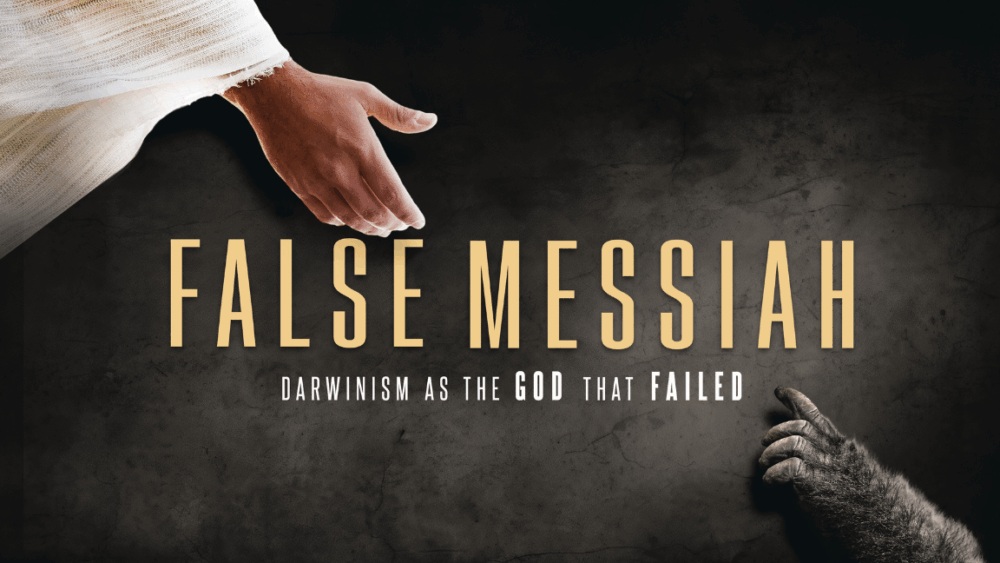
False-Messiah-Landscape-Graphic
Image courtesy Discovery Institute.

Neil Thomas on the Internal Flaws & Historical Roots of Darwinism

It might surprise you to learn that Charles Darwin's theory of evolution by natural selection did not triumph on purely scientific grounds. There are other reasons beyond empirical science that gave it broad acceptance and enduring popularity. On today's ID The Future, host Andrew McDiarmid unpacks those reasons as he begins a conversation with professor emeritus and author Neil Thomas about his new book False Messiah: Darwinism As the God That Failed. Over two episodes, Thomas discusses the conceptual flaws and historical roots of the theory, the responses of major early dissenters of the theory, and how modern science is undermining the Enlightenment worldview upon which Darwinism relies. This is Part 1 of a two-part conversation. Look for Part 2 in a separate episode. Read More ›
space-and-galaxy-gas-dust-light-speed-moving-travel-colorful-516694438-stockpack-adobestock
Space and Galaxy gas dust light speed moving travel colorful. Elements of this image furnished by NASA.
Image Credit: Quality Stock Arts - Adobe Stock

From Fantastic Four to First Causes: Why Science Has Eclipsed Darwin

If you noticed a copy of Charles Darwin’s famous nineteenth-century volume On The Origin of Species in someone's house, what would you think? Perhaps they’re committed materialists. Perhaps they simply admire Darwin’s work as a naturalist. Or perhaps they keep it around as a cautionary tale about the dangers of scientific hubris. Either way, you’d want to consider whether their experiences of the world around them matched their scientific worldview. Today on ID The Future, host Andrew McDiarmid explores the tenets of scientific materialism to see if they match our observations of the world around us. McDiarmid also shares a clip from Dr. Stephen Meyer as he highlights just one of the scientific discoveries of the last century showing that the 19th century science that produced today's scientific atheism has been eclipsed. Read More ›
cell-division-stages-of-mitosis-stockpack-adobe-stock-87111052-stockpack-adobe_stock
Cell Division Stages of Mitosis
Image Credit: darnell_vfx - Adobe Stock

McLatchie: Why Cell Division Challenges Darwinism

One of the most incredible features of cellular life is the capability of self-replication. But can a Darwinian mechanism take the credit for the origin and design of the cell division process? On this episode of ID The Future, host Andrew McDiarmid concludes a four-part series with Dr. Jonathan McLatchie on the intelligent design and irreducible complexity of eukaryotic cell division. In his recent paper on eukaryotic cell division, Dr. McLatchie quotes a Latin expression Darwin uses in his famous book On The Origin of Species to describe natural selection: natura non facit saltus: nature does not make jumps. That’s the built-in limitation of Darwinian processes: by default they are stepwise and gradual. And of course, Darwin himself acknowledged this Read More ›
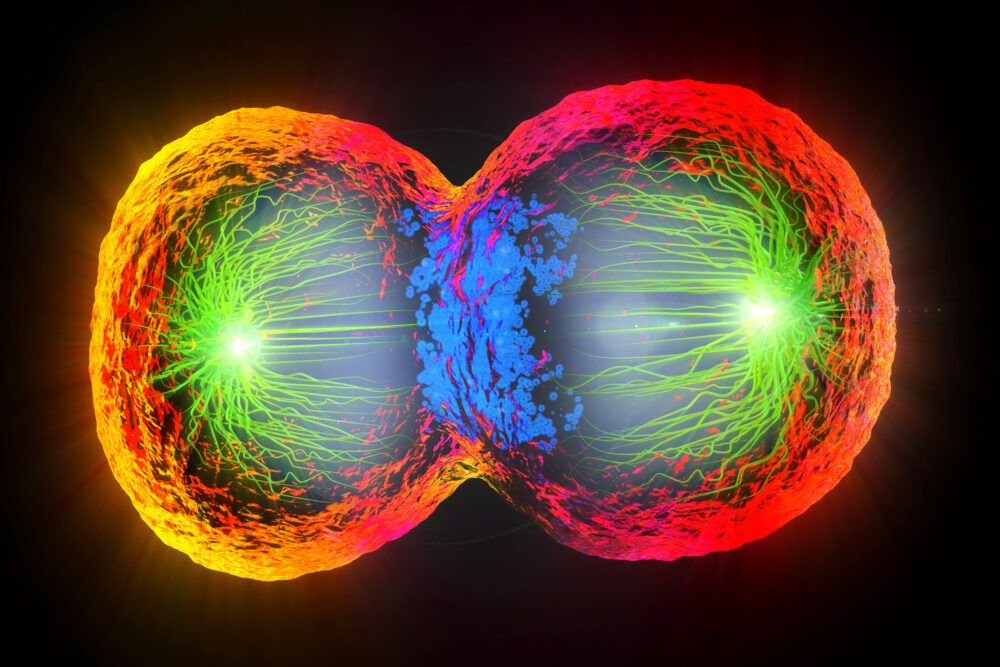
3d-illustration-of-colorful-cell-division-cell-membrane-and-195847620-stockpack-adobe_stock
3d illustration of colorful cell division, cell membrane and splitting nucleus
Image Credit: Christoph Burgstedt - Adobe Stock

McLatchie: Intelligent Design in the Eukaryotic Cell Cycle
On this ID The Future, host Andrew McDiarmid begins a short series with Dr. Jonathan McLatchie delving into the remarkable design and irreducible complexity of the eukaryotic cell cycle. The pair review the differences between prokaryotic and eukaryotic cells, the phases involved in eukaryotic cell division, and the concept of irreducible complexity. They explore how various components of the cell division process, such as kinetochores and microtubules, are essential for successful mitosis and why these systems are more likely the product of intelligent design rather than an unguided evolutionary process. Read More ›
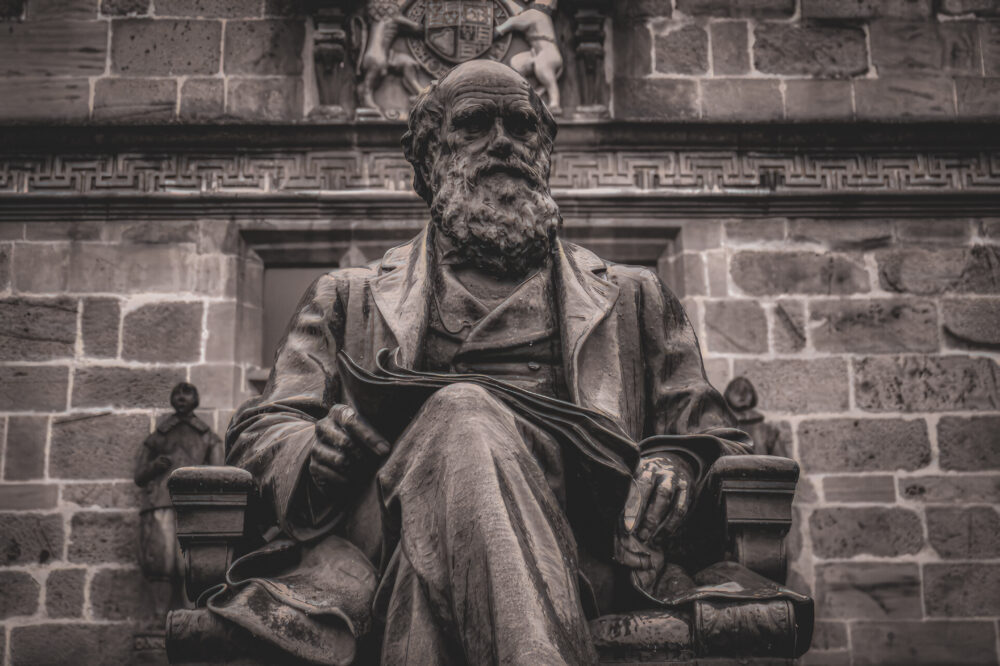
statue-of-charles-darwin-stockpack-adobe-stock-623495976-stockpack-adobe_stock
statue of charles darwin
Image Credit: Nick - Adobe Stock

Wrestling with Darwin: A Reading From Fr. Martin Hilbert’s New Book

When Charles Darwin formulated his theory of evolution, he offered up a new god and a new understanding of mankind. But does his creation myth satisfy the scientific evidence we have today for the design and complexity of life? I'm Andrew McDiarmid. On this ID The Future, I read an excerpt of a new book that exposes the inadequacy of Darwinism and dispels the darkness of Darwinian materialism. A Catholic Case for Intelligent Design, by Father Martin Hilbert, is now available from Discovery Institute Press. Read More ›
IDTF 1979 Berlinski and Meyer Insider's Briefing Conversation Part 1 Podcast Post Graphic Enhanced

The Deniable Darwin: Stephen Meyer Interviews David Berlinski
On this ID The Future, philosopher of science and bestselling author Stephen Meyer invites us to join him for an intimate conversation with one of his dearest friends and longest-standing colleagues: mathematician, writer, and thinker Dr. David Berlinski. The occasion for the exchange was a recent gathering of Discovery Institute supporters and colleagues in Cambridge, England. In Part 1, Berlinski shares the harrowing story of how his parents survived the Holocaust and immigrated to New York, how he learned mathematics, and when he began to take an interest in the mathematical challenges to Darwinian evolution. Read More ›
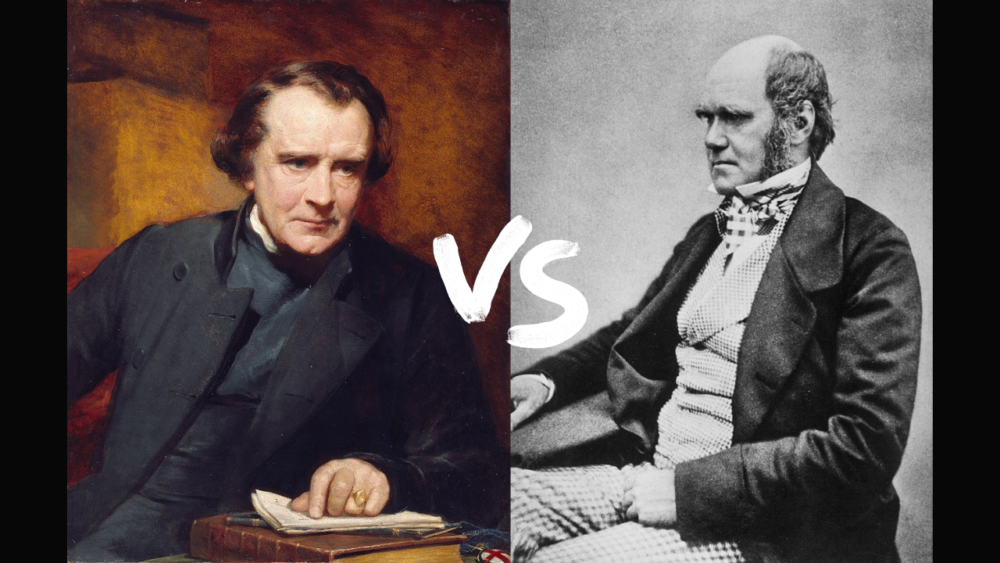
IDTF 1968 McDiarmid Reading of Samuel Wilberforce Review of Origin of Species Post Graphic

Samuel Wilberforce Critiques the ‘Unbounded Assumptions’ of Darwin’s Theory of Evolution
In June 1860, just seven months after Charles Darwin published On the Origin of Species, three men hotly debated the merits of Darwin's argument at a meeting of the British Association. Biologist Thomas Henry Huxley and botanist Joseph Hooker defended Darwin's theory. English bishop, speaker, and writer Samuel Wilberforce critiqued it. And though he was a man of the cloth, Wilberforce did not build a theological case against Darwin. Rather, he evaluated the argument for natural selection on scientific grounds, exposing its "loose statements and unfounded speculations" by weighing it "in the simple scales of logical examination." On this ID The Future, host Andrew McDiarmid treats you to excerpts from Wilberforce's powerful critique, published as a review a month after the debate in Quarterly Review. Read More ›
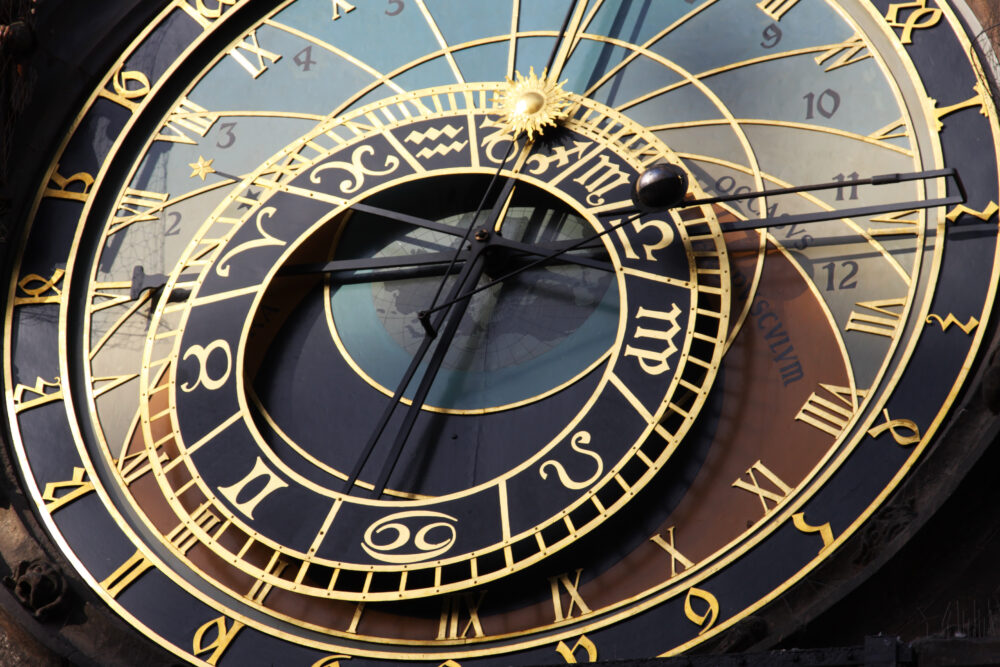
Astronomical clock in Czech capital Prague
Image licensed from Adobe Stock

Online Course Explores History of Science and Christianity

Did Christianity help or hinder the rise of science? On this ID The Future, host Andrew McDiarmid speaks with Dr. Melissa Cain Travis about her latest online course Science & Christianity: An Historical Exploration. The live 6-week course offered this spring gives a small cohort of students the opportunity to dive into the historical relationship between science and Christianity and the skill to address the distorted historical narratives that persist in the contemporary conversation. Read More ›
Exotic orchid set. Botanical vector vintage illustration. Design elements. Colorful.
Image licensed from iStock

A Reading From Darwin’s Bluff

Charles Darwin penned three-quarters of a sequel to his famous book On the Origin of Species, but he never finished or published it. Why not? On this ID The Future, we're pleased to bring you an exclusive excerpt from author and professor Dr. Robert Shedinger's new book Darwin's Bluff: The Mystery of the Book Darwin Never Finished. This exclusive reading covers the Introduction to the book and a portion of Ch. 6. Get your copy at www.discovery.org/bluff. Read More ›
Origin of Species - Charles Darwin
Image licensed from iStock/duncan1890

Demythologizing Darwin: More on Darwin’s Bluff

Under the weight of modern scientific evidence, Darwin's theory of evolution is struggling. To better understand why, it's helpful to peel back the mythological status of its founder, Charles Darwin, and see the 19th century naturalist for who he really was. On this ID The Future, host Andrew McDiarmid concludes his conversation with author and professor Dr. Robert Shedinger about his new book Darwin's Bluff: The Mystery of the Book Darwin Never Finished. This is Part 2 of a two-part conversation. Don't miss Part 1! Read More ›