Cerumen, tympanic membranes, and ossicles, oh my! On this ID The Future, lend us your ears as host Andrew McDiarmid invites Dr. Jonathan McLatchie to give us a tour of our magnificent sense of hearing. Dr. McLatchie reviews the anatomy of the human ear with all its interconnected parts, from the oracle (ear lobe) to the curly cochlea in the inner ear. Along the way, he explains why intelligent design is a more reasonable explanation for our sense of hearing than a blind Darwinian evolutionary process. Read More ›
Does the vertebrate eye make more sense as the product of engineering or unguided evolutionary processes? On this ID The Future, host Andrew McDiarmid concludes his two-part conversation with physicist Brian Miller about the intelligent design of the vertebrate eye. Did you know your brain gives you a glimpse of the future before you get to it? And what about the claim that human eyes are badly designed? Dr. Miller discusses all this and more. This is Part 2 of a two-part interview. Visit idthefuture.com for show notes and full archive! Read More ›
Young mother and her daughter look at each other with love in the countryside
The gift of our vision is easy to take for granted. Yet, the more we dig into this amazingly intricate system, the more grateful we might get. On this ID The Future, host Andrew McDiarmid begins a two-part conversation with physicist Brian Miller about the intelligent design of the vertebrate eye. Dr. Miller reviews the evolutionary scenario for the origins of human vision, explaining where it collapses for lack of empirical evidence. Then he explains why it's helpful to approach biological systems from an engineering standpoint. This is Part 1 of a two-part conversation. Read More ›
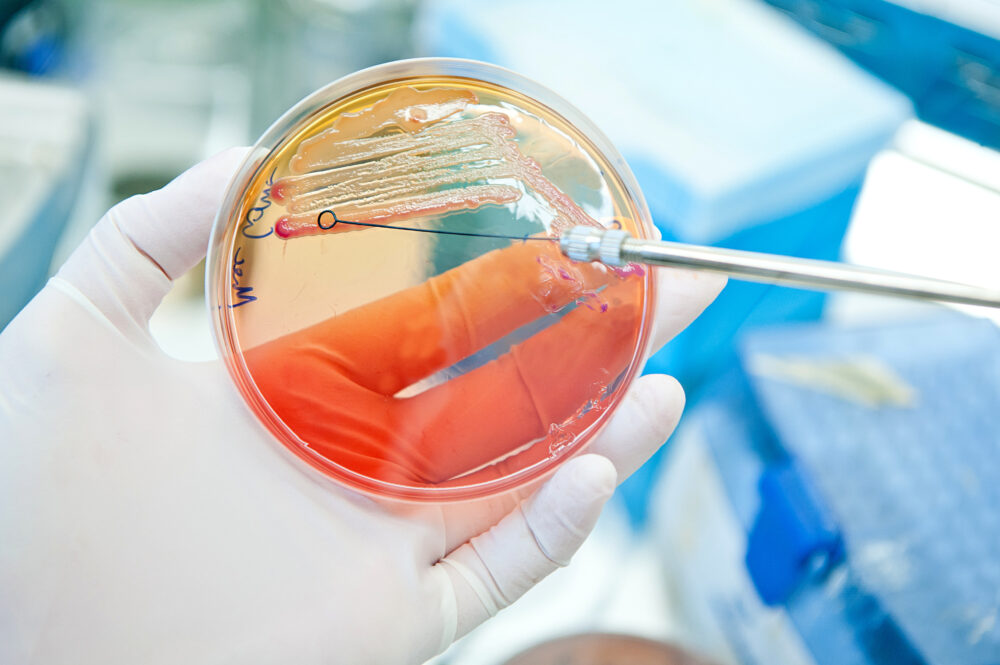
On this episode of ID The Future, host Eric Anderson concludes his Why It Matters interview with microbiologist Dr. Scott Minnich. In Part 2, Dr. Minnich critiques Lenski's famous Long Term Evolutionary Experiments. Through experiments of his own, Minnich has shown how the practical results of Lenski's project on E. coli are easily repeatable under different conditions, and how some key changes to E. coli are even reversible, both of which speak more to an organism's pre-existing capabilities than to a Darwinian explanation. This is the conclusion to a two-part interview. Read More ›
On this episode of ID The Future, host Eric Anderson continues his occasional interview series Why It Matters, this time with microbiologist Dr. Scott Minnich. In Part 1, Minnich shares how he first learned about intelligent design, met Dr. Stephen Meyer, and eventually became involved in the well-known documentary, Unlocking the Mystery of Life. Minnich also reflects on his childhood upbringing, his interest in the big questions, and how a run-in with a professor changed everything. This is Part 1 of a two-part conversation. Read More ›
Are there natural limits to biological change? Is the evidence for design in nature well-founded? On this ID The Future, host Andrew McDiarmid concludes his conversation with historian of science Michael Keas about Christianity's influence on the development of modern scientific inquiry. Keas also discusses the legacy of pioneering philosopher of science William Whewell, contrasting Whewell's perspective of the evidence for design with his contemporary Charles Darwin. This is Part 2 of a two-part conversation. Read More ›
Is there room in science for both natural and super-natural explanations? Or does science only advance by excluding arguments that go outside purely naturalistic causes? On this episode of ID The Future, host Andrew McDiarmid begins a two-part conversation with historian of science Michael Keas on how Christianity cultivated science both with and without methodological naturalism. This is Part 1 of a two-part conversation. Read More ›
Romanesco broccoli close up. The fractal vegetable is known for it's connection to the fibonacci sequence and the golden ratio. Fun food for any practical scientists that loves mathematics
Is there an empirical method to determine whether a system is the product of chance or design? On this ID The Future, physicist Brian Miller concludes a two-part conversation with Dr. William Dembski about a new updated second edition of his classic book The Design Inference. In many ways, the 2nd edition of The Design Inference is a brand new book. Dr. Dembski teases out what is new and updated, and he also discusses what it was like to team up with software engineer Winston Ewert on the project. He even gives us a sneak preview of his next book, covering the conservation of information. This is Part 2 of a two-part conversation. Read More ›
Hailed as "sparklingly original" and an "important contribution", mathematician William Dembski's 1998 book The Design Inference gave the modern design hypothesis a firm empirical footing and quickly inspired demonization and dismissal from disgruntled Darwinists. Twenty-five years later, Dembski's arguments stand firm, and a second edition with fresh analysis and insight is now available to a new generation of truth seekers. On this ID The Future, physicist Brian Miller invites Dr. Dembski to take us back to the 1980s to tell us the story of how The Design Inference came to be. This is Part 1 of a two-part conversation. Look for Part 2 next! Read More ›
If Charles Darwin could have peered into one of today's high-powered microscopes and seen the stunning complexity and function in even the simplest living cells, On the Origin of Species might have been a very different book! On this ID The Future, we go behind the scenes with biochemist Michael Behe to discuss his popular video series Secrets of the Cell. From overseeing intricate animation work to driving off-road in a Jeep through the backwoods, Dr. Behe spills some secrets of his own about his experience getting in front of the camera to bring the wonders of the cell to life. Read More ›