

ID the Future Intelligent Design, Evolution, and Science Podcast
Topic

Charles Darwin

Wells Online Course HOME PAGE Graphic

Jonathan Wells Evaluates Darwinian Evolution in New Online Course

How strong is the evidence for Darwinian evolution? What are the limits of the Darwinian mechanism? How should concepts like evolution and science best be defined? On this episode of ID The Future, we bring to you the first three video lectures from a new online course by molecular and cell biologist Jonathan Wells. In the first brief lecture, Wells explains his own evolution; the evolution of his thinking about evolution, that is. You'll glean some interesting details about Wells's career here. In the second lecture, Wells defines the word evolution by reminding us of its various meanings and uses. He also describes how Darwin's theory of natural selection became the framework that bolstered a materialistic metaphysic that endures today. You'll learn that Darwin's proposal relied less on evidence-based science and more on theological and philosophical arguments. In the third lecture, Wells defines science, and explains what happens when the definition of science is confined to naturalistic explanations only. Every so often, says Wells, enough data accumulates to present a challenge to the prevailing scientific framework. It happened in Newton's day. It happened in Darwin's day. And it may happen again soon, if the mounting evidence supportive of intelligent design is any indication. Learn more about Wells's online course at discoveryu.org. Over 40 short video lectures, Wells explains the major concepts of both chemical and biological evolution, and he critically assesses the evidence for evolution offered by genetics, developmental biology, fossils, and more. Wells deals with some of the most popular “icons” of evolution found in standard textbooks, including Darwin’s finches, whales, antibiotic resistance, peppered moths, “junk” DNA, and more. Read More ›
Bruegel tower of babel
Vienna, Austria. 2019/10/23.
Image Credit: Adam Ján Figeľ - Adobe Stock

David Berlinski on His New Book, Science After Babel

On today’s ID the Future, host Andrew McDiarmid rings up Science After Babel author David Berlinski in Paris to discuss the philosopher’s latest book. Berlinski is at his cultivated best as the two discuss everything from the biblical Tower of Babel as a metaphor for modern materialistic science, to his friendship with the brilliant and colorful French intellectual Marcel Schützenberger, a world-class mathematician who was self-taught and, as we learn here, came within a hair’s breadth of being swept up in the Chinese Revolution. Berlinski also reflects on the seminal 1966 WISTAR symposium, which laid out some mathematical challenges to Darwinism, challenges that Berlinski says remain unanswered to this day. At the same time, Berlinski gives the devil — here Read More ›

sad angel
Vintage image of a sad angel against the background of leaves
Image Credit: zwiebackesser - Adobe Stock

Stephen Meyer: Has the West Forgotten God?

In today’s ID the Future philosopher Stephen Meyer revisits Aleksandr Solzhenitsyn’s Templeton Prize speech from May 10, 1983, where Solzhenitsyn indicted the West for forgetting God. Meyer argues that Solzhenitsyn’s indictment is more timely than ever. But at the same time, there is today more scientific evidence than ever for the existence of a personal God, Meyer says, and the argument from intelligent design is a powerful means to awaken individuals to the presence of God and to renew culture. Meyer goes on to support those claims with concrete examples. Today’s episode is taken from a talk Dr. Meyer gave at the 2023 Dallas Conference on Science and Faith. Meyer is author of the bestselling book Return of the God Read More ›
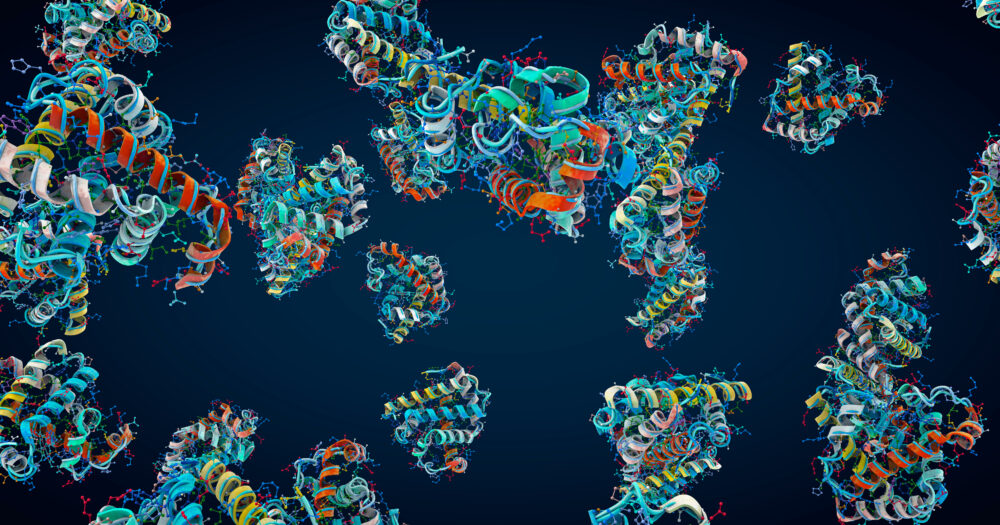
colorful-chain-of-amino-acids-or-bio-molecules-called-proteins-3d-illustration-stockpack-adobe-stock
Colorful chain of amino acids or bio molecules called proteins - 3d illustration
Image Credit: Christoph Burgstedt - Adobe Stock

Protein Evolution, The Waiting Times Problem, and the Intriguing Possibility of Two First Parents

On this ID The Future, host Eric Anderson gets an update on the recent work of Dr. Ann Gauger, Senior Fellow at Discovery Institute's Center for Science and Culture. Dr. Gauger explains her continuing research into the limits of protein evolution, efforts that are challenging the prevailing assumptions of the role of proteins and mutations in a Darwinian account of life. She also discusses her work on the related waiting times problem, demonstrating the difficulty of Darwinian processes to account for the diversity we see in biology. In addition, Ann shares her journey into researching human origins. After being asked to evaluate the scientific case against Adam and Eve, Ann dove into population genetics to see if monogenesis - the hypothesis that all humans are descended from two first parents - was even a possibility. What she discovered may surprise you. Don't miss this review of Dr. Gauger's fascinating and important research. Read More ›
complex machine
Metallic background of car automotive transmission gearbox
Image Credit: xiaoliangge - Adobe Stock

A PhD Evolutionary Biologist on Why He Embraces Intelligent Design

On this episode, Dr. Jonathan McLatchie takes us on a deep dive into two classic examples of irreducibly complex systems - the bacterial flagellar motor and the process of DNA replication in cell division. He explains the intricacies of each process and shows why each stands up to scrutiny as a true example of irreducible complexity. Along the way, he explains why the RNA world scenario isn't likely to be the answer to irreducible complexity that materialists are looking for. And near the end, be sure to listen to McLatchie explain the "likelihood ratio"of the evidence for irreducible complexity, a top-heavy ratio he says strongly supports a design hypothesis. This is Part 1 of a 2-part interview. Read More ›
replication-fork-for-a-new-strand-dna-in-the-dna-origin-stockpack-adobe-stock
Replication fork for a new strand DNA in the dna origin
Image Credit: Love Employee - Adobe Stock

Jonathan McLatchie on Classic Examples of Irreducibly Complex Systems

On this episode, Dr. Jonathan McLatchie takes us on a deep dive into two classic examples of irreducibly complex systems - the bacterial flagellar motor and the process of DNA replication in cell division. He explains the intricacies of each process and shows why each stands up to scrutiny as a true example of irreducible complexity. Along the way, he explains why the RNA world scenario isn't likely to be the answer to irreducible complexity that materialists are looking for. And near the end, be sure to listen to McLatchie explain the "likelihood ratio"of the evidence for irreducible complexity, a top-heavy ratio he says strongly supports a design hypothesis. This is Part 1 of a 2-part interview. Read More ›
mikiola-fagi-galls-of-insect-pest-on-beech-leaves-stockpack-adobe-stock
Mikiola fagi, galls of insect pest on beech leaves
Image Credit: Jitka - Adobe Stock

Do Plant Galls Falsify Darwinism?

Plant galls are novel forms that benefit the intruding insect, not the plant. Do these structures falsify Darwinism, as Darwin himself suggested they might? Retired geneticist Dr. Wolf-Ekkehard Lonnig explains. Read More ›
industrial-blueprint-stockpack-adobe-stock
industrial blueprint
Image Credit: Myst - Adobe Stock

Is a New Design-Based Paradigm of Biology Emerging?

More biologists are returning to the use of design-based assumptions, tools, models, and language to study the natural world. Dr. Brian Miller explains why in Part 1 of a conversation with Casey Luskin. Read More ›
three monkeys
three wise monkeys
Image Credit: SergeyF - Adobe Stock

Did the National Science Teaching Association Just Muzzle … Darwin?

What happens when someone tries to present to the National Science Teaching Association (NSTA) Charles Darwin’s top arguments against his own theory? Herman Bouma, founder of the National Association for Objectivity in Science, knows from personal experience. As he relates to host Casey Luskin on this ID the Future, he recently had a poster presentation on the topic accepted for an NSTA conference, but then a defender of Darwinian orthodoxy rushed in and spiked it. Bouma describes the censored presentation and the Kafkaesque back and forth he says he had with the organizer, who ultimately shut him down. Bouma warns of what has been described as the “Censorship Industrial Complex,” but he also says he hasn’t given up trying to Read More ›

makeup-for-darwin

Robert Shedinger: Darwin’s Sacred Cause is “Historical Fiction”

On today’s ID the Future, science-and-religion scholar Robert Shedinger makes the case that a well-known biography of Charles Darwin, Darwin’s Sacred Cause, is deeply misleading. Specifically, the book by Adrian Desmond and James Moore holds that Darwin was significantly motivated in his scientific work by abolitionist sentiments; and Shedinger says, not so fast.  He had spent considerable time reading Darwin’s correspondence and had seen no evidence of this thesis, so he reread Darwin’s Sacred Cause, this time tracking down all the key citations the book offered as evidence, and a pattern soon emerged. The sources the authors cite didn’t actually support their thesis. Some were totally irrelevant. Some were cited completely out of context. In other cases, the authors gave Read More ›