ID the Future Intelligent Design, Evolution, and Science Podcast
Topic

Darwinism

ib2022-weikart-JZ0A6449
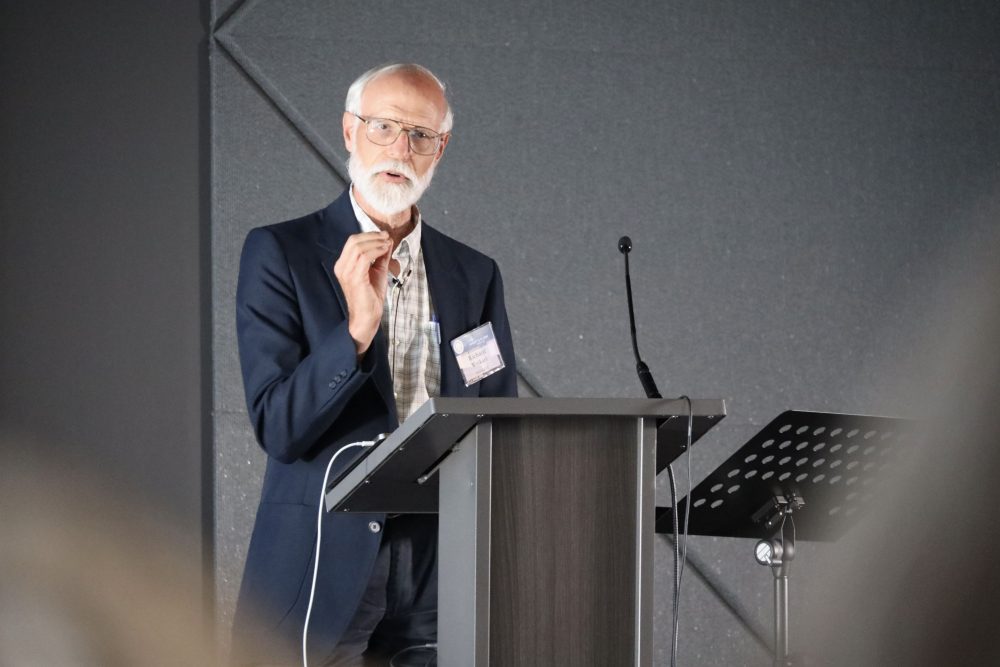
Richard Weikart at the CSC Insiders Briefing 2022

Darwinian Racism Then and Now

Today’s ID the Future spotlights Darwinian racism, past and present. In this first half of a panel discussion at the 2022 Center for Science and Culture Insider’s Briefing, Darwin Day in America author John West introduces the other panel members, teases an upcoming book, Darwin Comes to Africa, and discusses his experience visiting the Museum of Criminal Anthropology in Turin, Italy, where the work of infamous Darwinian criminologist Cesare Lombroso’s racist ideas about evolution and race are on dramatic display. Then historian Richard Weikart, author of Darwinian Racism, debunks the popular media claim that white nationalist racism in America is a Southern evangelical phenomenon. Weikart shows that the most prominent white nationalists show little if any interest in promoting Christianity, Read More ›


dog cat
dog and cat play together. cat and dog lying outside in the yard. kitten sucks dog breast milk. dog and cat best friends. love between animals.
Image Credit: Ivan - Adobe Stock

Behe and Ramage: Evolution’s Limits and the Fingerprints of Design

Today’s ID the Future wraps up a debate over evolution and intelligent design between Lehigh University biologist Michael Behe and Benedictine College theologian Michael Ramage. Both Behe and Ramage are Catholic, and they carry on their conversation in the context of Catholic thinking about nature and creation, in particular the work of Thomas Aquinas and contemporary Thomist philosophers. Ramage seeks to integrate his Thomistic/personalist framework with modern evolutionary theory’s commitment to macroevolution and common descent. Behe doesn’t discount the possibility of common descent but lays out a case that any evolution beyond the level of genus (for instance, the separate families containing cats and dogs) cannot be achieved through mindless Darwinian mechanisms and, instead, would require the contributions of a Read More ›

StThomasAquinas

Behe and Ramage Debate, Pt. 2: Evolution, ID, and Aquinas

Today’s ID the Future continues the conversation between Catholic intelligent design biologist Michael Behe and Catholic theologian Matthew Ramage. Both agree that nature points to a cosmic designer, but Ramage says he prefers, on aesthetic grounds, the idea that the biological realm has the capacity, gifted by God, to evolve on its own without the need for intervention by God. Behe notes that people have different aesthetic predilections, but it’s the scientist’s job not to figure out how he would have preferred things to have happened in nature, but to discover how they actually did come about. Behe also says that while the sun, moon, and stars do move according to fixed natural laws, it doesn’t follow from this that Read More ›

Miller West Dallas photo
Brian Miller and John West

Brian Miller Q&A: Engineering in Biology, and THE Engineer

On today’s ID the Future, host John West sits down with physicist and engineer Brian Miller to pitch him questions submitted at the Dallas Conference on Science and Faith. Is the Bible against the pursuit of knowledge about the natural world, or for it? Are microevolutionary changes in various organisms consistently driven by random mutations and natural selection, or instead, are some made possible by pre-programming in the organism, programming that gives the organism a built-in flexibility to adapt to its environment, within limits? If living systems were deliberately engineered, how good of an engineer was the engineer behind living systems? And if so, what are the implications for the evolution/design debate? Also, what do engineering insights regarding optimization processes Read More ›

Brian-Miller-Dallas-Science-Faith-2022-59

Brian Miller: The Surprising Relevance of Engineering in Biology

Today’s ID the Future brings listeners physicist and engineer Brian Miller’s recent lecture at the Dallas Conference on Science and Faith, “The Surprising Relevance of Engineering in Biology.” Miller rebuts several popular arguments for evolution based on claims of poor design in living systems, everything from the “backward wiring” of the vertebrate eye to whales, wrists, ankles, and “junk DNA.” But the main emphasis of this discussion is the exciting sea change in biology in which numerous breakthroughs are occurring by scientists who are treating living systems and subsystems as if they are optimally engineered systems. Some in this movement reject intelligent design for ideological reasons. Others embrace it. But all systems biologists treat these systems as if they are masterfully engineered Read More ›

RGH cover no text
Return of the God Hypothesis, ROGH, Meyer

Stephen Meyer: One God or Many Universes?

In this ID the Future, Stephen Meyer takes a deep dive into the case for not only intelligent design, but also for a designer of the cosmos who is immaterial, eternal, transcendent, and involved. Meyer draws on evidence for design at the origin of life, in the origin of plants and animals, and from the fine tuning of the laws and constants of chemistry and the initial conditions of the universe. He connects all this to the scientific evidence that the universe is not eternal but had a beginning—the Big Bang. What about the main materialistic alternative for explaining this suite of evidence—the idea that there is a multiverse with our universe just being one of the lucky universes with Read More ›

harvester ants
Messor Barbarus harvester ants cutting a green plant. High quality photo
Image Credit: Jorge - Adobe Stock

Evolution Challenge: The Harvester Ant Foraging Algorithm

On this ID the Future, Animal Algorithms author Eric Cassell explores an algorithm in the brains of harvester ants that adjusts their foraging strategy based on how available food is in their environment, thereby guiding the harvester ants toward more efficient foraging. Cassell builds off a March 2022 article in the Journal of the Royal Society Interface to explain how the algorithm in the ant’s tiny brain involves a sophisticated feedback control mechanism that includes both positive and negative feedback systems. As he further notes in the episode and in an article at Evolution News, a mathematical model of the harvester ants’ foraging behavior by Stanford University scientists confirms the control algorithm is largely optimized. Cassell’s recent book, Animal Algorithms, Read More ›

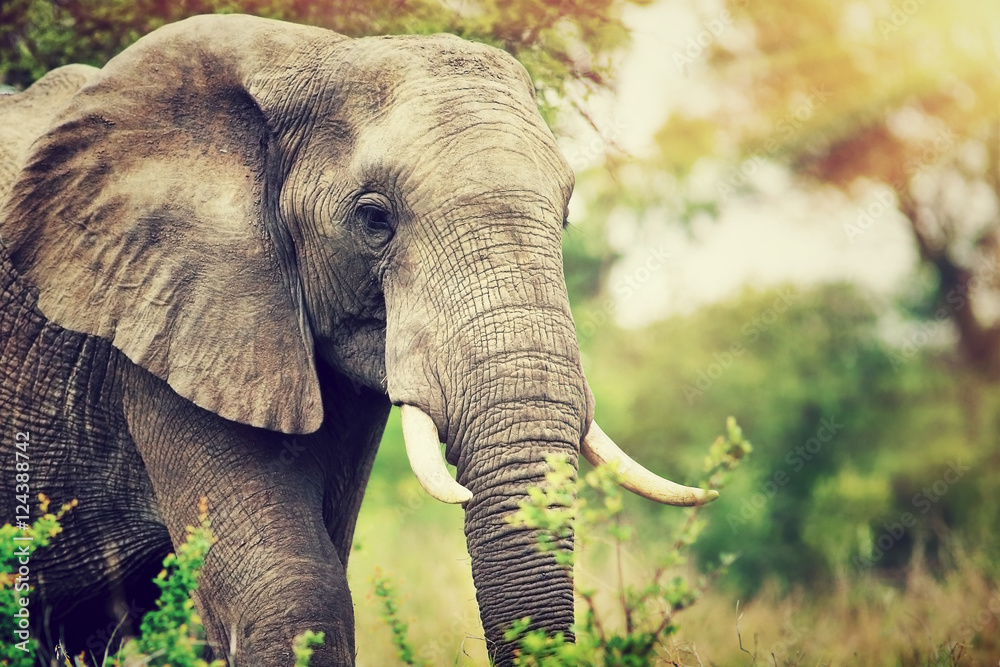
elephant
Wild elephant portrait
Image Credit: Anna Om - Adobe Stock

Günter Bechly: Species Pairs Wreck Darwinism

On this ID the Future, distinguished German paleontologist Günter Bechly continues unpacking his new argument against modern evolutionary theory. According to Bechly, contemporary species pairs diverge hardly at all over millions of years, even when isolated from each other, and yet we’re supposed to believe that the evolutionary process built dramatically distinct body plans in similar time frames at various other times in the history of life. Why believe that? He suggests this pattern of relative stasis among species pairs strikes a significant and damaging blow to Darwinian theory. In this Part 2 episode, Bechly and host Casey Luskin discuss mice/rat pairs, cattle and bison, horses and donkeys, Asian and African elephants, the Asian black bear and the South American Read More ›

frog
Funny frog head frontal view
Image Credit: creativenature.nl - Adobe Stock

Species Pairs: A New Challenge to Evolutionary Theory

On today’s ID the future, German paleoentomologist Günter Bechly and host Casey Luskin unpack a recent article of Bechly’s at Evolution News, “Species Pairs: A New Challenge to Darwinists.” There Bechly describes a challenge to evolutionary theory that thus far has been given little attention, namely “the morphological similarity of modern species pairs.” He says this “poses a severe problem for Darwinian theory “because it implies that the macroevolutionary processes that allegedly were at work and common during all periods of Earth history and in all groups of organisms, apparently were totally absent in the origins of all of the millions of living species.” Or as he puts it in a follow-up article on the same topic, “Among the 350,000 Read More ›

fetus
3d rendered medically accurate illustration of a fetus at week 20
Image Credit: SciePro - Adobe Stock

David Galloway: The Fetal Circulatory System is Irreducibly Complex

On today’s ID the Future, distinguished British physician and author David Galloway explains why he’s convinced that the human fetal circulatory system is irreducibly complex and therefore beyond the reach of blind gradualistic evolution to have built. In his conversation with host and fellow physician Geoffrey Simmons, Galloway also mentions some molecular machines that he’s convinced are irreducibly complex and shout intelligent design. The occasion for the conversation is Galloway’s new book, Design Dissected.