ID the Future Intelligent Design, Evolution, and Science Podcast
Topic

electromagnetic spectrum

abstract-background-of-science-and-technology-160151602-stockpack-adobestock
Abstract background of science and technology
Image Credit: LanaPo - Adobe Stock

How Intelligent Engineering Can Solve the Electromagnetic Spectrum Crisis

Today’s episode of ID The Future comes from our sister podcast Mind Matters News, a production of Discovery Institute’s Walter Bradley Center for Natural and Artificial Intelligence. Mind Matters regularly explores the nature of intelligence, the origin of information, and the things that make us uniquely human, all concepts that are central to the theory of intelligent design. Enjoy today’s offering of Mind Matters News! In this episode of Mind Matters News, host Robert J. Marks speaks with Baylor University spectrum experts Dr. Charles Baylis, Dr. Austin Egbert, and PhD candidate Jonathan Swindell about the nation’s pressing electromagnetic spectrum crisis. Have you ever thought about all of the electromagnetic waves in the room you’re in right now? You have invisible microwave cell phone signals in the air, plus all of the signals for broadcast television and AM and FM radio. Radiation from a GPS signal is there waiting for you to tap in. The range of frequencies in electromagnetic waves is known as the electromagnetic spectrum. And that spectrum is in great demand, with the rapid proliferation of personal wireless devices, radar network, and satellite weather sensors all competing for a spot. Managing the electromagnetic spectrum is our topic today. Read More ›
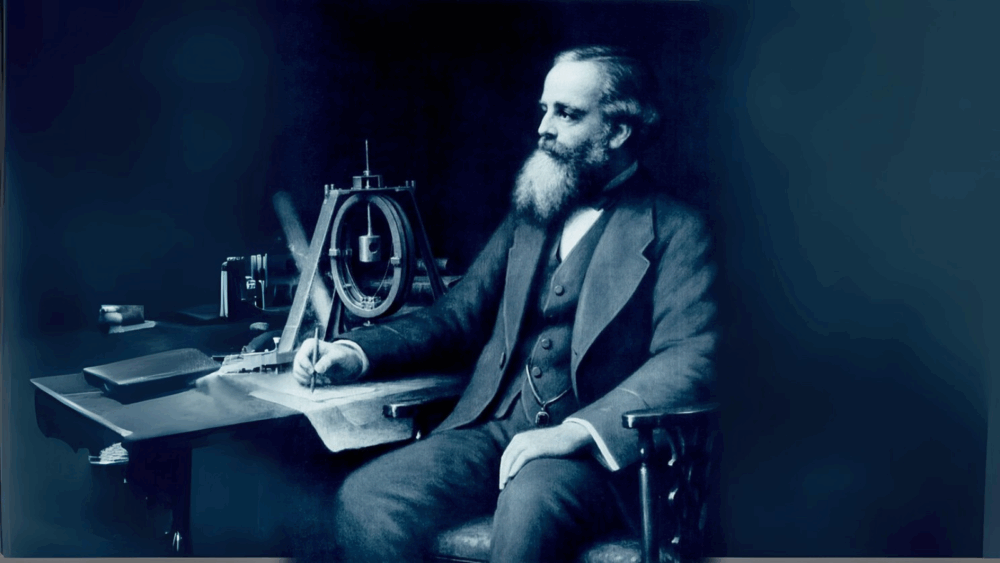
James-Clerk-Maxwell-Enlarged-Post-Graphic
Image of James Clerk Maxwell, public domain, via Wikimedia Commons.

Faith and Reason: A Profile of Mathematician James Clerk Maxwell

He's one of the most significant scientists of the 19th century, and his work laid the foundation for modern physics, quantum mechanics, and relativity. Scottish physicist and mathematician James Clerk Maxwell is a pivotal figure in the history of modern science, and his scientific study was inspired by the belief that the works of nature reflect the work of a designing intelligence. Today, my guest is mathematics educator, curriculum designer, and medical physicist Amos Tarfa, who helps us profile Maxwell to better understand the great scientist’s contributions and lasting influence. Tarfa also unpacks how Maxwell harmonized his faith in God with his scientific reasoning, and gives examples of how his discoveries point toward deeper questions about order, design, and meaning in the universe. This is Part 1 of a two-part conversation. Read More ›
water-pouring-on-hand-in-morning-ligth-background-stockpack-310407095-stockpack-adobe_stock
Water pouring on hand in morning ligth background
Image Credit: lovelyday12 - Adobe Stock

Sunlight And Water: Uniquely Fit to Sustain Life
f the sun didn't power the photosynthesis of green plants, we wouldn't be breathing right now. And without the finely tuned properties of water, Earth would be a frozen, lifeless wasteland. Coincidence? Or is something else at work? On this episode of ID The Future, host Andrew McDiarmid continues his ongoing series with Dr. Jonathan McLatchie unpacking the many features of our planet and the cosmos that allow for advanced life like ours to exist. Here, the discussion turns to the life-friendly properties of sunlight and water. Read More ›
Miracle of Man
Michael Denton, Miracle of Man, book cover without words / text

The Miracle of Man: Extraordinary “Coincidences” All the Way Down

On today’s ID the Future, Miracle of Man author and biologist Michael Denton continues his conversation with host Eric Anderson. Here Denton does a rapid flyover of several more anthropic “coincidences” in chemistry, biochemistry, and Earth science that are fine tuned to allow air-breathing, bipedal, technology-developing terrestrial creatures like ourselves to exist and thrive. The fine tuning, what Denton calls anthropic prior fitness, would seem to require foresight and planning on literally a cosmic scale. The wide-ranging conversation, the final one in a four-part series, gives a flavor for the breadth—if not the depth and richness—of Denton’s new book from Discovery Institute Press, available here.

Beautiful nature scene with blooming chamomiles in sun flares
chamomiles in sun flares

Michael Denton: Remarkable Coincidences in Photosynthesis

On this episode of ID the Future from the vault, we listen in on a few minutes from a lecture given by Australian biochemist Michael Denton, author of the brand new book The Miracle of the Cell. In this segment, Denton explains the “remarkable set of coincidences” that makes the creation of oxygen through photosynthesis possible. From the specific energy of visible light to the unique properties of water, this degree of fine tuning for life shouts intelligent design.