
ID the Future Intelligent Design, Evolution, and Science Podcast
Topic

James Clerk Maxwell

enthusiastic-math-teacher-holding-a-lesson-for-high-school-s-327321121-stockpack-adobestock
Enthusiastic math teacher holding a lesson for high school students
Image Credit: Kuz Production - Adobe Stock

How to Train Up a New Generation of James Clerk Maxwells

Is it possible to produce mathematicians today of the same caliber as greats like Sir Isaac Newton and James Clerk Maxwell? How can we help young people develop a genuine interest in mathematics, including its history, applications, and philosophy? Today on ID The Future, host Andrew McDiarmid concludes his conversation with mathematics educator, curriculum designer, and medical physicist Amos Tarfa. In Part 1, Amos profiled 19th century Scottish mathematician and physicist James Clerk Maxwell to help us better understand the great scientist’s contributions and how they relate to today’s debate over evolution and intelligent design. Here in Part 2, Amos tells us more about his vision for math education and how we can train up the next generation of James Clerk Maxwells. Read More ›
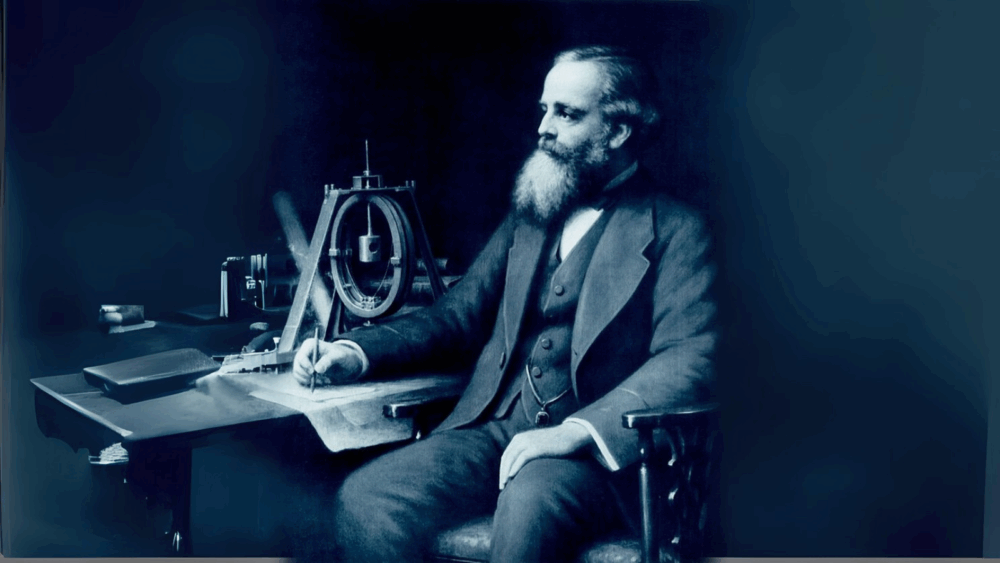
James-Clerk-Maxwell-Enlarged-Post-Graphic
Image of James Clerk Maxwell, public domain, via Wikimedia Commons.

Faith and Reason: A Profile of Mathematician James Clerk Maxwell
He's one of the most significant scientists of the 19th century, and his work laid the foundation for modern physics, quantum mechanics, and relativity. Scottish physicist and mathematician James Clerk Maxwell is a pivotal figure in the history of modern science, and his scientific study was inspired by the belief that the works of nature reflect the work of a designing intelligence. Today, my guest is mathematics educator, curriculum designer, and medical physicist Amos Tarfa, who helps us profile Maxwell to better understand the great scientist’s contributions and lasting influence. Tarfa also unpacks how Maxwell harmonized his faith in God with his scientific reasoning, and gives examples of how his discoveries point toward deeper questions about order, design, and meaning in the universe. This is Part 1 of a two-part conversation. Read More ›
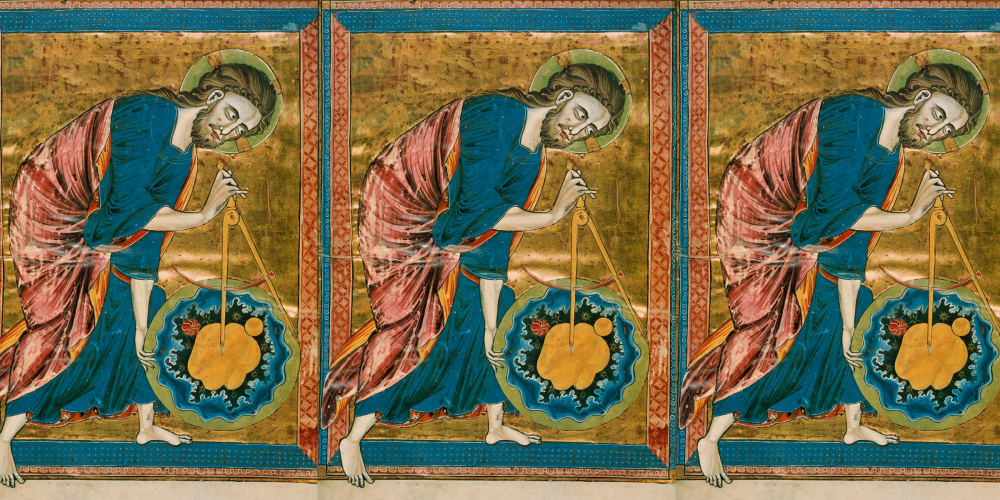
God the Geometer
God the Geometer — Gothic frontispiece of the Bible moralisée, representing God's act of Creation. France, mid-13th century

William Dembski on Scientism, Science, and Christian Faith

On today’s ID the Future, philosopher William Dembski and host Casey Luskin explore the relationship between science and faith. What is science? What is faith? How does Christianity define faith? Dembski explains that faith in the Judeo-Christian tradition is not the opposite of reason; at the same time, faith possesses a relational component—trust in a just, gracious, and reasonable God—that goes beyond mere assent to propositions. As for science, Dembski describes it as a careful search for truths about the natural world, including truths about key elements such as the birth of our fine-tuned universe and the origin of living things. Dembski says that he is convinced that scientific discoveries, unshackled from atheistic blinders, point strongly to intelligent design as Read More ›