We already have a well-established law that shows us how order can decrease in a physical system. But is there a law that explains an increase in order? Scientists have been looking for "nature's missing law" for a while, and while they might be asking the right questions, their training in a bottom-up reductionist framework is leading them to the wrong answers. On this ID The Future, mathematician and philosopher Dr. William Dembski continues a four-part conversation with host Andrew McDiarmid about his work on the law of conservation of information and its implications for theories that attempt to explain the origin of life and the universe. This is Part 2 of a four-part conversation. Read More ›
Is it possible to produce mathematicians today of the same caliber as greats like Sir Isaac Newton and James Clerk Maxwell? How can we help young people develop a genuine interest in mathematics, including its history, applications, and philosophy? Today on ID The Future, host Andrew McDiarmid concludes his conversation with mathematics educator, curriculum designer, and medical physicist Amos Tarfa. In Part 1, Amos profiled 19th century Scottish mathematician and physicist James Clerk Maxwell to help us better understand the great scientist’s contributions and how they relate to today’s debate over evolution and intelligent design. Here in Part 2, Amos tells us more about his vision for math education and how we can train up the next generation of James Clerk Maxwells. Read More ›
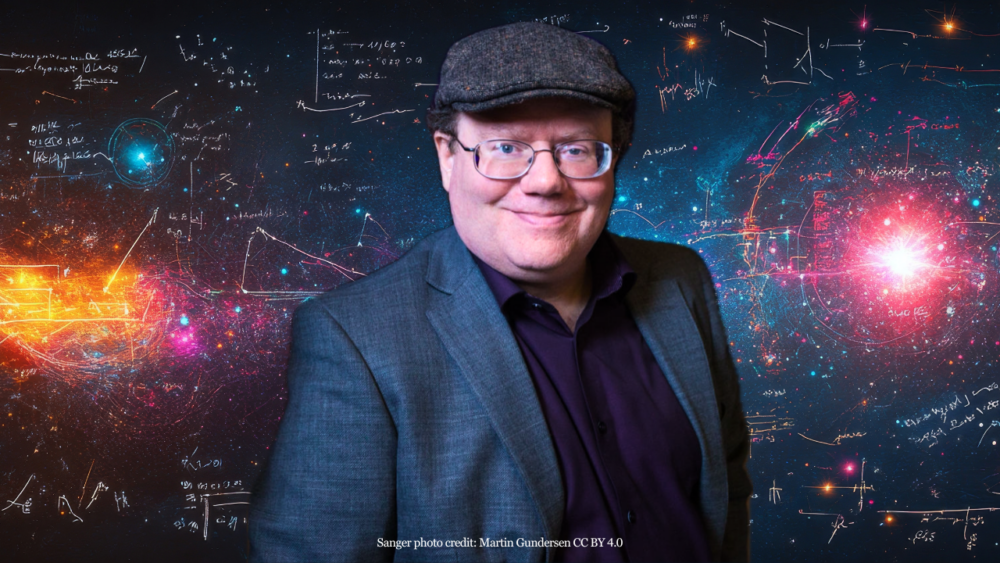
On this ID The Future, Wikipedia co-founder Larry Sanger joins hosts Andrew McDiarmid and Nathan Jacobson to delve into his personal evolution from longtime skeptical philosopher to belief in God. After falling out of faith in his teens, Sanger became a committed skeptic and agnostic, adhering to the principle of methodological skepticism for decades as he evaluated traditional arguments for the existence of God and found them wanting. And while Sanger was unconvinced by the claims of "new atheists" like Richard Dawkins and Daniel Dennett, he found himself drawn to the arguments of intelligent design scientists like Stephen Meyer, Michael Behe, and William Dembski. In this first half of a conversation, Sanger recounts his fascinating intellectual journey while unpacking the intelligent design arguments he found most convincing along his journey. This is Part 1 of a two-part interview. Look for Part 2 in a separate episode. Read More ›