

Ann Gauger on Her New Book, God’s Grandeur: The Catholic Case for Intelligent Design
Today’s ID the Future spotlights the richly stimulating new book, God’s Grandeur: The Catholic Case for Intelligent Design. Edited by biologist Ann Gauger, the anthology explores the evidence for intelligent design from a Catholic perspective, with contributions from an impressive range of Catholic scientists, philosophers, and theologians, including Gauger; internationally renowned paleontologist Günter Bechly; philosopher Jay Richards; molecular biologist Michael Behe; Rector of the European University in Rome Fr. Pedro Barrajón, LC; Aquinas and Evolution author Michael Chaberek; philosopher J. Budziszewski; professor of neurosurgery Michael Egnor; and noted Dante scholar Anthony Esolen. Listen in as Gauger gives a quick flyover of the book’s content, tells how she found her way into the intelligent design fold, and explains why Catholics should Read More ›

James Tour Talks Origin-of-Life Dealbreakers
On today’s ID the Future, distinguished synthetic organic chemist James Tour of Rice University explains why the goal of synthesizing life from non-life in conditions similar to those of the early Earth appears further away than ever. It’s not an illusion, he explains. The illusion was how close OOL researchers thought they were 50-70 years ago. They were never close, and the more we learn about how mind-bogglingly sophisticated even the simplest cells are, and how the complexity is essential for biological life, the more we realize just how far we are from constructing a plausible scenario for the mindless origin of the first life. Tour points out that even granting a great deal of intelligent design in the form Read More ›

Rescuing Evolutionary Theory from Darwinian Mythology

James Tour: The Goalposts are Racing Away from the Origin-of-Life Community
On today’s ID the Future distinguished nanoscientist James Tour explains to host Eric Metaxas why the origin-of-life community is further than ever from solving the mystery of life’s origin, and how the public has gotten the false impression that scientists can synthesize life in the lab. Tour explains that origin-of-life scientists aren’t even close to intelligently synthesizing life from non-life in the lab. The problem, Tour says, is that some leading origin-of-life researchers give the impression they are right on the cusp of solving the problem. Not so, Tour says. He offers the analogy of someone claiming, in the year 1500, that he has the know-how to build a ship to travel to the moon, when no one yet knows Read More ›

James Tour Talks Nanotech at Socrates in the City
Today’s ID the Future features the first part of a conversation between James Tour and Socrates in the City host Eric Metaxas on Tour’s astonishing work in nanotechnology and on the topic “How Did Life Come into Being?” Tour is the T. T. and W. F. Chao Professor of Chemistry, Professor of Computer Science, and Professor of Materials Science and Nanoengineering at Rice University. He is widely regarded as one of the world’s leading nano-scientists. This event took place at the River Oaks Country Club in Houston, Texas, and is presented here with permission of Eric Metaxas. Here in Part 1, Tour explains some of the inventions coming out of Tour’s Rice University lab, including molecular cars and astonishing graphene Read More ›
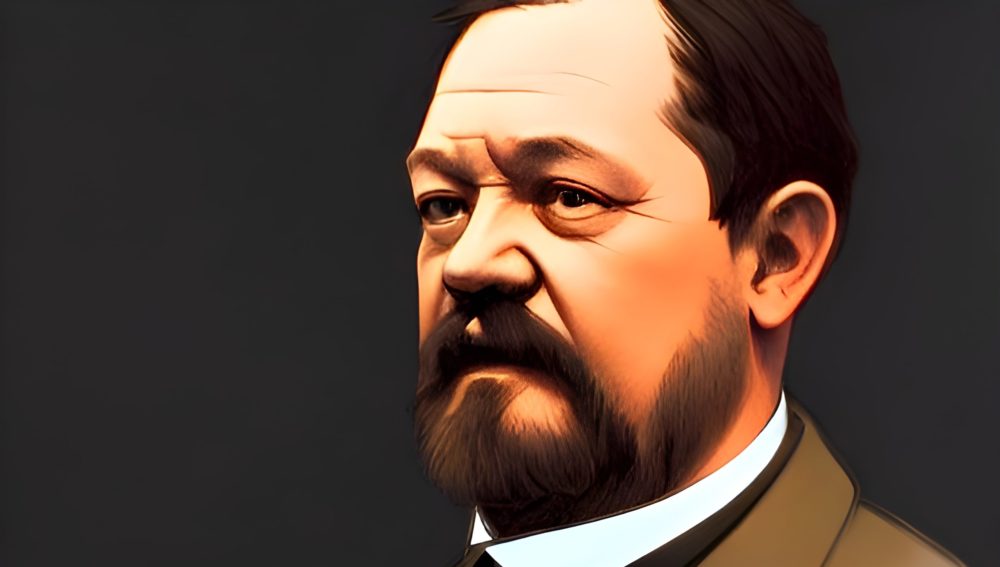
The 200th Birthday of Louis Pasteur: A Man of Science and Faith
December 27, 2022 marks the 200th anniversary of the birth of Louis Pasteur, the French scientist whose scientific breakthroughs have saved millions of lives, and whose work on microbes sounded the death knell of the idea of spontaneous generation. On this episode of ID the Future, biologist Ann Gauger walks listeners through the triumphs, flaws, and tragedies in the life of this extraordinary individual. In the nineteenth century, it was widely believed that the spontaneous generation of life from non-life was common and unremarkable, since it was thought that spontaneous generation of worms, mold, and other life forms occurred all the time in rotting meat and dirty rags. Pasteur constructed an experiment demonstrating that these “spontaneously” arising worms and such Read More ›

Did Chess Ace Hans Niemann Cheat? A Design Detection Poser
On this ID the Future, mathematician William Dembski and host Eric Anderson explore whether design detection tools shed any light on the recent chess scandal involving world chess champion Magnus Carlsen and American grandmaster Hans Moke Niemann. Did Niemann cheat in a match where he beat Carlson, as some have claimed? There is no smoking gun in the case, so how might one determine if cheating occurred? At first glance the problem might seem far removed from the design detecting rules and tools Dembski laid out in his Cambridge University Press monograph The Design Inference. But actually there is some intriguing overlap. Is there a way to dig into the chess data and determine whether Niemann secretly used a computer chess engine to Read More ›

An Origin-of-Life Poser: No Short Cut to Energy-Harnessing
On today’s ID the Future, Stairway to Life co-author Rob Stadler and host Eric Anderson delve deeper into Challenge to Origin of Life: Energy Harnessing, the latest video in the Long Story Short intelligent design video series. Could the first cell have been much simpler than any current cell, making it easier for it to emerge through blind natural forces on the early Earth? Stadler and Anderson surface one big problem with that idea: in experiments to make relatively simple cells even simpler, the cells inevitably become less robust and adaptable. These simpler cells must be coddled to survive. But the first cell on earth would have been anything but coddled. It would have had no source of glucose and Read More ›

Energy Harnessing: An Achilles Heel for Origin of Life
Origin-of-life specialist Rob Stadler joins today’s ID the Future to discuss a new Long Story Short science video short. The video investigates a special problem that faces all naturalistic origin-of-life scenarios: To be viable, a cell must have sophisticated machinery, including ATP synthase, to turn raw energy into constructive energy. But how could prebiotic chemicals harness raw energy on the way to evolving into a viable self-reproducing cell without first having the sophisticated machinery to harness raw energy and convert it to useful work? Are the energy sources that have been proposed for chemical evolution realistic? In his conversation with host Eric Anderson, Stadler argues that, no, they aren’t. This isn’t the sort of thing that mindless natural processes can Read More ›