ID the Future Intelligent Design, Evolution, and Science Podcast
Topic

Paul Nelson

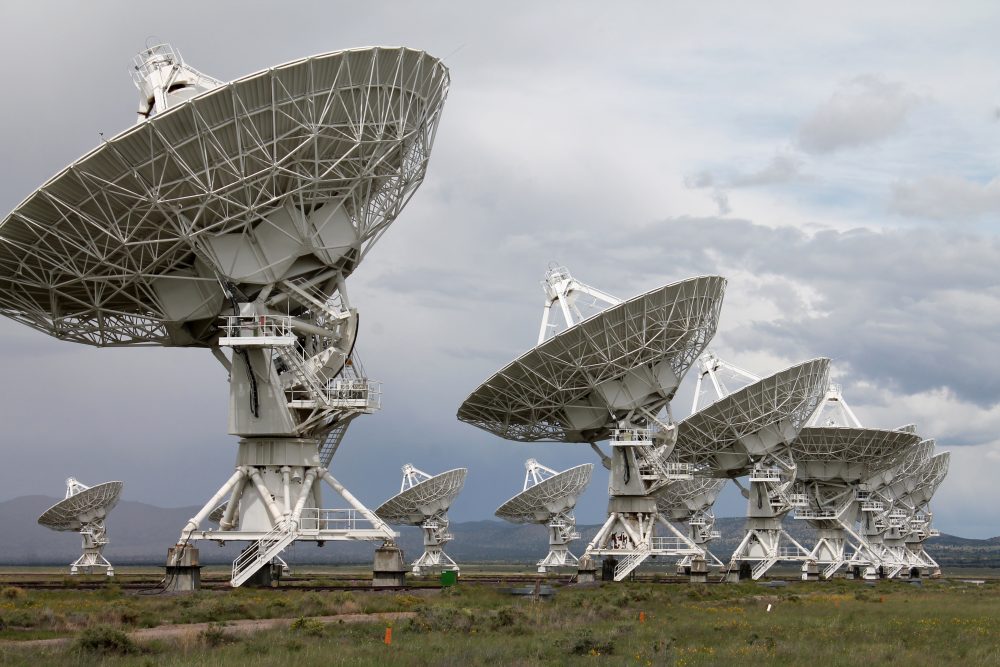
radio dishes seti
The Very Large Array (VLA) radio-astronomy antennas, in New Mexico, is one of the most impressive observatories in the world. The Sun was piercing through after a major storm during a public tour.
Image Credit: Xenomanes - Adobe Stock

Carl Sagan’s Love/Hate Relationship with Intelligent Design

On today’s ID the Future, philosopher of science Paul Nelson explores an intriguing tension in the thinking of famous scientist and science popularizer Carl Sagan concerning his agnosticism shading into atheism on the one hand, and on the other hand his embrace of certain ideas consistent with the theory of intelligent design. As Nelson is quick to clarify, if Sagan had lived to see the rise of the contemporary intelligent design movement, he probably would have rejected it, particularly its theistic implications. And yet, Nelson says, Sagan’s thinking and arguments laid out in his Gifford lectures and in his science fiction novel Contact strongly support the idea that intelligent design can be detected. Nelson goes further, saying that if we Read More ›

shift blame
The student is sitting at the table and is looking for excuses for not being ready for the lesson. Photo by Dmitriy on Adobe Stock
Image Credit: Dmitriy - Adobe Stock

How Universal Common Descent Survives Failed Predictions

On today’s ID the Future, philosopher of biology Paul Nelson discusses his chapter in a recent Harvest House anthology edited by host Casey Luskin, The Comprehensive Guide to Science and Faith. Nelson says the theory of universal common descent, a key component of modern evolutionary theory, has generated multiple predictions that have failed. The prediction he discusses here is that there would turn out to be a single universal genetic code, since that’s what we should expect if all life on earth is descended from the last universal common ancestor (LUCA). Findings over the past three decades have  proven that prediction spectacularly wrong. How does the theory of universal common descent shrug off this contrary empirical finding? The trick for Read More ›