

Michael Behe: Why Darwinism Will Eventually Collapse
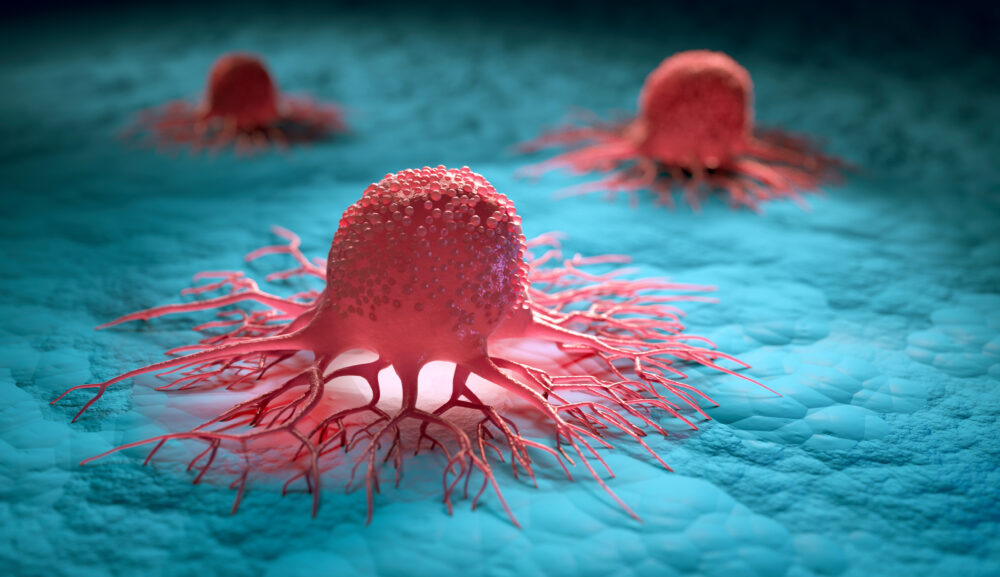
What Cancer Reveals About the Limits of Darwinian Evolutionary Processes

On Suffering, Intelligent Design Provides a Better Lens Than Darwinism

Fooled by Darwinism: One Scholar’s Cautionary Tale

The Simple Life: Abiogenesis Gets Another Reality Check

Behe and Ramage: Evolution’s Limits and the Fingerprints of Design
Today’s ID the Future wraps up a debate over evolution and intelligent design between Lehigh University biologist Michael Behe and Benedictine College theologian Michael Ramage. Both Behe and Ramage are Catholic, and they carry on their conversation in the context of Catholic thinking about nature and creation, in particular the work of Thomas Aquinas and contemporary Thomist philosophers. Ramage seeks to integrate his Thomistic/personalist framework with modern evolutionary theory’s commitment to macroevolution and common descent. Behe doesn’t discount the possibility of common descent but lays out a case that any evolution beyond the level of genus (for instance, the separate families containing cats and dogs) cannot be achieved through mindless Darwinian mechanisms and, instead, would require the contributions of a Read More ›

Michael Behe: Evolution, Devolution, Design
Today’s ID the Future features three recent Evolution News essays by Lehigh University biology professor and Darwin Devolves author Michael Behe, as read by host Andrew McDiarmid. In the first, nothing shows the feebleness of Darwinism quite so much as breathless stories about new results that turn out to be much ado about nothing. In this case, it’s some recent speculation about the rise of “lactase persistence” in many human adults. Then it’s onto malaria, much beloved of evolutionists, not for its lethality but as a demonstration of evolution in action. But Behe dissects the latest news story on the topic to show that the touted malaria evolution is, once again, malaria gnawing off the proverbial leg to achieve a Read More ›

Origin-of-Life Mystery at the University of Tokyo, Pt. 2
Today’s ID the Future is Part 2 of physicist Brian Miller exploring a recent report from the University of Tokyo claiming a big breakthrough in origin-of-life research. As Miller and host Eric Anderson make clear, the university’s laboratory work on RNA, detailed in a recent Nature Communications article, involved the intelligent interference of the lab scientists and, despite this intelligent interference, the devolution of RNA rather than the evolution of increasing RNA sophistication. Miller says that it’s ironic that Steven Novella, a scientist committed to puncturing science hype, seems to have fallen for the hype surrounding this laboratory work. Miller and Anderson go on to discuss critiques of origin-of-life tall-tale claims, critiques coming Robert Shapiro, James Tour, and others. Life, Read More ›

Did U of Tokyo Just Solve the Mystery of Life’s Origin?
On this ID the Future, Brian Miller, research coordinator for the Center for Science & Culture, reports on laboratory research recently presented in Nature Communications and in a University of Tokyo press release— research that supposedly provides dramatic “new insights into the possible origin of life,” and specifically “the molecular evolution of RNA.” The popular press picked up on these claims and ran with them, including in this May 5 Quanta article that breathlessly reported, “When researchers gave a genetic molecule the ability to replicate, it evolved over time into a complex network of ‘hosts’ and ‘parasites’ that both competed and cooperated to survive.” Miller says nothing remotely this dramatic occurred in the experiment. He insists there were no great Read More ›