By now, you’ve likely heard of the new documentary film The Story of Everything. It’s a cinematic exploration of the evidence for intelligent design in the cosmos, from the fine-tuning of the universe to the stunning engineering in every living cell. Today on ID The Future, we continue our series of interviews with the scientists and scholars featured in The Story of Everything. Host Andrew McDiarmid welcomes plasma physicist Dr. Robert Sheldon to the podcast to discuss his participation in the movie and talk about his work in physics and cosmology. Read More ›
IDTF 1937 Richard Weikart on New Book Unnatural Death Post Graphic
If we believe there is no qualitative distinction between animals and humans, are we more likely to protect human life or devalue it? On this episode of ID The Future out of the vault, guest host Eric Anderson talks to historian Dr. Richard Weikart about his latest book, Unnatural Death: Medicine's Descent From Healing to Killing, now available from Discovery Institute Press. The book is a wide-ranging history of euthanasia and assisted suicide from Ancient Greece to today. How did we get to the point we are at today, and how do we turn the tide to promote the sanctity of human life? Tune in to find out. Read More ›
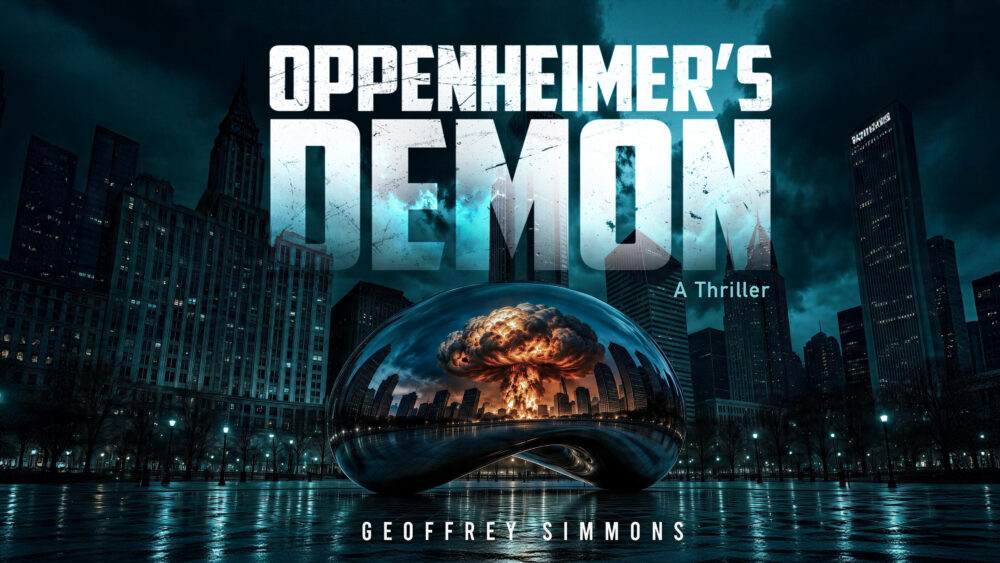
Most people know about the two atomic bombs dropped on Japan in 1945. But Robert Oppenheimer’s Manhattan Project had on hand another nuclear core. After claiming the lives of two scientists in separate accidents, it was dubbed the Demon Core and melted down. Some demons, however, are not so easily destroyed. Today, guest host Jonathan Witt concludes his conversation with medical doctor, disaster prep expert, and novelist Geoffrey Simmons about his new thriller novel Oppenheimer's Demon, now available from Discovery Institute Press. This is Part 2 of a two-part conversation. Read More ›
Cloud Gate (The Bean) with no people present in Chicago, Illinois
Have you ever read a book wherein both the origin and end of man hang in the balance? That's a rare combination that comes together in a new disaster thriller novel now available from Discovery Institute Press. On this ID The Future, DI Press executive editor and CSC senior fellow Jonathan Witt takes a turn at the hosting mic as he welcomes medical doctor, disaster preparedness expert, and novelist Geoffrey Simmons to discuss his latest book Oppenheimer's Demon. This is Part 1 of a two-part conversation. Read More ›
Today’s episode of ID The Future comes from our sister podcast Mind Matters News, a production of Discovery Institute's Walter Bradley Center for Natural and Artificial Intelligence.
On this episode of Mind Matters News, guest host Pat Flynn welcomes Dr. Winston Ewert to the show to discuss Ewert’s chapter in the volume Minding the Brain.
In his contribution, titled “The Human Mind’s Sophisticated Algorithm and Its Implications,” Dr. Ewert argues that the human mind’s problem-solving cognition can be modeled as a sophisticated algorithm. Ewert explains that any cognitive task can be expressed as a version of the halting problem from computer science, where an algorithm either halts or continues infinitely. He suggests that humans are able to solve a large and sophisticated subset of these problems, but are limited in the same way that no algorithm can solve all halting problems. Ewert contends that this algorithmic view of human cognition has implications that challenge reductive materialist and neo-Darwinian views, despite resistance from some thinkers who believe human abilities transcend any algorithm. Read More ›
There are many books written by intelligent design scientists and scholars that explore the scientific evidence for intelligent design and the debate over evolution. But a new book published by Discovery Institute Press manages to be concerned with “both the origin and the end of man” in the same book! On this ID The Future, distinguished physician, successful novelist, and disaster preparedness expert Geoffrey Simmons is going to read to us a few scenes from his new thriller novel Oppenheimer’s Demon. Read More ›
Can a blind, evolutionary process account for who we are and why we’re here? Is there anything beyond this life? On this ID The Future, enjoy a conversation with veteran oncologist, author, and speaker Dr. Stephen Iacobini. In this conversation, originally aired on the Ex-Skeptic podcast and hosted by Jana Harmon, Dr. Iacoboni shares his journey from childhood faith to scientific atheism and back to theistic belief. Along the way, he examines the failures of naturalism, the role of science, and the undeniable human longing for meaning that points to something beyond life itself. Read More ›
In 2026, one of the most influential books on science in our lifetime turns 30 years old. It’s Darwin’s Black Box, written by biochemist and professor Michael J. Behe. On this ID The Future, host Andrew McDiarmid concludes his conversation with Dr. Behe as we celebrate the milestone, revisit the book’s major insights, and examine its staying power over the last three decades. This is Part 2 of a two-part conversation. Look for Part 1 in a separate episode. Read More ›
Today's episode of ID The Future comes from our sister podcast Mind Matters News. Today, guest host Pat Flynn welcomes Dr. Robert Marks and Dr. Michael Egnor to the show to critique Integrated Information Theory (IIT), a popular mathematical model that attempts to explain consciousness through computational complexity. Read More ›
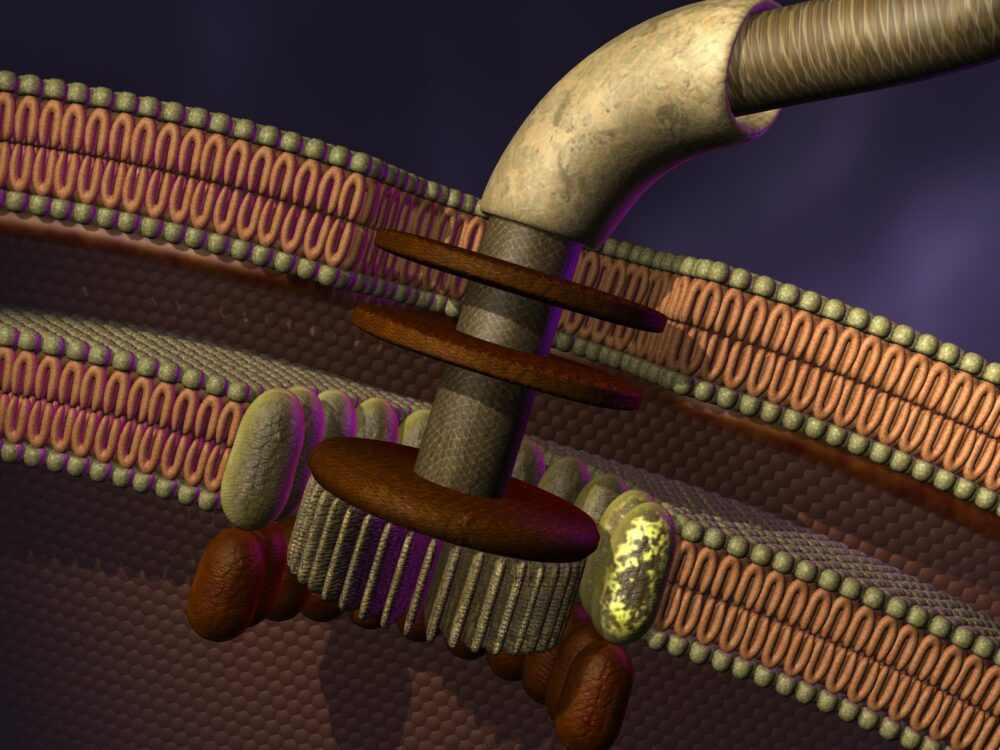
It's the book that helped launch the biochemical challenge to Darwinian evolution. It has been hailed as one of the most influential books on science in our lifetime. And this year, it celebrates thirty years in print! On today's ID the Future, host Andrew McDiarmid invites you to join him as he reads selections from Darwin's Black Box, authored by biochemist Michael J. Behe. And don't miss Andrew's two-part conversation with Behe about the impact of the book. Look for that in separate episodes of ID The Future. Read More ›