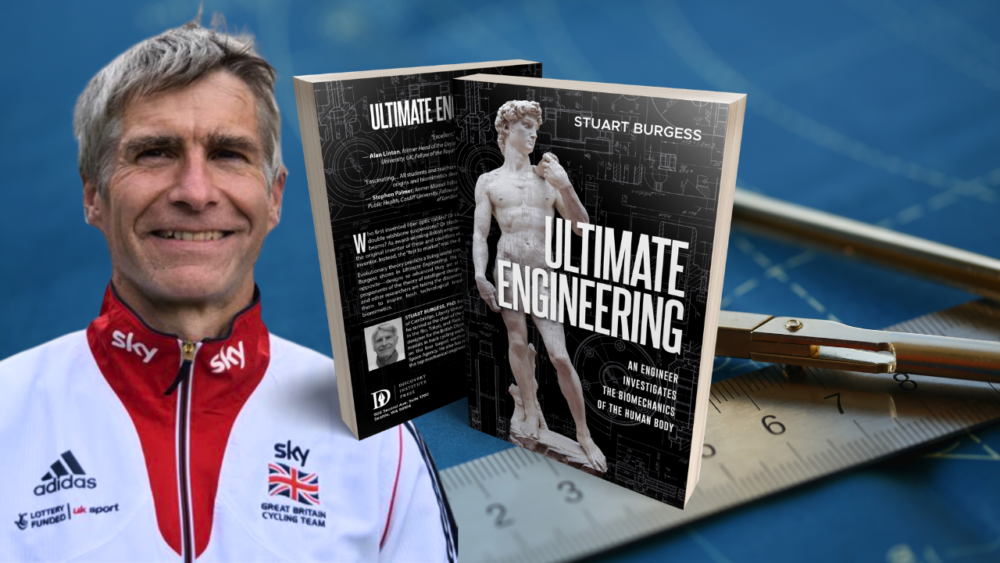
Designing an Olympic bicycle requires the very best materials and lubricants. And the smallest of engineering choices can make the difference between winning and losing the race. On this ID The Future, host Andrew McDiarmid speaks with award-winning British engineer and designer Stuart Burgess. This time, the topic is his engineering work as lead transmission designer on the Olympic bikes used by Team Great Britain in the last three summer Olympic Games. Burgess reveals that the human body boasts a level of engineering that far surpasses the best things humans have been able to engineer. This optimal design in living things points to intelligent design instead of an evolutionary origin for life. Read More ›
A good way to evaluate scientific theories of origins is to ask what we’d expect to find if the given hypothesis were true and compare that to what we actually observe. Under a Darwinian explanation of life, we’d expect to see designs cobbled together by a blind, undirected process, substandard designs that work but that, in the words of one scientist, wouldn’t win any prizes at an engineering competition. But when we compare that expectation with the scientific evidence, they don’t match up at all. On today's ID The Future, award-winning British engineer and designer Stuart Burgess reads excerpts from his new book Ultimate Engineering. He’s going to share just enough with you today to whet your appetite for reading his book, which is chock full of evidence that humans and other organisms contain countless examples of not just so-so, not just good or very good, but optimal engineering in the design of systems and structures that keep living things alive. Read More ›
Is life the result of purposeful design or unintended evolutionary accidents? It’s an ongoing debate that’s about to be impacted by new scientific evidence that suggests living things are full of optimal engineering. On this ID The Future, host Andrew McDiarmid concludes his conversation with award-winning British engineer and designer Stuart Burgess about his new book Ultimate Engineering. In it Burgess gathers together compelling examples of advanced structures and systems in the human body and other vertebrates that go far beyond what humans have produced and point to intelligent design, not the cobbled-together results of a blind, purposeless process. In Part 2, Burgess compares his professional work on European Space Agency satellites to the far more sophisticated systems found in biology. This is Part 2 of a two-part conversation. Look for Part 1 in a separate conversation. Read More ›
Evolutionary theory predicts a living world crowded with substandard designs. But as today’s guest reveals, the latest science has discovered just the opposite—designs so advanced they are at the limit of the possible, precisely as proponents of the theory of intelligent design have anticipated. On this episode of ID The Future, host Andrew McDiarmid welcomes to the show award-winning British engineer and designer Stuart Burgess to begin a two-part conversation with me about the extraordinary engineering feats of the human body: ingenious systems and devices that demonstrate what Burgess calls Ultimate Engineering.
This is Part 1 of a two-part conversation. Look for Part 2 in a separate episode! Read More ›