
ID the Future Intelligent Design, Evolution, and Science Podcast
Topic

wrist joint

Ultimate-Engineering-Book-Reading-Episode-Graphic
Assembled by Andrew McDiarmid. Book art courtesy Discovery Institute.

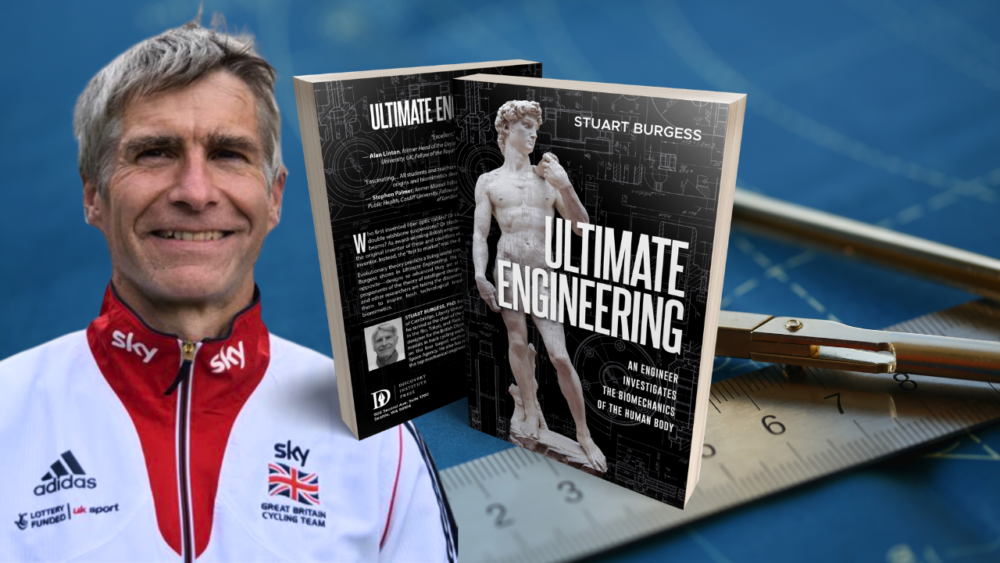
Bioengineer Stuart Burgess Reads From New Book Ultimate Engineering

A good way to evaluate scientific theories of origins is to ask what we’d expect to find if the given hypothesis were true and compare that to what we actually observe. Under a Darwinian explanation of life, we’d expect to see designs cobbled together by a blind, undirected process, substandard designs that work but that, in the words of one scientist, wouldn’t win any prizes at an engineering competition. But when we compare that expectation with the scientific evidence, they don’t match up at all. On today's ID The Future, award-winning British engineer and designer Stuart Burgess reads excerpts from his new book Ultimate Engineering. He’s going to share just enough with you today to whet your appetite for reading his book, which is chock full of evidence that humans and other organisms contain countless examples of not just so-so, not just good or very good, but optimal engineering in the design of systems and structures that keep living things alive. Read More ›
space-shuttle-flying-over-the-clouds-stockpack-adobe-stock-80273384-stockpack-adobestock
Space Shuttle Flying Over The Clouds
Image Credit: 3dsculptor - Adobe Stock

Rockets & Wristbones: Optimal Engineering in Biology

Is life the result of purposeful design or unintended evolutionary accidents? It’s an ongoing debate that’s about to be impacted by new scientific evidence that suggests living things are full of optimal engineering. On this ID The Future, host Andrew McDiarmid concludes his conversation with award-winning British engineer and designer Stuart Burgess about his new book Ultimate Engineering. In it Burgess gathers together compelling examples of advanced structures and systems in the human body and other vertebrates that go far beyond what humans have produced and point to intelligent design, not the cobbled-together results of a blind, purposeless process. In Part 2, Burgess compares his professional work on European Space Agency satellites to the far more sophisticated systems found in biology. This is Part 2 of a two-part conversation. Look for Part 1 in a separate conversation. Read More ›
gymnast
portrait of young man gymnasts
Image Credit: _italo_ - Adobe Stock

Human Skeletal Joints—Engineering Masterpieces, Pt. 2

Today’s ID the Future completes a talk by award-winning British engineer Stuart Burgess, who explains how the human ankle and wrist joints offer powerful evidence of engineering genius. Burgess is answering evolutionist Nathan Lents, who has argued that human joints are badly designed and, therefore, evidence against intelligent design and for Darwinian evolution’s blind trial-and-error process. According to Burgess, Lents ignores—and seems to be ignorant of—the many ingeniously engineered features of our joints, leading Lents to make easily refuted claims. For example, Lents says an ankle with fused bones would be a superior design to a healthy human ankle. Not if the person hopes to play squash or tackle any number of other activities that require the suppleness and responsiveness of Read More ›

gymnast feet balance
side view legs female gymnast in balance beam gymnastics
Image Credit: sportpoint - Adobe Stock

Why Human Skeletal Joints Are Engineering Masterpieces, Pt. 1

On this ID the Future, Stuart Burgess, one of Britain’s top engineers, explains how the skeletal joints in the human body are masterpieces of intelligent design. He also responds to claims by some evolutionists that human joints are badly designed and supposedly evidence of Darwinian evolution’s blind trial-and-error process. This presentation was taped at the 2022 Westminster Conference on Science and Faith in the greater Philadelphia area, which was jointly sponsored by Discovery Institute’s Center for Science and Culture, and Westminster Theological Seminary. Here in Part 1, Burgess focuses on the ankle joint, showing that it packs an extraordinary amount of functionality into a small space, beyond anything human engineers have managed to achieve either in prosthetics or robotics.