
ID the Future Intelligent Design, Evolution, and Science Podcast
Topic

Natural Selection

Landscape-with-title
Image copyright Discovery Institute.

Ultimate Engineering: An Interview with Bioengineer Stuart Burgess

Evolutionary theory predicts a living world crowded with substandard designs. But as today’s guest reveals, the latest science has discovered just the opposite—designs so advanced they are at the limit of the possible, precisely as proponents of the theory of intelligent design have anticipated. On this episode of ID The Future, host Andrew McDiarmid welcomes to the show award-winning British engineer and designer Stuart Burgess to begin a two-part conversation with me about the extraordinary engineering feats of the human body: ingenious systems and devices that demonstrate what Burgess calls Ultimate Engineering. This is Part 1 of a two-part conversation. Look for Part 2 in a separate episode! Read More ›
star-explosion-in-a-galaxy-of-an-unknown-universe-stockpack-421557319-stockpack-adobestock
Star explosion in a galaxy of an unknown universe
Image Credit: pixel - Adobe Stock

Irreducible Intelligence: The Ultimate Origin of Biological Information
What is the ultimate origin of the information that powers life and the universe? For materialists, matter and energy are the fundamental stuff of life, but an even more crucial element is missing from that equation: information. And as our parents likely reminded us, you don't get anything in this life for free. On this ID The Future, host Andrew McDiarmid concludes his four-part conversation with mathematician and philosopher Dr. William Dembski about his work on the law of conservation of information and how it can help us critically evaluate scientific theories of origins. In this final segment, Dembski explains the ultimate origin of information: what he calls irreducible intelligence. Don't miss other segments of this conversation in separate episodes! Read More ›
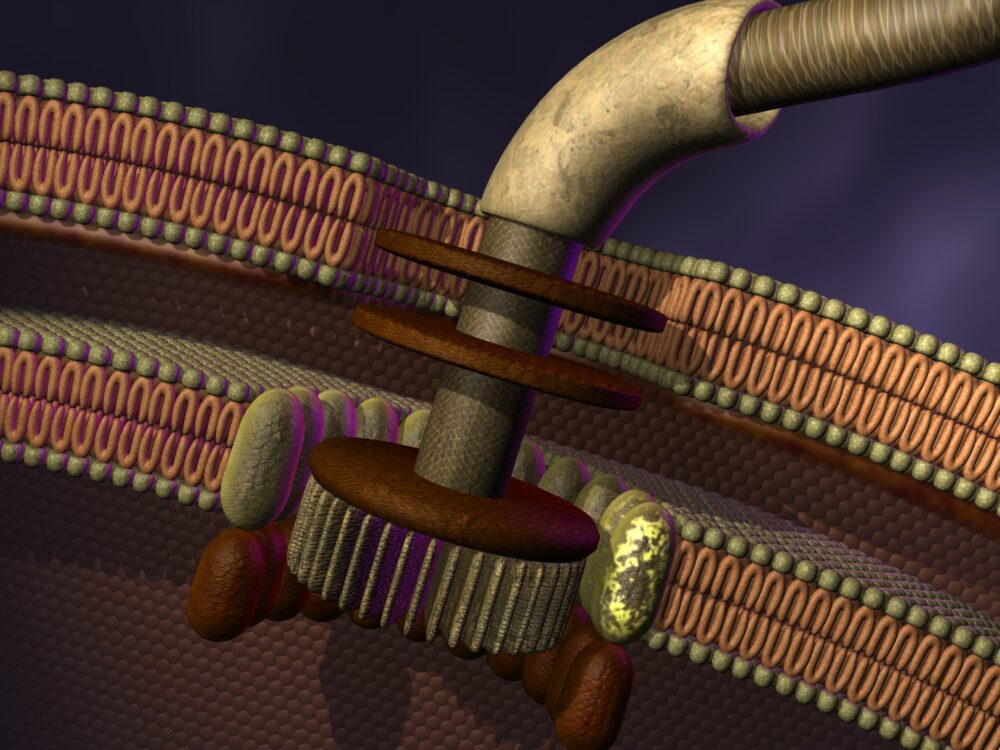
Bacterial-Flagellar-Motor-Open

Applying Information Conservation to Biological Origins

Nothing's free in life. It's a sobering reality we all come to realize in life. And this cold, hard truth also applies to the realm of biology. On today's ID The Future, host Andrew McDiarmid continues his four-part discussion with mathematician and philosopher Dr. William Dembski. The topic is Dembski's work on the law of conservation of information, a principle asserting that information within a search process is redistributed from pre-existing sources rather than materializing from nothing. In addition to being used in computer science and physics, the law can also be applied to theories of biological origins to evaluate which theory best comports with the reality that all information comes with a cost, and that cost must be adequately explained. This is Part 3 of a four-part conversation. Read More ›
nautilus-shell-stockpack-adobe-stock-207897813-stockpack-adobestock
nautilus shell
Image Credit: KMNPhoto - Adobe Stock

Why Intelligence is Necessary to Explain Nature’s Functional Information

We already have a well-established law that shows us how order can decrease in a physical system. But is there a law that explains an increase in order? Scientists have been looking for "nature's missing law" for a while, and while they might be asking the right questions, their training in a bottom-up reductionist framework is leading them to the wrong answers. On this ID The Future, mathematician and philosopher Dr. William Dembski continues a four-part conversation with host Andrew McDiarmid about his work on the law of conservation of information and its implications for theories that attempt to explain the origin of life and the universe. This is Part 2 of a four-part conversation. Read More ›
little-boy-hunting-for-egg-in-spring-garden-on-easter-day-tr-483676407-stockpack-adobestock
Little boy hunting for egg in spring garden on Easter day. Traditional easter festival outdoors. Focus on multicolor eggs.
Image Credit: Maria Sbytova - Adobe Stock

Bill Dembski Reveals the Hidden Cost of Information

Chances are you’re already familiar with specified complexity, one of the mathematical pillars of the theory of intelligent design. There’s another pillar that is much less well known but equally vital: the law of conservation of information. On this ID The Future, host Andrew McDiarmid begins a four-part conversation with mathematician and philosopher Dr. William Dembski. The conversation unpacks Dembski’s work on the law of conservation of information and its implications for scientific theories like Darwinian evolution. In Part 1, Dr. Dembski begins by defining information fundamentally as the narrowing of possibilities, where specifying one outcome excludes others. Using his a simple analogy of location, he explains that identifying a specific place, like the town of Aubrey, Texas, provides more Read More ›

scientist-with-equipment-and-science-experiments-laboratory-301866446-stockpack-adobestock
Scientist with equipment and science experiments ,laboratory glassware containing chemical liquid for design or decorate your content,microscopoe .Pipette dropping a sample into a test tube
Image Credit: Looker_Studio - Adobe Stock

Dr. Edward Peltzer: The Messy Reality of Prebiotic Chemistry

On today's ID the Future, host Casey Luskin continues a deep dive into the mounting hurdles facing origin of life (OOL) research with prebiotic synthesis expert Dr. Edward Peltzer. Peltzer, a seasoned ocean chemist and researcher, breaks down the critical flaws in the RNA world hypothesis, revealing that many successful lab experiments actually rely on investigator interference—intelligently designed interventions that researchers must make in experiments in order to yield results. But that's not how the prebiotic atmosphere would have worked, notes Peltzer: "Unless you've got graduate students and post-docs working on the early Earth to set up these conditions that were used in the experiments, it's not gonna happen." Peltzer also discusses how the goalposts of origin-of-life theory keep moving as our understanding of cellular complexity expands. And he shares a personal story of censorship as the discussion ends by exploring the risks faced by scientists who question the standard evolutionary paradigm. This is Part 2 of a two-part conversation. Look for Part 1 in a separate episode. Read More ›
rough-colored-ocean-wave-falling-down-at-sunset-time-stockpa-167197431-stockpack-adobestock
rough colored ocean wave falling down at sunset time
Image Credit: willyam - Adobe Stock

Casey Luskin on the Rising Tide of Intelligent Design Research

Any scientific theory for the origin of life and the universe is only as strong as its research program. For intelligent design, this is good news. On today's ID The Future, Dr. Casey Luskin describes the current growth and scientific maturity of the Intelligent Design (ID) movement. Luskin describes the progress of ID across three main areas: successful scientific predictions, the unresolved failures of Neo-Darwinism to account for life, and the growth of the ID community as well as scientists outside ID who are looking for alternatives to modern evolutionary proposals. Dr. Luskin compares the growth of the ID research program to a snowball; it started small and faced early setbacks, but it is now rapidly picking up size, speed, and scientific weight as it rolls forward. Read More ›
monarch-emerges-from-its-chrysalis-shell-stockpack-adobe-sto-441062589-stockpack-adobestock
Monarch emerges from its chrysalis shell
Image Credit: Betty Rong - Adobe Stock

Creepy Crawly Complexity: The Intelligent Design of Insects
Bugs. Some of them we enjoy more than others! But there’s no denying they’re a part of life. And though they’re small, they’re examples of big engineering and design. Today, host Andrew McDiarmid welcomes Discovery Institute staffer Kate Kavanaugh to discuss ID Education Days, whole-day experiences hosted by the Center for Science and Culture and geared specifically for middle and high school students in home or private school settings. Lately, the theme of these events has focused on the creepy crawly complexity found within the world of insects and invertebrates. Far from being mere nuisances, these creatures function as tiny engineers that elegantly solve complex problems to sustain global ecosystems. Kavanaugh highlights insights from recent ID Education Day events and explains the importance of studying even tiny examples of intelligent design in nature. Read More ›
Screenshot-2025-12-08-at-35103PM

Scientist Roundtable: Examples of Intelligent Design in the Human Body
It's easy to be blown away by the examples of engineering prowess in the human body. But it can be challenging to turn that evidence into a robust argument for intelligent design you can share with skeptical friends and colleagues. To help you learn to do that, host Andrew McDiarmid begins a roundtable discussion with not one, not two, not three, but four guests to the podcast, all part of our team of resident scientists at Discovery Institute’s Center for Science and Culture: geologist and lawyer Casey Luskin, biochemist and metabolic nutritionist Emily Reeves, biologist Jonathan McLatchie, and physicist Brian Miller. The first half of the discussion kicks off with a review of the basics of design detection, including various methods for empirically detecting the hallmarks of design in nature. After that, these four experts take turns diving into examples of extraordinary design in the human body. This is Part 1 of a two-part conversation. Read More ›
Granville-Sewell-Arguments-for-ID-Episode-Image

Get to Know This Mathematician’s Simple, Profound Arguments for Intelligent Design

No amount of small, blind, and gradual changes to the steam engine could ever have produced the internal combustion engine. To get to that fundamentally new type of engine, an infusion of new information was required. That analogy can be applied to the origin of biological life too. The spectacular order, complexity, and design we see in life could not have been achieved gradually by a process that lacked foresight. On today's ID The Future, host Andrew McDiarmid welcomes mathematician Granville Sewell to the podcast to share some of his compelling arguments for intelligent design. We might think that mathematicians are focused on incredibly complex ideas and equations, way above the everyday thoughts of the rest of us. But as Sewell points out, mathematicians are trained to value simplicity, and complex problems can often be solved in simple ways. Sewell's straightforward, yet profound arguments for intelligent design are worth memorizing and sharing with your friends, family, and associates. Read More ›