Everywhere you turn, you’re likely to see evidence of error in thinking, and the realm of science is no exception. On this ID The Future, host Andrew McDiarmid concludes his conversation with J. Budziszewski, a professor of government, philosophy, and civic leadership at the University of Texas at Austin and author of the new book Pandemic of Lunacy: How to Think Clearly When Everyone Around You Seems Crazy. In his book, Budziszewski identifies thirty irrational ideas that are prevalent in modern society. He argues that many people have abandoned common sense and objectivity, leading to a cloud of confusion regarding human nature, science, and morality.
In Part 2, we jump into more lunacies relevant to the scientific debates around human beings, biological life, and design in nature. Read More ›
Bad ideas have consequences. We don't have to look far to see evidence of it. Every day the news headlines are filled with conflicting versions of the same story. Biological facts are treated as “opinions,” logic is labeled as “hate,” and to speak up for common sense is seen as a revolutionary act. We're seeing this in every area of life, including science. So what's going on? How can we get back to clear thinking and respectful discourse? Helping us answer those questions today is J. Budziszewski, a professor of government, philosophy, and civic leadership at the University of Texas at Austin and author of the new book Pandemic of Lunacy: How to Think Clearly When Everyone Around You Seems Crazy.
In his book, Professor Budziszewski patiently explains 30 delusions that beset us in the modern age. Ranging over the topics of morality and happiness, politics and science, family and sexuality, the real and the unreal, and God and religion, Budziszewski makes the case for sanity in accessible, commonsense language. In Part 1 of the conversation, we start zooming into some of the bad ideas that are specifically relevant to science and the arguments for intelligent design.
This is Part 1 of a two-part conversation. Read More ›
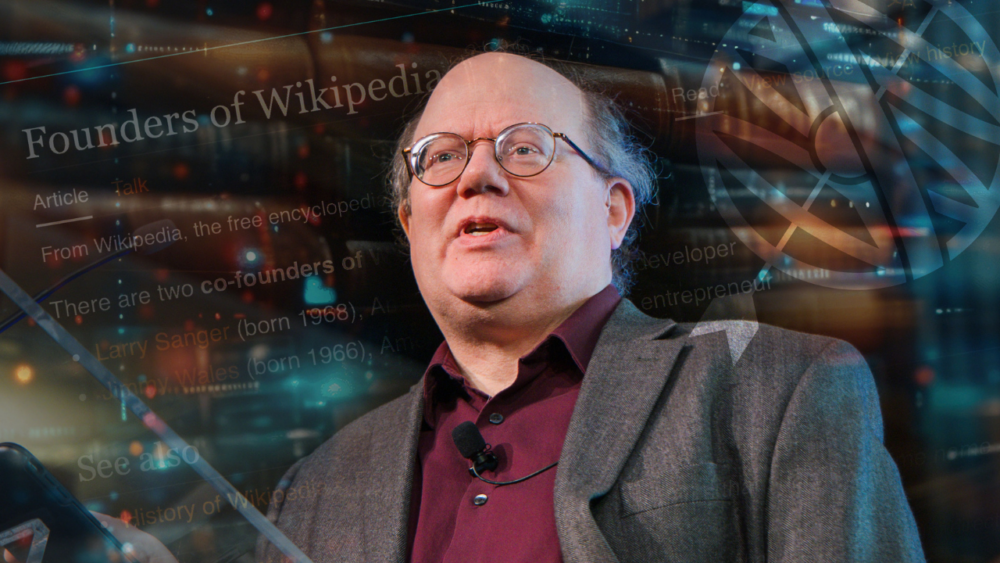
On this episode of ID The Future, hosts Andrew McDiarmid and Nathan Jacobson continue their conversation with Wikipedia co-founder Larry Sanger. In this segment, Sanger explains how his philosophy to decentralize the world's knowledge plays into science and truth-seeking in the age of AI. He talks about the shortcomings of large language models and why humans are irreplaceable and essential to increasing our understanding of the world. Sanger also discusses the challenges that online encyclopedias like Wikipedia have faced in accurately and fairly reflecting controversial or important topics. This is Part 2 of a two-part conversation. Check out Part 1 in a separate episode! Read More ›