ID the Future Intelligent Design, Evolution, and Science Podcast
Author

Michael Behe

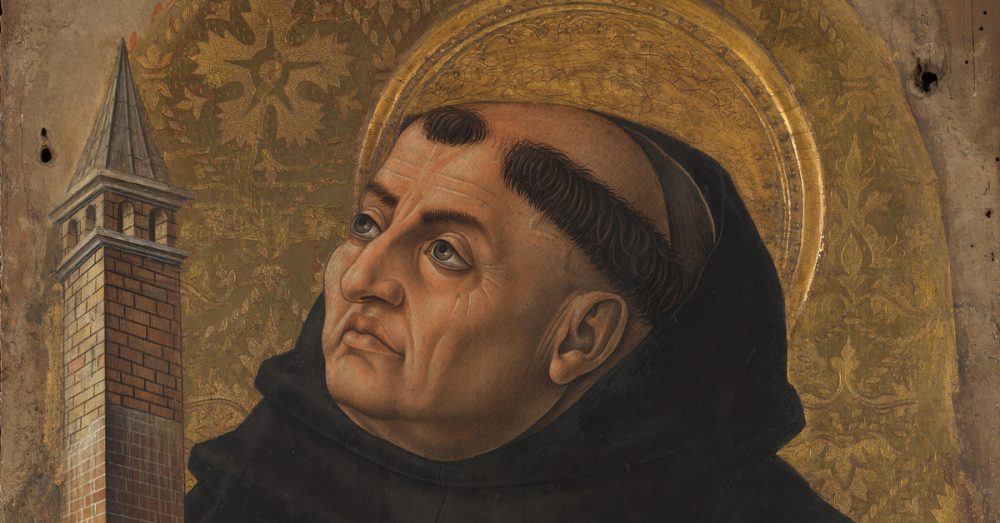
StThomasAquinas

Behe and Ramage Debate, Pt. 2: Evolution, ID, and Aquinas

Today’s ID the Future continues the conversation between Catholic intelligent design biologist Michael Behe and Catholic theologian Matthew Ramage. Both agree that nature points to a cosmic designer, but Ramage says he prefers, on aesthetic grounds, the idea that the biological realm has the capacity, gifted by God, to evolve on its own without the need for intervention by God. Behe notes that people have different aesthetic predilections, but it’s the scientist’s job not to figure out how he would have preferred things to have happened in nature, but to discover how they actually did come about. Behe also says that while the sun, moon, and stars do move according to fixed natural laws, it doesn’t follow from this that Read More ›

friendly conversation
Hands of friends with coffee cups
Image Credit: Antonioguillem - Adobe Stock

Michael Behe and Matthew Ramage Debate Evolution and ID, Pt. 1

Today’s ID the Future brings the first part of a friendly debate/discussion between Lehigh University biologist and intelligent design proponent Michael Behe and Catholic theologian Matthew Ramage. Led by Philosophy for the People podcast host Pat Flynn, Behe starts by noting that he is a lifelong Catholic who accepted from childhood that, as he was taught in school, if God wanted to work through the secondary causes of Darwinian evolutionary mechanisms to generate the diversity of life, who were we to tell him he shouldn’t or couldn’t do it that way? Behe says that his skepticism toward Neo-Darwinism arose many years later and stemmed purely from his scientific research. Ramage, who specializes in the work of Pope Benedict XVI, sees Read More ›

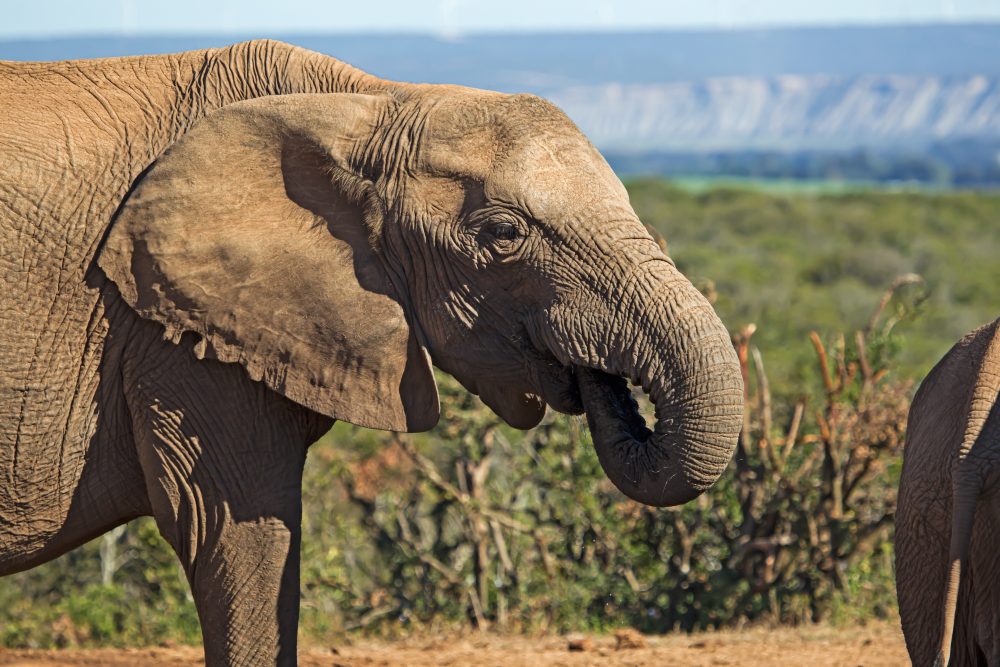
tuskless elephant
Tuskless female elephant with trunk in mouth
Image Credit: geoffsp - Adobe Stock

Michael Behe: Evolution, Devolution, Design

Today’s ID the Future features three recent Evolution News essays by Lehigh University biology professor and Darwin Devolves author Michael Behe, as read by host Andrew McDiarmid. In the first, nothing shows the feebleness of Darwinism quite so much as breathless stories about new results that turn out to be much ado about nothing. In this case, it’s some recent speculation about the rise of “lactase persistence” in many human adults. Then it’s onto malaria, much beloved of evolutionists, not for its lethality but as a demonstration of evolution in action. But Behe dissects the latest news story on the topic to show that the touted malaria evolution is, once again, malaria gnawing off the proverbial leg to achieve a Read More ›

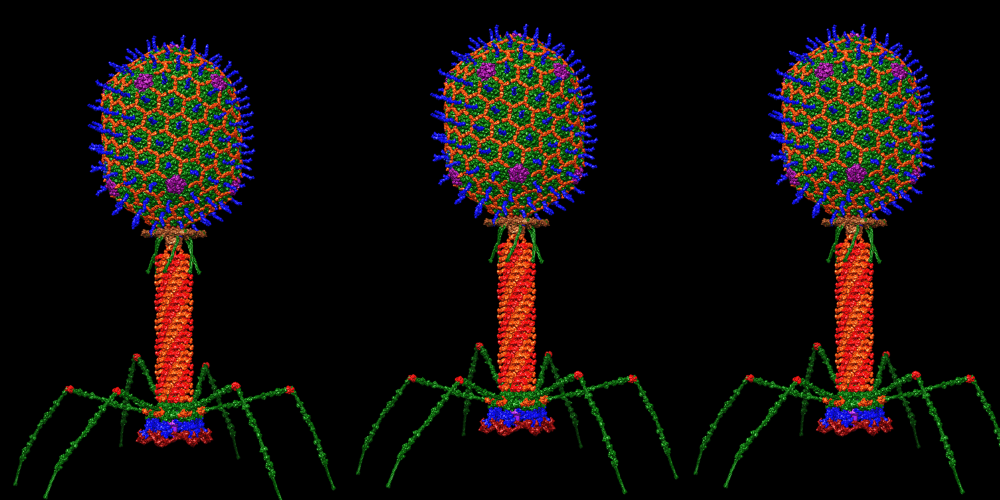
T4 bacteriophage
Dr. Victor Padilla-Sanchez, PhD - Atomic structural model of bacteriophage T4 in UCSF Chimera software using pdbs of the individual proteins--CC 4.0 attribution license

Behe: Bacteriophage—The New Poster Child for Darwin’s Doom

On today’s ID the Future, Lehigh University biologist Michael Behe argues that Darwinism was built on a foundation of ignorance. Through no fault of Darwin’s, neither he nor anyone else in his day had a clue about the nature of cellular life and biological information, says Behe. Even the biologists of the Neo-Darwinian synthesis in the first half of the twentieth century were fairly clueless about the foundation of life, Behe says. When researchers did finally begin to unravel the sophisticated foundations of life, earlier notions of how evolutionary processes might have invented the great diversity of life forms on earth were exposed as causally inadequate. Behe says that in fact all the attempts to rescue the idea of mindless Read More ›

Saccharomyces_cerevisiae_yeast
By Rainis Venta Wikimedia Commons. Drop-inoculation of laboratory baker´s yeast (Saccharomyces cerevisiae) mutants on agar plate.

Two Recent Papers Buttress Behe’s Darwin Devolves Thesis

On today’s ID the Future Darwin Devolves author and biologist Michael Behe discusses two recent technical papers that the news media billed as dramatic evidence for evolution. As Behe explains in his conversation with host Eric Anderson, a careful look at the papers themselves shows that both cases involve devolution. That is, the biological forms in question did not evolve novel structures and information; instead they threw away things to achieve a niche advantage. In the first study, in the journal Nature Microbiology, the researchers found that in Africa, where “most rapid diagnostic tests (RDTs) for falciparum malaria recognize histidine-rich protein 2 antigen,” the malaria parasite has repeatedly evolved a way to sometimes elude detection, giving it a selective advantage, Read More ›

zen-tree-inside-mystery-shining-sun-stockpack-adobe-stock
Image Credit: Johann - Adobe Stock

Darwin Devolves Author Michael Behe Tangles with Two Philosophers, Pt. 3

On this ID the Future, ID biologist Michael Behe continues fielding tough questions from philosophers Pat Flynn and Jim Madden. Here in Part 3 of 3, Behe responds to the claim that some designs in biology are bad designs and to criticisms leveled at ID from some Thomists. Also in the mix, the issue of academic pressure to distance oneself from ID, even before those involved understand what the theory of intelligent design actually is. Madden also asks Behe what reforms he’d pursue if he suddenly found himself in charge of the National Academy of Sciences. Tune in to hear Behe’s response, and much more. This three-part series is borrowed, with permission, from Flynn’s podcast, which can be found on his Read More ›

zen-tree-inside-mystery-shining-sun-stockpack-adobe-stock
Image Credit: Johann - Adobe Stock

ID Pioneer Michael Behe Tangles with Two Philosophers, Pt. 2

In today’s ID the Future, intelligent design pioneer Michael Behe continues his conversation with philosophers Pat Flynn and Jim Madden. Here in Part 2 of a three-part series, Behe offers an illustration from language and Madden presses him, noting that meaning detection in language is not parts to whole. A lively exchange ensues and then Behe turns the discussion back to his primary focus, detecting design in molecular biological machines by recognizing the purposeful arrangement of parts. From there the conversation turns to everything from epigenetics, systems biology, and autopoiesis to co-option, mousetraps, tie clips, biologist Kenneth Miller, and the philosophers Aristotle and Thomas Aquinas. For Behe’s newest book, A Mousetrap for Darwin, go here. This discussion is presented here with permission of philosopher Read More ›

zen-tree-inside-mystery-shining-sun-stockpack-adobe-stock
Image Credit: Johann - Adobe Stock

Biologist Michael Behe Tangles with Two Philosophers, Pt. 1

Today’s ID the Future features Darwin Devolves author and Lehigh University biologist Michael Behe speaking about the logic and evidence of intelligent design with two philosophers, Pat Flynn and Jim Madden. In a friendly, stimulating exchange, Flynn and Madden press Behe with objections — some philosophic, others scientific — to see how well his position stands up to scrutiny from experts who have engaged the subject. Here in Part 1 of a three-part series, Behe counters the charge that ID is an argument from ignorance, and then the three men compare the contemporary design argument to philosopher Thomas Aquinas’s fifth way. For Behe’s newest book, A Mousetrap for Darwin, go here. This discussion is presented here with permission of philosopher Read More ›

fragmented cube
Image Credit: Andrea Danti - Adobe Stock

Michael Behe and Cilia 3.0 … or, Irreducible Complexity Cubed

On today’s ID the Future, author and biologist Michael Behe discusses with host Andrew McDiarmid how the once seemingly humble cilium is actually even more irreducibly complex than Behe suggested in his ID classic Darwin’s Black Box—and indeed, even more complex than his review of cilia in his update in 2007. At the time Behe described cilia as “irreducible complexity squared.” But as noted in a recent article at Evolution News, even more layers of sophistication in cilia and their Intraflagellar Transport (IFT) system have now been discovered. So, does that mean we are now looking at irreducible complexity cubed? Listen in as Behe and McDiarmid revel in the engineering sophistication of this fascinating molecular machine, and discuss why, more Read More ›

Image Credit: pathdoc - Adobe Stock

A Mousetrap for Blind Evolution, and Larry Moran

Today’s ID the Future concludes our series on A Mousetrap for Darwin, Lehigh University biochemist Michael Behe’s new book on evolution and intelligent design. Here Behe and host Eric Anderson tackle an objection to Behe’s work from evolutionary biologist Larry Moran. Moran says that while the Darwinian process may find it difficult to find any particular solution requiring evolutionary innovation, there are countless possible solutions to a given problem, not just the one solution that evolution did hit upon and that is under investigation. According to Moran, Behe failed to take this into account, a factor that greatly enhances the chances of blind evolution to engineer novel solutions to ecological challenges. Behe counters that Moran’s objection misses the force of Read More ›