ID the Future Intelligent Design, Evolution, and Science Podcast
Topic

Emily Reeves

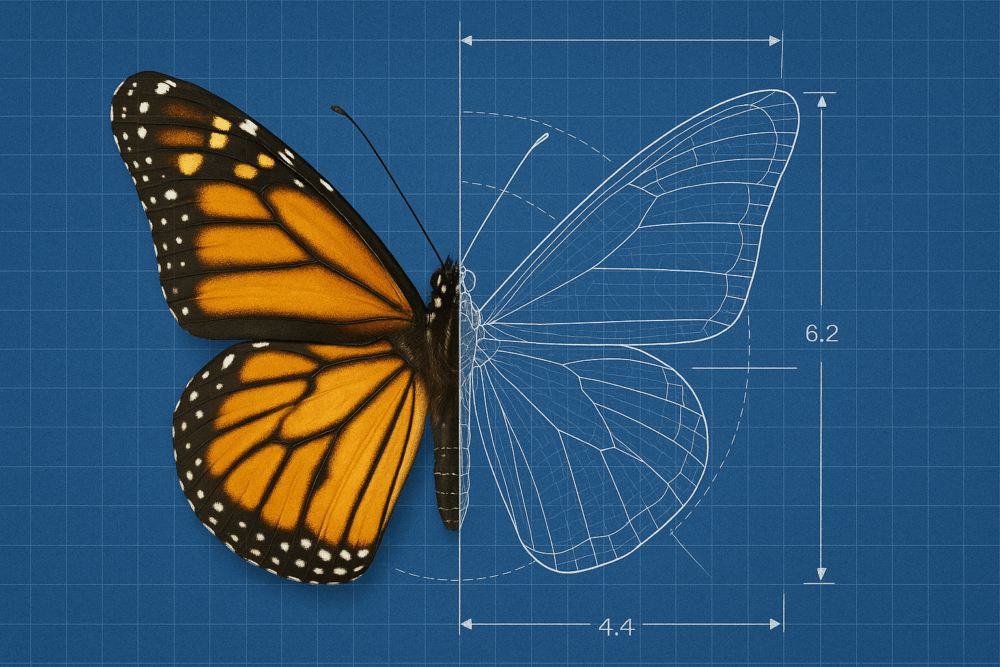
Butterfly-Blueprint

When Engineering Meets Biology: More From Our Scientist Roundtable

A Quick Message From Host Andrew McDiarmid: Hey thanks for joining me! Did you know that although ID The Future is free content, it’s not free to produce? If you’re enjoying the interviews, commentaries, and readings you hear on the podcast, would you consider partnering with me to create more new content next year? Support the CSC today to help me generate another amazing lineup of interviews with ID scientists and scholars. Thanks for your support! When biologists use principles of engineering to study living systems, they can gain a richer, deeper understanding of how and why life works. But most biologists are trained to view design as the product of a blind, purposeless, gradual evolutionary process. Today on ID Read More ›
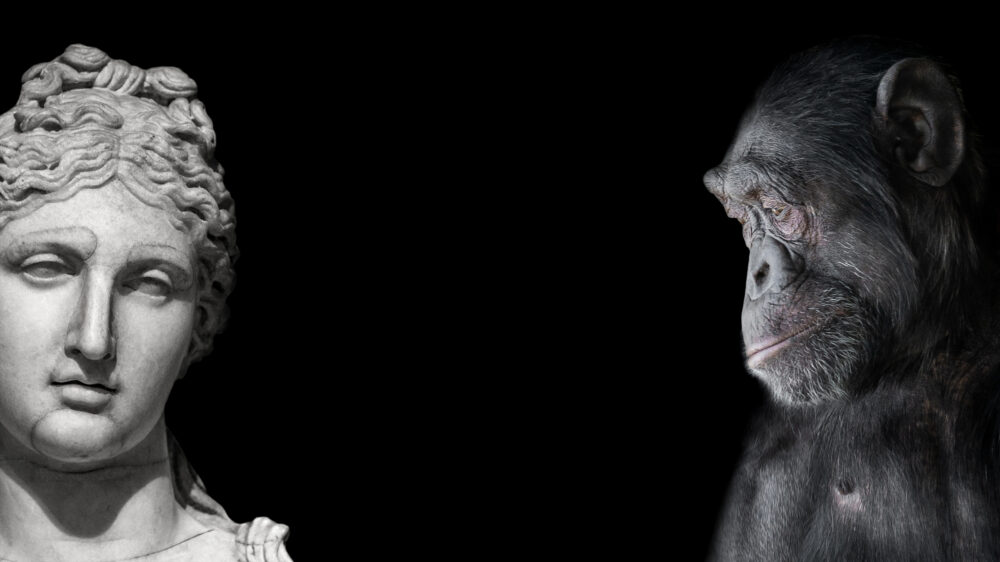

collage-of-two-contrast-portraits-of-chimpanzee-and-beautifu-232675949-stockpack-adobestock
Collage of two contrast portraits of Chimpanzee and beautiful Roman woman in stone at black background, details, paste space
Image Credit: neurobite - Adobe Stock

New Study Shatters the 1% Human-Chimp Difference Myth

When scientists originally studied the chimp genome, they used the human genome as a template. This scaffolding technique gave birth to the popular claim that chimp and human genomes are only 1% different. But new research has now blown the 1% myth out of the water. On today's ID The Future, geologist Dr. Casey Luskin speaks with host Dr. Emily Reeves about this explosive new finding and what it means for the debate over evolution. Read More ›
robotic-engineer-automatic-mechanic-checking-quality-system-1168154051-stockpack-adobe_stock
Robotic engineer automatic mechanic checking quality system of automation robot arms machine in factory. Service programming machinery welding robots in production at factory industry.
Image Credit: eakgrungenerd - Adobe Stock

How to Study Biology with Systems Engineering Principles

Traditional methods in biology have proven insufficient for understanding and accurately predicting complex biological systems. Why? The great majority of biologists are trained to study life from the bottom up, as the result of unguided evolutionary processes. It turns out there are better ways to observe, question, hypothesize, experiment, and analyze a complex system. On this ID The Future, host Andrew McDiarmid welcomes biochemist and metabolic nutritionist Dr. Emily Reeves to the podcast to discuss her co-authored paper on how biologists can apply principles from systems engineering to biology to better approach the study of complex living systems. Dr. Reeves explains how the new methodology works and how it can produce fruitful scientific research. Read More ›
holding-hands-loving-couple-stands-in-the-middle-of-the-whea-299407210-stockpack-adobe_stock
Holding hands loving couple stands in the middle of the wheat field at sunrise. A young couple in love touched hands on the first date. Loving couple has a happy relationship. First love concept.
Image Credit: gorynvd - Adobe Stock

Can Meaning and Purpose Emerge From a Darwinian Process?

Did meaning and purpose arise from a bottom-up Darwinian process to give us an evolutionary advantage? Or is the universe infused with meaning and purpose for a deeper reason than survival? On this ID The Future, host Andrew McDiarmid and Dr. Emily Reeves explore whether meaning and purpose can emerge from an unguided evolutionary process. They also discuss the machine metaphor in biology and how it can help us understand and explain living systems. Read More ›
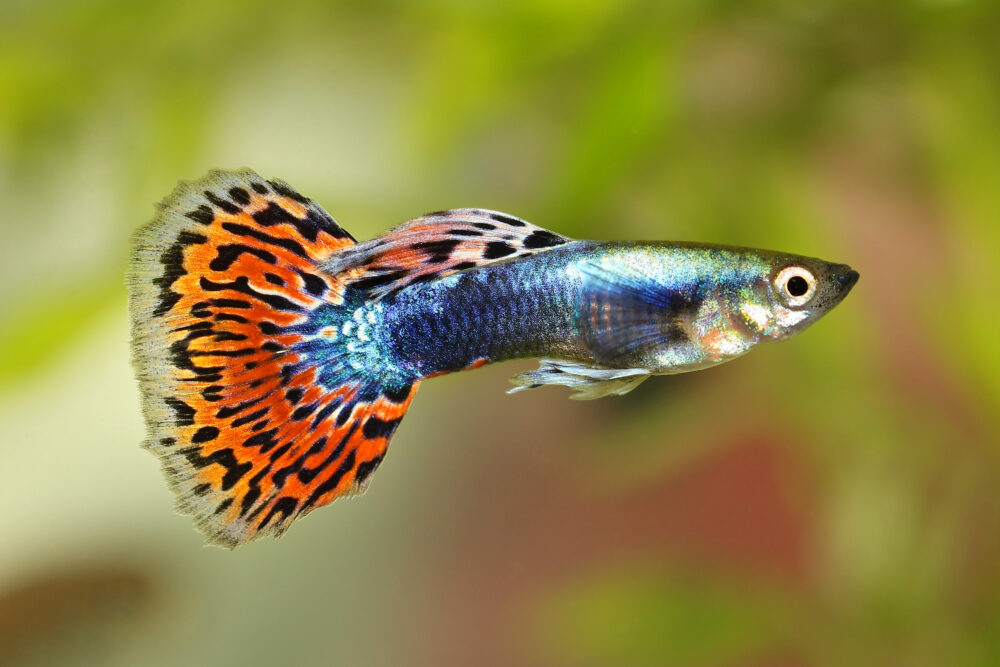
Guppy Poecilia reticulata colorful rainbow tropical aquarium fish
Image licensed from Adobe Stock

The Engineered Adaptability of the Humble Guppy

Do living things evolve right before our eyes? Perhaps the most common evidence put forward to support evolutionary theory is the observation that organisms can adapt. But is this adaptability really a hallmark of a gradual Darwinian process? Or is it evidence of intelligent design? On this ID The Future, host Eric Anderson speaks with Dr. Emily Reeves about the adaptability of the humble guppy fish, a new icon of evolution heralded by biologists as proof positive of Darwinian evolutionary processes at work. In this episode, Dr. Reeves uses guppies to discuss why the adaptability of organisms is actually powerful evidence of design. She also explains how biologists can improve their abilities as scientists by learning more about engineering. Read More ›
Dallas skyline
Image Credit: f11photo - Adobe Stock

Emily Reeves Previews Dallas Science/Faith Conference 2022

On this ID the Future, host Andrew McDiarmid sits down with Emily Reeves, one of the speakers for the January 22, 2022, Dallas Science and Faith Conference. The two walk through the lineup of speakers for the conference (Stephen Meyer, Brian Miller, Casey Luskin, Ray Bohlin, and others), tease some of the talks, and discuss how to join the one-day event live, either in person in the Dallas area or online. For more about the conference, slated for this Saturday, and to sign up, go here.

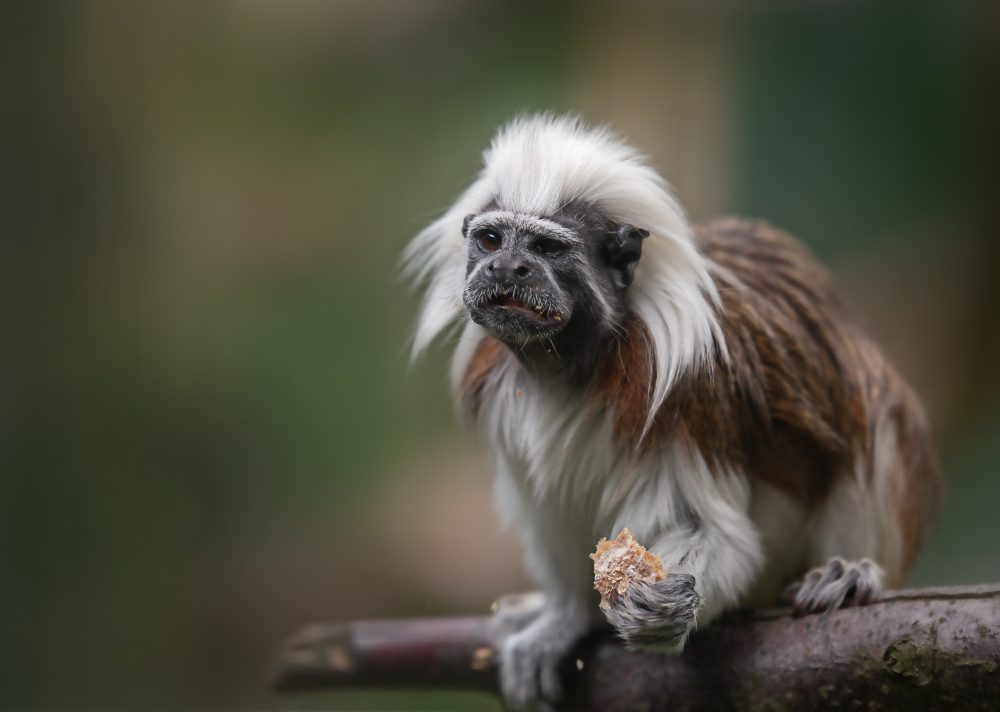
tamarin new world monkey
Image Credit: myschka79 - Adobe Stock

Casey Luskin: Biogeography Is No Friend of Common Descent

On this ID the Future, geologist Casey Luskin discusses biogeography and the problems it poses for the idea of universal common descent. To make it work, evolutionists have to propose, for instance, that old world monkeys rafted across the Atlantic from Africa to South America on a natural raft. Really? That’s some raft. And how did the monkeys not starve to death? Or die of thirst? They couldn’t drink salty ocean water, after all. And talk about a genetic bottleneck! That’s just one of several problems Luskin raises with the idea that all species gradually evolved from a universal common ancestor. In his conversation with host Emily Reeves, he also touches on the problem of convergence, as when two creatures Read More ›