

Brian Miller: Transforming Lives Through the Summer Seminar

The Humble Origins of the Big Bang Theory
The Real Heroes of the Big Bang Revolution
William Whewell: Statesman of Science
When Natural and Super-Natural Explanations Work Hand in Hand

Thinking God’s Thoughts: Kepler and Cosmic Comprehensibility

Nature Paper: Groundbreaking Science on the Decline
On today’s ID the Future philosopher of science Paul Nelson discusses a new paper in Nature making waves in the scientific community, “Papers and Patents are Becoming Less Disruptive over Time.” According to Michael Park and his fellow researchers, the rate of groundbreaking scientific discoveries is declining while the percentage of consolidating (or incremental) science is coming to dominate. Is the spirit of groundbreaking scientific discovery withering, and if so, why? Nelson notes a 1997 book by John Horgan, The End of Science. Nelson credits Horgan for seeing the trend a generation ahead of the Park paper, but Nelson breaks with Horgan on the diagnosis. Horgan posits that groundbreaking science is declining because we have already made most of the Read More ›
The 200th Birthday of Louis Pasteur: A Man of Science and Faith
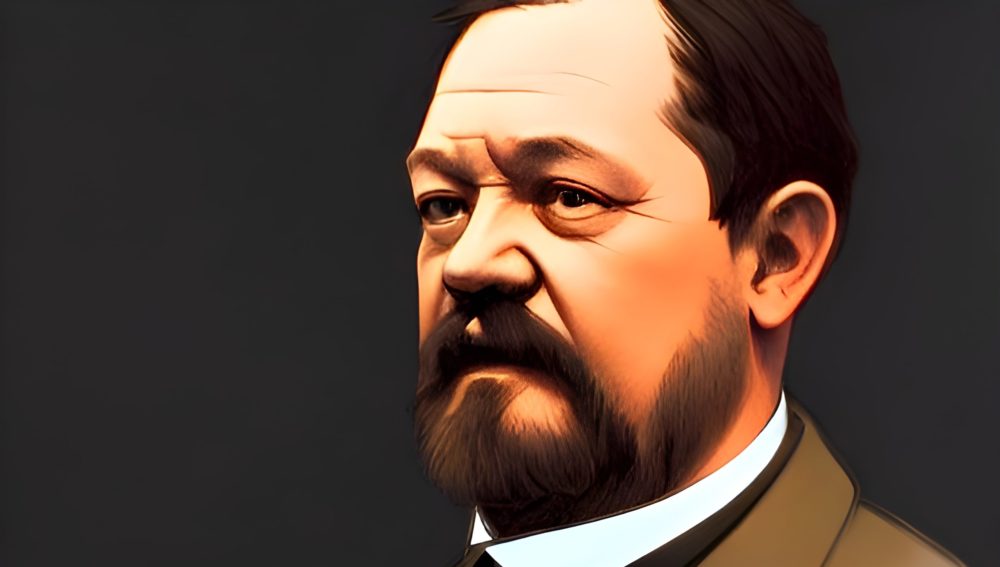
December 27, 2022 marks the 200th anniversary of the birth of Louis Pasteur, the French scientist whose scientific breakthroughs have saved millions of lives, and whose work on microbes sounded the death knell of the idea of spontaneous generation. On this episode of ID the Future, biologist Ann Gauger walks listeners through the triumphs, flaws, and tragedies in the life of this extraordinary individual. In the nineteenth century, it was widely believed that the spontaneous generation of life from non-life was common and unremarkable, since it was thought that spontaneous generation of worms, mold, and other life forms occurred all the time in rotting meat and dirty rags. Pasteur constructed an experiment demonstrating that these “spontaneously” arising worms and such Read More ›

Jay Richards on the Art of Answering Theistic Evolutionists
On today’s ID the Future, philosopher Jay Richards offers advices on engaging with evolutionists over the issues of origins, evolution, and intelligent design. In his conversation with host Casey Luskin, he says that if someone tells you he’s a theistic evolutionist, first find out what he means by theism and evolution. The latter term, in particular, can have widely varying meanings, and the average lay persons who see themselves as theistic evolutionists likely see God as actively and creatively working in the history of life to steer evolutionary outcomes, including the origin of humanity. What they may not realize is that such a view takes them well outside the bounds of what academic theistic evolutionists generally mean by the term Read More ›