
ID the Future Intelligent Design, Evolution, and Science Podcast
Topic

Neo-Darwinism

glowing-jellyfish-swim-deep-in-blue-sea-medusa-neon-jellyfis-473265737-stockpack-adobestock
Glowing jellyfish swim deep in blue sea. Medusa neon jellyfish fantasy in space cosmos among stars
Image Credit: angel_nt - Adobe Stock

Meyer, Behe, and Lennox on Science, God, and Darwin’s Other Doubt
Every Friday we pull a gem out of our archive for those who may not have enjoyed it yet. On today’s ID the Future out of the vault, Oxford’s John Lennox, Lehigh University’s Michael Behe, and Darwin’s Doubt author Stephen Meyer continue a probing conversation with host Peter Robinson on what they see as the growing evidence for intelligent design and the scientific and philosophical problems with Darwinian materialism. This is Part 2 of a two-part conversation. This interview appears on ID The Future with the kind permission of Peter Robinson and the Hoover Institution. Read More ›
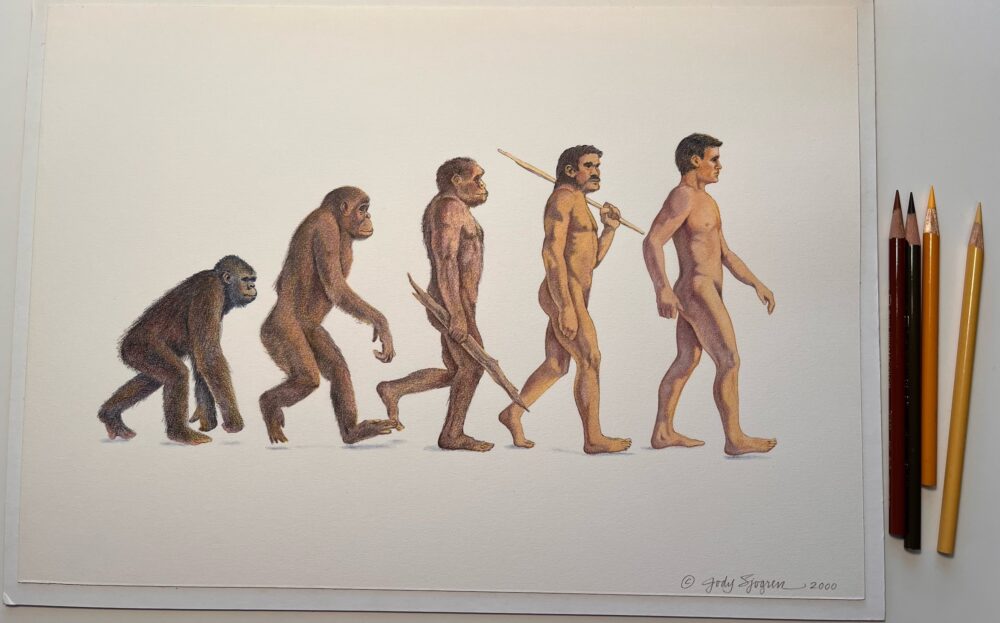
ApeHumanjpg
Drawing copyright Jody Sjogren. All rights reserved. Used with permission.

Artist Jody Sjogren on Illustrating the Icons of Evolution

Artistic license has been used to promote Darwinian evolution since the late nineteenth century. Icons of evolution have appeared in textbooks, journals, magazines, and other visual media to promote a materialist worldview that is light on evidence and weighty on assumption. But in 2000, a book came along – Icons of Evolution – that finally exposed the myths, exaggerations, and outright fakery behind ten of the most infamous icons of Darwin’s theory. Today, host Andrew McDiarmid welcomes the illustrator of that ground-breaking book, medical illustrator and artist Jody Sjogren, to discuss her experience of bringing these famous icons to life and working with author Dr. Jonathan Wells on the project. Jody also shares some of her memories of Dr. Wells, Read More ›

nature-stockpack-adobe-stock-394141619-stockpack-adobestock
Nature.
Image Credit: BillionPhotos.com - Adobe Stock

Brian Miller on Advancing Biology Through an Engineering Lens

Can viewing life as designed enhance scientific research? Today, host Andrew McDiarmid speaks with physicist Dr. Brian Miller about the fruitful research that can result when engineering principles are applied to the study of biological systems. Dr. Miller is part of a group that brings together engineers, scientists, and scholars to demonstrate how engineering principles, patterns, and tools can deepen the understanding of biology. The group hosts an annual Conference on Engineering in Living Systems, hosted by Discovery Institute, that highlights new insights and research projects in this bold new approach to the study of life. Here Dr. Miller gives the lowdown on current research as well as this year's conference. Read More ›
the-birth-of-the-solar-system-in-space-a-big-bang-3d-illustr-198380466-stockpack-adobestock
The birth of the solar system in space, a big bang 3d illustration
Image Credit: flashmovie - Adobe Stock

Stephen Meyer: God Behind the Birth of Science and the Cosmos

Do we have to choose between science and God? Absolutely not, says philosopher of science Dr. Stephen Meyer. In fact, theistic ideas about nature actually inspired the rise of modern science. On today’s ID the Future from the archive, Return of the God Hypothesis author Stephen Meyer and radio host Michael Medved discuss the arguments presented in a series of short videos featuring Dr. Meyer that explore the increasingly strong scientific case for intelligent design and for the idea that the universe is the product of a transcendent mind. Read More ›
excavator-working-at-the-demolition-of-an-old-industrial-bui-140320329-stockpack-adobestock
Excavator working at the demolition of an old industrial buildin
Image Credit: Monika Gruszewicz - Adobe Stock

Jay Richards on the “Ground Clearing” Work of Jonathan Wells
Before the positive case for intelligent design can be received effectively, the case against the Darwinian evolutionary mechanism must be clearly laid out. One man who was instrumental in this initial "ground clearing operation" was biologist Dr. Jonathan Wells, our friend and colleague who passed away in 2024. On this ID The Future, host Andrew McDiarmid welcomes Dr. Jay Richards back to the podcast to share his memories of Dr. Wells and discuss the significance of Wells's life and work. Read More ›
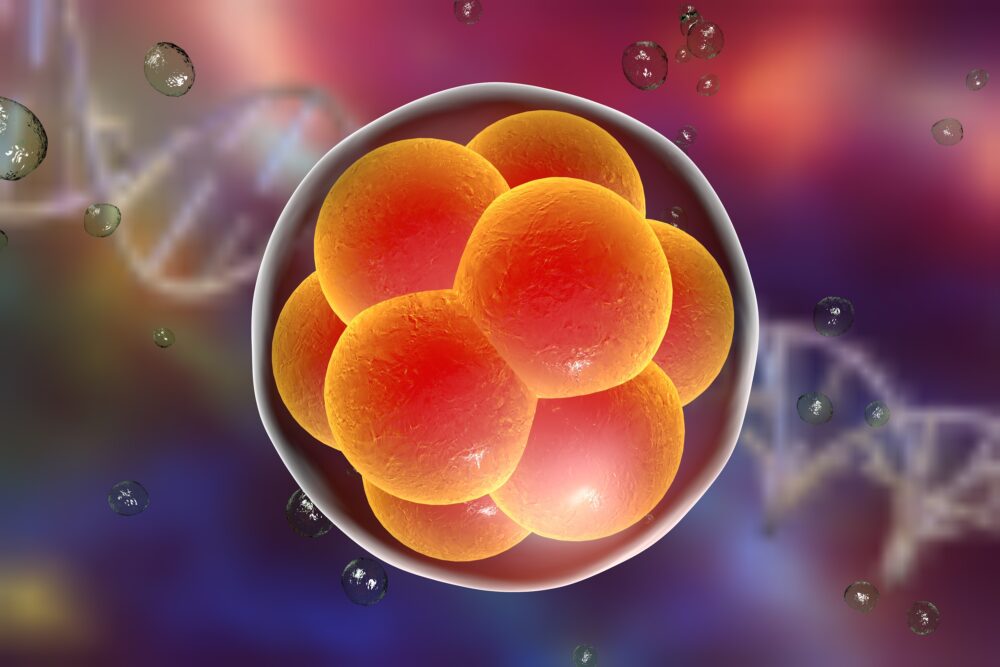
human-embryo-on-the-stage-of-16-cells-on-background-with-dna-96311422-stockpack-adobestock
Human embryo on the stage of 16 cells on background with DNA
Image Credit: Dr_Microbe - Adobe Stock

Physicist Brian Miller: The Non-Algorithmic Nature of Life

For decades, we’ve thought the control center of life lies in DNA. But a new scientific framework is emerging that challenges that idea, and suggests that vast portions of the genome are immaterial and lie outside the physical world. Today, physicist Dr. Brian Miller shares his perspective on the cutting-edge, potentially revolutionary research of mathematical biologist Dr. Richard Sternberg on the immaterial aspects of the genome. In this exchange, Dr. Miller shares several examples of the immaterial nature of life. These ideas point towards the earliest stages of the next great scientific revolution and have significant implications for the intelligent design debate. Read More ›
Vincent van Gogh, The Starry Night, 1889
Vincent van Gogh, (1853-1890) The Starry Night, 1889, oil on canvas. Museum of Modern Art, New York City. Licensed via Adobe Stock; GiorgioMorara - stock.adobe.com

Can Evolutionary Processes Explain Human Creativity?

On this ID The Future, we're sharing a conversation that first aired on Mind Matters News, another podcast from Discovery Institute that focuses on the intersection of artificial and natural intelligence. In this episode, guest host Pat Flynn welcomes engineer Dr. Eric Holloway and professor Robert J. Marks to discuss the information cost of creativity. The conversation is based on a chapter in the recent volume Minding the Brain, authored by Dr. Holloway and Marks. This conversation originally aired on the Mind Matters News podcast. Visit mindmatters.ai/podcast for more. Read More ›
young-ballerina-in-a-beautiful-dress-is-dancing-in-a-dark-ph-119165194-stockpack-adobestock
Young ballerina in a beautiful dress is dancing in a dark photostudio
Image Credit: imynzul - Adobe Stock

Why Life Is the Most Unnatural Thing in the Universe

We usually think of life as the most natural thing there is – blooming plants, flowing water, the cycles of nature. But what if that perspective is fundamentally challenged by the very laws of physics that govern our universe? On this ID The Future, host Andrew McDiarmid welcomes physicist Dr. Eric Hedin to the podcast to discuss the compelling idea that life is the most "unnatural" thing in the universe. Dr. Hedin contends that the complex, organized nature of life defies the natural tendency of matter and energy towards disorder and equilibrium, suggesting that life requires something only an intelligent designer could provide. Read More ›
collage-of-two-contrast-portraits-of-chimpanzee-and-beautifu-232675949-stockpack-adobestock
Collage of two contrast portraits of Chimpanzee and beautiful Roman woman in stone at black background, details, paste space
Image Credit: neurobite - Adobe Stock

New Study Shatters the 1% Human-Chimp Difference Myth

When scientists originally studied the chimp genome, they used the human genome as a template. This scaffolding technique gave birth to the popular claim that chimp and human genomes are only 1% different. But new research has now blown the 1% myth out of the water. On today's ID The Future, geologist Dr. Casey Luskin speaks with host Dr. Emily Reeves about this explosive new finding and what it means for the debate over evolution. Read More ›
plants-background-with-biochemistry-structure-stockpack-adob-456951388-stockpack-adobestock
Plants background with biochemistry structure.
Image Credit: Marchu Studio - Adobe Stock

Register Now: HS Biology and Chemistry With Intelligent Design Integration

On this ID The Future, host Andrew McDiarmid welcomes Kristin Marais and Summer Lile, two passionate instructors from Discovery Institute Academy, to discuss their high school biology and chemistry courses, uniquely taught from the perspective that nature reflects intelligent design. These courses offer a complete, sequenced curriculum and include readings, handouts, videos, pre-recorded instructor lectures, and hands-on wet labs designed to be done at home. Live classes and one-on-one teacher drop-in sessions are also available. In this exchange, both teachers discuss what students will learn in their class and how intelligent design concepts are integrated throughout course content. Learn more and register at discoveryinstitute.academy. Read More ›