ID the Future Intelligent Design, Evolution, and Science Podcast
Topic

suboptimal design

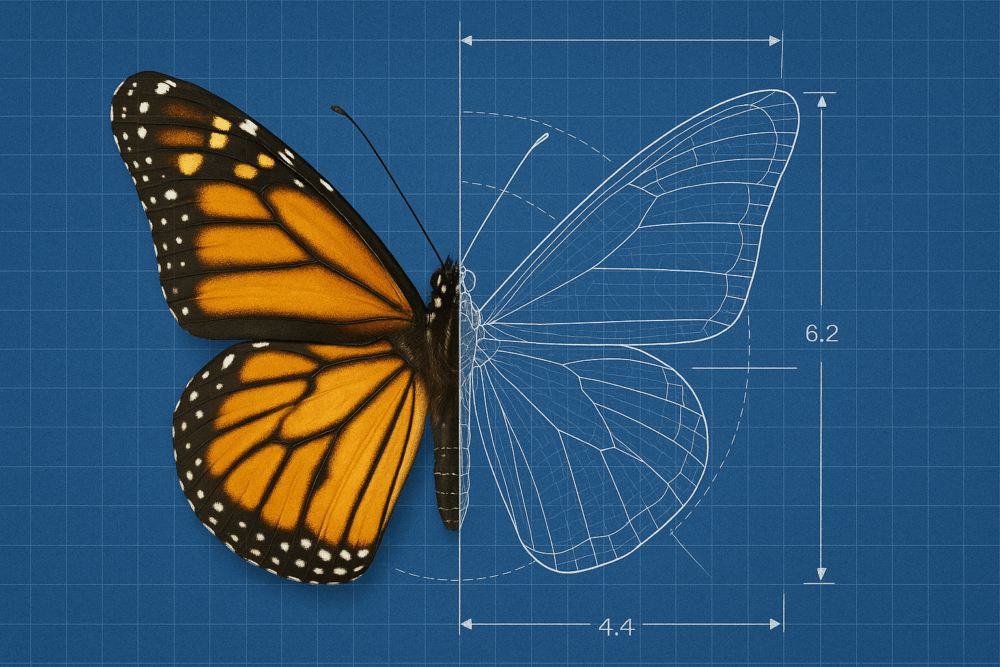
Butterfly-Blueprint

When Engineering Meets Biology: More From Our Scientist Roundtable

A Quick Message From Host Andrew McDiarmid: Hey thanks for joining me! Did you know that although ID The Future is free content, it’s not free to produce? If you’re enjoying the interviews, commentaries, and readings you hear on the podcast, would you consider partnering with me to create more new content next year? Support the CSC today to help me generate another amazing lineup of interviews with ID scientists and scholars. Thanks for your support! When biologists use principles of engineering to study living systems, they can gain a richer, deeper understanding of how and why life works. But most biologists are trained to view design as the product of a blind, purposeless, gradual evolutionary process. Today on ID Read More ›


Panda Bear Eating Bamboo, Bifengxia Panda Reserve in Ya'an Sichu
Image licensed from Adobe Stock

The Panda’s Thumb: An Extraordinary Instance of Design?

Does the panda's thumb refute intelligent design? Or is it one of the most extraordinary manipulation systems in the mammalian world, as one respected study has found? On this ID The Future, host Casey Luskin speaks with philosopher Dr. Stephen Dilley about his recent paper evaluating the strengths and weaknesses of the iconic panda's thumb argument for evolution. Read More ›
Brian-Miller-Dallas-Science-Faith-2022-59

Brian Miller: The Surprising Relevance of Engineering in Biology

Today’s ID the Future brings listeners physicist and engineer Brian Miller’s recent lecture at the Dallas Conference on Science and Faith, “The Surprising Relevance of Engineering in Biology.” Miller rebuts several popular arguments for evolution based on claims of poor design in living systems, everything from the “backward wiring” of the vertebrate eye to whales, wrists, ankles, and “junk DNA.” But the main emphasis of this discussion is the exciting sea change in biology in which numerous breakthroughs are occurring by scientists who are treating living systems and subsystems as if they are optimally engineered systems. Some in this movement reject intelligent design for ideological reasons. Others embrace it. But all systems biologists treat these systems as if they are masterfully engineered Read More ›

green-sea-turtle-breathing-stockpack-adobe-stock
Green sea turtle breathing
Image Credit: Dennis - Adobe Stock

Hank Hanegraaff and Animal Algorithms Author Eric Cassell, Pt. 2

On today’s ID the Future, radio host Hank Hanegraaff continues his conversation with Animal Algorithms author Eric Cassell. Here they look at more insects with strikingly sophisticated innate behavior, suggesting intricate algorithms encoded into their brains from birth, all of which cannot be effectively explained by reference to Darwinian evolution. Cassell and Hanegraaff touch on wasp martial arts; termite altruism and termite architectural skills, including a cooling system that has inspired a human design; interdependent social caste systems that enhance fitness; and spiderweb architecture and the extraordinary properties of spider silk, including the different kinds of silk and the spider’s ability to employ different types precisely tailored for different needs. Cassell looks at evolutionary explanations for these innate abilities that Read More ›

hawksbill sea turtle
Hawksbill Sea Turtle in Indian ocean
Image Credit: Jag_cz - Adobe Stock

Hank Hanegraaff Interviews Animal Algorithms Author Eric Cassell, Pt. 1

On this ID the Future radio host Hank Hanegraaff interviews Animal Algorithms author Eric Cassell about insects and other small-brained animals with innate behaviors of astonishing sophistication — desert ants, leafcutter ants, honey bees, spiders, monarch butterflies, and many more. These appear to be hard-wired from birth with complex algorithms coded into their neural networks, and some of the algorithms seem to involve complex mathematics. Also mysterious: many of these innate abilities are do or die. So how could they have blindly evolved one small Darwinian step at a time? Also, how would genetic mutations generate the ability to make navigational calculations (as in the case of some birds) that for humans require spherical geometry? Listen in to learn more Read More ›

IDTF-thumbnail
IDTF-thumbnail

Meyer, Berlinski and Yale’s David Gelernter Challenge Darwinism, Pt. 2

This episode of ID the Future features Part 2 of Peter Robinson’s conversation with Yale computer scientist David Gelernter and Discovery Institute senior fellows Stephen Meyer and David Berlinski.

Read More ›
jp-moreland-te-interview

J. P. Moreland on Scientism, Darwinism, and Bucking the Consensus

On this episode of ID the Future, philosopher J. P. Moreland explains from his new book Scientism and Secularism: Learning to Respond to a Dangerous Ideology how scientism helped bring about Darwinism’s current widespread acceptance. Ironically, the process involved some scientists who dismiss theology … doing theology, and doing it not very well. Moreland says this is just one of the reasons that it’s rational to buck the consensus on evolution. Please consider donating to support the IDTF Podcast.