ID the Future Intelligent Design, Evolution, and Science Podcast
Topic

Evolutionary Biology

dawkins-test-tree-of-life-e1684185493368-1200x675

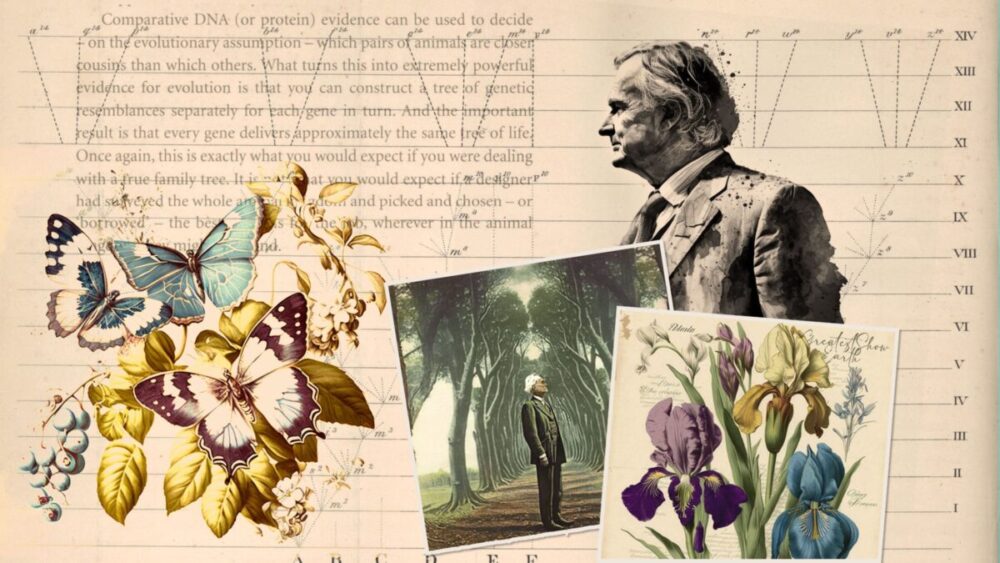
The Dawkins Test Returns an Answer: Intelligent Design

In 2009 atheist biologist Richard Dawkins offered a scientific test to decide between Darwinian evolution and intelligent design (ID). The results are in, and as guest Casey Luskin explains on this ID the Future, the evidence has broken strongly in favor of intelligent design. At the time Dawkins presented the test, he was confident that comparative DNA evidence supported Darwin’s tree of life and its idea of universal common ancestry. He made the point in his 2009 book The Greatest Show on Earth and in two interviews. As he put it, “The single most convincing fact or observation you could point to” in favor of Darwinian evolution over against ID “would be the pattern of resemblances that you see when Read More ›


fetus
3d rendered medically accurate illustration of a fetus at week 20
Image Credit: SciePro - Adobe Stock

David Galloway: The Fetal Circulatory System is Irreducibly Complex

On today’s ID the Future, distinguished British physician and author David Galloway explains why he’s convinced that the human fetal circulatory system is irreducibly complex and therefore beyond the reach of blind gradualistic evolution to have built. In his conversation with host and fellow physician Geoffrey Simmons, Galloway also mentions some molecular machines that he’s convinced are irreducibly complex and shout intelligent design. The occasion for the conversation is Galloway’s new book, Design Dissected.

RGH cover no text
Return of the God Hypothesis, ROGH, Meyer

Pt. 2: Stephen Meyer and Skeptic Michael Shermer

Today’s ID the Future continues a lively and cordial conversation between atheist Michael Shermer and Stephen Meyer, author of Return of the God Hypothesis: Three Scientific Discoveries That Reveal the Mind Behind the Universe. In this segment of the four-part series, Shermer and Meyer discuss a fourth argument for theism, the moral law within. Then they discuss the similarities and differences between inferring design for something like the Rosetta Stone versus inferring intelligent design from the information in DNA or the fine tuning of the universe. The interview is reposted here by permission of Michael Shermer.

Image Credit: pathdoc - Adobe Stock

A Mousetrap for Blind Evolution, and Larry Moran

Today’s ID the Future concludes our series on A Mousetrap for Darwin, Lehigh University biochemist Michael Behe’s new book on evolution and intelligent design. Here Behe and host Eric Anderson tackle an objection to Behe’s work from evolutionary biologist Larry Moran. Moran says that while the Darwinian process may find it difficult to find any particular solution requiring evolutionary innovation, there are countless possible solutions to a given problem, not just the one solution that evolution did hit upon and that is under investigation. According to Moran, Behe failed to take this into account, a factor that greatly enhances the chances of blind evolution to engineer novel solutions to ecological challenges. Behe counters that Moran’s objection misses the force of Read More ›

sierra-negra-volcano-galapagos-stockpack-adobe-stock.jpg
Sierra Negra Volcano - Galapagos
Image Credit: Adwo - Adobe Stock

Paul Nelson Visits the Galapagos Islands, Pt. 2

On this episode of ID the Future, philosopher of biology Paul Nelson continues his discussion with host Andrew McDiarmid about Nelson’s recent visit to the Galapagos Islands, made famous by Charles Darwin. Nelson explains how Darwin was right — partly. Darwin urged biologists to consider the history of a plant or animal, an idea that was much neglected in the work of his predecessors. As Darwin’s experience on the Galapagos showed, and as Nelson’s experience there echoed, history must be part of our explanation for how species and populations have become the way they are today. At the same time, there are demonstrated limits to evolutionary change, Nelson argues, and so natural history alone cannot be the entire explanation for Read More ›

IDTF-thumbnail
IDTF-thumbnail

Dr. Stephen C. Meyer: The Mystery of the Origin of Genetic Information

On this episode of ID the Future, hear the second part of Casey Luskin’s interview with Dr. Stephen C. Meyer, author of the forthcoming book Darwin’s Doubt: The Explosive Origin of Animal Life and the Case for Intelligent Design. Dr. Meyer discusses how the origin of information in the Cambrian explosion poses a problem for evolutionary biology.

Read More ›