Can artificial intelligence be applied to the scientific theory of Darwinian evolution to help us evaluate its strengths and weaknesses? On this episode of ID The Future, host Casey Luskin concludes his conversation with two distinguished PhD scientists who are asking tough questions of Neo-Darwinism: Olen Brown, Professor Emeritus of Biomedical Sciences at the University of Missouri, and David Hullender, Professor of Mechanical and Aerospace Engineering at the University of Texas, Arlington. In Part 2, Luskin discusses the latest paper from Brown and Hullender arguing that AI has strong but unrealized potential both for assessing and also solving major problems with the prevailing naturalistic account of life's origins. This is Part 2 of a two-part conversation. Read More ›
London, England - December 4, 2019: Statue of Charles Robert Darwin was an English naturalist and biologist in Natural History Museum. London, United Kingdom.
Five years ago, Yale University professor of computer science David Gelernter wrote that he was bidding farewell to neo-Darwinian evolutionary theory. Why would he take such a bold step? What convinced him that the neo-Darwinian paradigm no longer satisfied the scientific evidence? On this ID The Future, host Andrew McDiarmid marks the fifth anniversary of Gelernter's important essay by reading it aloud in full. If you’ve read the essay, this will likely be a good refresher on Gelernter’s arguments. If you haven’t read it yet, by all means enjoy! Read More ›
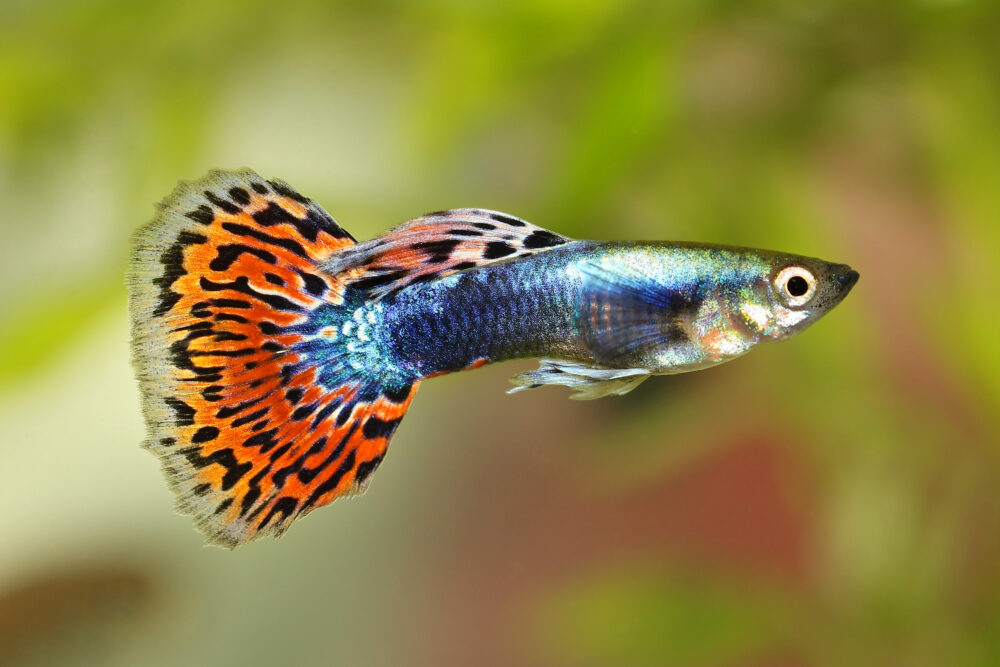
Guppy Poecilia reticulata colorful rainbow tropical aquarium fish
Do living things evolve right before our eyes? Perhaps the most common evidence put forward to support evolutionary theory is the observation that organisms can adapt. But is this adaptability really a hallmark of a gradual Darwinian process? Or is it evidence of intelligent design? On this ID The Future, host Eric Anderson speaks with Dr. Emily Reeves about the adaptability of the humble guppy fish, a new icon of evolution heralded by biologists as proof positive of Darwinian evolutionary processes at work. In this episode, Dr. Reeves uses guppies to discuss why the adaptability of organisms is actually powerful evidence of design. She also explains how biologists can improve their abilities as scientists by learning more about engineering. Read More ›
Panda Bear Eating Bamboo, Bifengxia Panda Reserve in Ya'an Sichu
Does the panda's thumb refute intelligent design? Or is it one of the most extraordinary manipulation systems in the mammalian world, as one respected study has found? On this ID The Future, host Casey Luskin speaks with philosopher Dr. Stephen Dilley about his recent paper evaluating the strengths and weaknesses of the iconic panda's thumb argument for evolution. Read More ›
It's not just intelligent design theorists who are calling for a major rethink of biology and origin-of-life research. On this ID The Future, Casey Luskin speaks to host Andrew McDiarmid about two recent articles in the prestigious journal Nature that review major problems with current theories on the origin of life and the source of genetic complexity in living things. Dig deeper with more resources at idthefuture.com. Read More ›
Can intelligent design and evolution work together? It's an intriguing idea that is welcomed by some, but does the scientific evidence support it? On this ID The Future, host Casey Luskin speaks with Dr. Emily Reeves to discuss her contribution to a recent paper critiquing theologian Dr. Rope Kojonen's proposal that mainstream evolutionary biology and intelligent design have worked in harmony to produce the diversity of life we see on earth. This is part of a series of interviews on this topic. Dig deeper with more resources and episodes at idthefuture.com. Read More ›
Almost 400 years after its discovery, the process of metamorphosis is still a thorny conundrum for evolutionary biologists. But there are other aspects of the humble caterpillar that elude a satisfactory Darwinian explanation, like the origin of caterpillar prolegs. On this ID The Future, paleo-entemologist Dr. Gunter Bechly returns to share insights with us from another article in his popular Fossil Friday series. Read More ›
The RNA world is proposed by some to explain how early life began before DNA. But is RNA capable of maintaining a life-friendly self-replication rate? On this ID The Future, host Andrew McDiarmid welcomes back Dr. Jonathan McLatchie to discuss another headache for the RNA world scenario. Before a trial and error process like natural selection can even get started, self-replicating molecules must have a minimal accuracy rate to copy genetic material effectively. The required fidelity rate is estimated to be 2%. Any error rate higher than that results in error catastrophe for organisms. The average error rate in RNA copying is estimated to be around 17%, vastly higher than the estimated maximum error threshold for survival. McLatchie explains the implications of this for chemical evolutionary theories like the RNA world hypothesis. He also explains how a Bayesian approach to this evidence can provide us with the likeliest explanation for the origin of biological life. "The sorts of features that we observe in life are not particularly surprising if we suppose that a mind is involved," says McLatchie. But things like minimal self-replication fidelity are wildly surprising on a naturalistic hypothesis. Read More ›
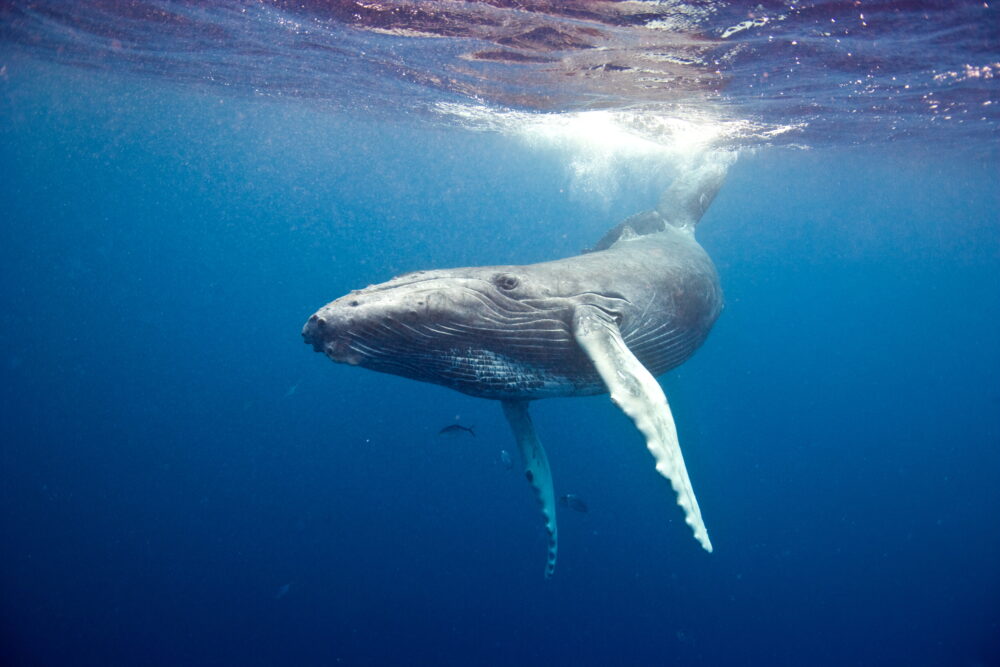
Has the accuracy of teaching on evolutionary theory improved in standard biology textbooks in recent years? On this ID The Future, host Daniel Reeves, Director of Education & Outreach at Discovery Institute’s Center for Science and Culture, speaks with a recent high school graduate named Natalie about her senior year research project. Natalie has had an interest in evolution and intelligent design for years, and she's noticed that textbooks don't always cover important or controversial topics fairly. So when she discovered her school was trialing a new biology textbook, she decided to evaluate the proposed textbook's approach to accuracy and fairness in light of the available scientific evidence. Focusing on the fossil record and genetics, Natalie organized quotations from the textbook into three categories - misrepresented, underdeveloped, or well-aligned - based on how well they conveyed the available evidence. From whale evolution to genetic differences among organisms, Natalie found that more often than not, the textbook was misleading to students in the way it presented or omitted important scientific ideas. "High school students are in such a pivotal time in their life because they're forming their worldview," says Natalie. "And evolution is a theory on the origin of life...that's huge to answering those questions." Natalie encourages her fellow students, and anyone interested in origins, to question and dive deep as they evaluate competing ideas. As biologist and Center for Science and Culture Senior Fellow Jonathan Wells puts it at the start of his latest book, Zombie Science, this book is "dedicated to the students who will need to discern the truth for themselves." Here's one young scholar who is doing just that.
AN IMPORTANT NOTE
In the interview, Natalie shares her personal view that intelligent design should be included in public school science classrooms. However, as a matter of public policy, Discovery Institute opposes any effort to require the teaching of intelligent design by school districts or state boards of education. Attempts to require teaching about intelligent design only politicize the theory and will hinder fair and open discussion of the merits of the theory among scholars and within the scientific community. Furthermore, most teachers at the present time do not know enough about intelligent design to teach about it accurately and objectively.
Instead of recommending teaching about intelligent design in public K-12 schools, Discovery Institute seeks to increase the coverage of evolution in curriculum. It believes that evolution should be fully and completely presented to students, and they should learn more about evolutionary theory, including its unresolved issues. In other words, evolution should be taught as a scientific theory that is open to critical scrutiny, not as a sacred dogma that can’t be questioned. Read more of our recommendations for science curriculum here: https://www.discovery.org/a/3164/ Read More ›
How strong is the evidence for Darwinian evolution? What are the limits of the Darwinian mechanism? How should concepts like evolution and science best be defined? On this episode of ID The Future, we bring to you the first three video lectures from a new online course by molecular and cell biologist Jonathan Wells. In the first brief lecture, Wells explains his own evolution; the evolution of his thinking about evolution, that is. You'll glean some interesting details about Wells's career here. In the second lecture, Wells defines the word evolution by reminding us of its various meanings and uses. He also describes how Darwin's theory of natural selection became the framework that bolstered a materialistic metaphysic that endures today. You'll learn that Darwin's proposal relied less on evidence-based science and more on theological and philosophical arguments. In the third lecture, Wells defines science, and explains what happens when the definition of science is confined to naturalistic explanations only. Every so often, says Wells, enough data accumulates to present a challenge to the prevailing scientific framework. It happened in Newton's day. It happened in Darwin's day. And it may happen again soon, if the mounting evidence supportive of intelligent design is any indication.
Learn more about Wells's online course at discoveryu.org. Over 40 short video lectures, Wells explains the major concepts of both chemical and biological evolution, and he critically assesses the evidence for evolution offered by genetics, developmental biology, fossils, and more. Wells deals with some of the most popular “icons” of evolution found in standard textbooks, including Darwin’s finches, whales, antibiotic resistance, peppered moths, “junk” DNA, and more. Read More ›