
ID the Future Intelligent Design, Evolution, and Science Podcast
Topic

Darwinism

iceland-geothermal-zone-namafjall-area-in-field-of-hverir-la-258708617-stockpack-adobestock
Iceland geothermal zone Namafjall - area in field of Hverir. Landscape which pools of boiling mud and hot springs. Tourist and natural attractions.
Image Credit: Natalia - Adobe Stock

Expert: Without Intelligence, Organic Chemistry Leads to Degradation, Not Life

By now, you may have heard about some of the problems facing the field of origin-of-life research. Maybe you’ve come across Dr. James Tour making the argument that origin-of-life researchers are nowhere near their goal of creating life in a lab or proving a chemical evolutionary scenario for the origin of life. On today's ID The Future, we hear from another expert in origin-of-life chemistry and prebiotic synthesis: Dr. Edward Peltzer. Host Casey Luskin begins a conversation with Peltzer about the significant chemical hurdles facing origin-of-life research, specifically regarding the synthesis of biological building blocks. This is Part 1 of a two-part conversation. Look for Part 2 in a separate episode. Read More ›
London, England - December 4, 2019: Statue of Charles Robert Darwin was an English naturalist and biologist in Natural History Museum. London, United Kingdom.
Statue of Charles Darwin. Licensed via Adobe Stock, wittayayut - stock.adobe.com

20 Years After Dover: Steve Fuller on Science, Censorship, and the “Church of Darwin”

In this ID The Future, host Casey Luskin concludes a two-part conversation with University of Warwick professor and author Steve Fuller reflecting on the 20th anniversary of the Kitzmiller v. Dover trial, a case that examined the constitutionality of teaching intelligent design in public schools. Fuller discusses his experience serving as an expert witness for the defense. He defends his support of a policy that merely informed students of alternative theories to Darwinian evolution. He explains why high school is an ideal time to encourage an open mind toward science. Then he pivots to discuss the deeper issue of institutional censorship in science and how establishment science functions as a religion. He characterizes intelligent design as "anti-establishment" and suggests there's hope for a more pluralistic approach to science in the near future. This is Part 2 of a two-part interview. Read More ›
rough-colored-ocean-wave-falling-down-at-sunset-time-stockpa-167197431-stockpack-adobestock
rough colored ocean wave falling down at sunset time
Image Credit: willyam - Adobe Stock

Casey Luskin on the Rising Tide of Intelligent Design Research

Any scientific theory for the origin of life and the universe is only as strong as its research program. For intelligent design, this is good news. On today's ID The Future, Dr. Casey Luskin describes the current growth and scientific maturity of the Intelligent Design (ID) movement. Luskin describes the progress of ID across three main areas: successful scientific predictions, the unresolved failures of Neo-Darwinism to account for life, and the growth of the ID community as well as scientists outside ID who are looking for alternatives to modern evolutionary proposals. Dr. Luskin compares the growth of the ID research program to a snowball; it started small and faced early setbacks, but it is now rapidly picking up size, speed, and scientific weight as it rolls forward. Read More ›
monarch-emerges-from-its-chrysalis-shell-stockpack-adobe-sto-441062589-stockpack-adobestock
Monarch emerges from its chrysalis shell
Image Credit: Betty Rong - Adobe Stock

Creepy Crawly Complexity: The Intelligent Design of Insects

Bugs. Some of them we enjoy more than others! But there’s no denying they’re a part of life. And though they’re small, they’re examples of big engineering and design. Today, host Andrew McDiarmid welcomes Discovery Institute staffer Kate Kavanaugh to discuss ID Education Days, whole-day experiences hosted by the Center for Science and Culture and geared specifically for middle and high school students in home or private school settings. Lately, the theme of these events has focused on the creepy crawly complexity found within the world of insects and invertebrates. Far from being mere nuisances, these creatures function as tiny engineers that elegantly solve complex problems to sustain global ecosystems. Kavanaugh highlights insights from recent ID Education Day events and explains the importance of studying even tiny examples of intelligent design in nature. Read More ›
classical-columns-on-government-building-with-colorful-sky-s-496190394-stockpack-adobestock
Classical columns on government building with colorful sky
Image Credit: littleny - Adobe Stock

Casey Luskin: How the ID Movement Has Flourished Since the Dover Trial

Was the modern intelligent design (ID) movement "over after Dover," as many ID critics hoped it would be? Quite the opposite. In the last two decades ID has flourished as a scientific research program and continues to gain momentum in both academia and the public square. On today's ID The Future, host Andrew McDiarmid concludes his conversation with geologist, legal scholar, and Dover trial expert Dr. Casey Luskin. In this segment, marking the 20th anniversary of the Kitzmiller vs. Dover trial of 2005, the pair examine the outcome of the Dover trial, in which a judge ruled that intelligent design was a religious viewpoint, not science, and therefore unconstitutional to teach in public schools. Luskin explains why the Dover ruling was highly flawed and unreliable and how it misrepresented the definition of science and the arguments of ID proponents. Luskin also reveals how the ID movement has flourished in the twenty years since Dover. This is Part 2 of a two-part conversation. Read More ›
judge-with-gavel-sitting-at-wooden-table-closeup-stockpack-a-685934129-stockpack-adobestock
Judge with gavel sitting at wooden table, closeup
Image Credit: New Africa - Adobe Stock

Casey Luskin: ID Over After Dover? Not Even Close
Over After Dover. That was the hopeful mantra of many critics of intelligent design (ID) after the Kitzmiller vs. Dover trial in 2005. They were hoping a federal judge could issue a decree from on high that would stop the ID movement cold in its tracks and neo-Darwinism could go back to being unquestioned, unchallenged orthodoxy. But was it over after Dover? Not even close. On this ID The Future, host Andrew McDiarmid marks the 20th anniversary of the Dover trial by beginning a two-part conversation with geologist, legal scholar, and Dover trial expert Dr. Casey Luskin. Luskin takes us back to 2005 to give us his unique perspective on the events that led to the Dover trial, his own personal experiences of the case, and the position the Discovery Institute's Center for Science & Culture held on the issues at stake. This is Part 1 of a two-part conversation. Read More ›
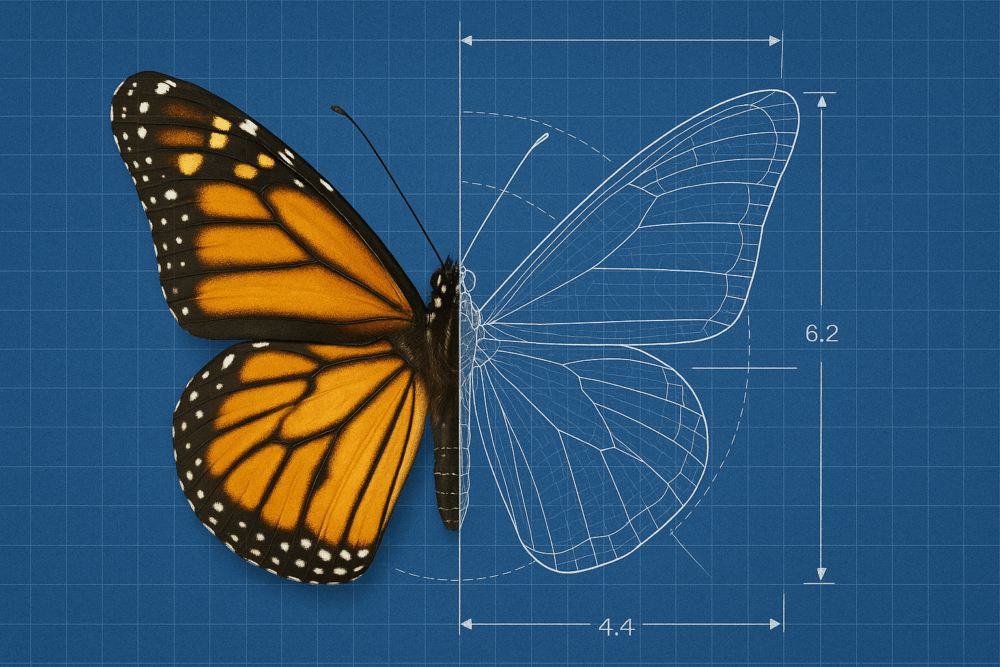
Butterfly-Blueprint

When Engineering Meets Biology: More From Our Scientist Roundtable

A Quick Message From Host Andrew McDiarmid: Hey thanks for joining me! Did you know that although ID The Future is free content, it’s not free to produce? If you’re enjoying the interviews, commentaries, and readings you hear on the podcast, would you consider partnering with me to create more new content next year? Support the CSC today to help me generate another amazing lineup of interviews with ID scientists and scholars. Thanks for your support! When biologists use principles of engineering to study living systems, they can gain a richer, deeper understanding of how and why life works. But most biologists are trained to view design as the product of a blind, purposeless, gradual evolutionary process. Today on ID Read More ›
Screenshot-2025-12-08-at-35103PM

Scientist Roundtable: Examples of Intelligent Design in the Human Body

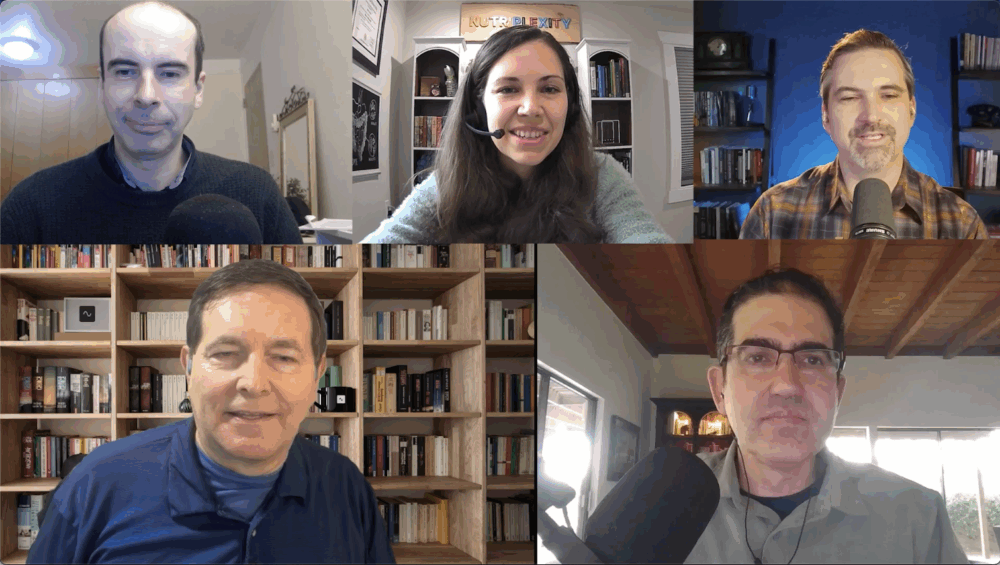
It's easy to be blown away by the examples of engineering prowess in the human body. But it can be challenging to turn that evidence into a robust argument for intelligent design you can share with skeptical friends and colleagues. To help you learn to do that, host Andrew McDiarmid begins a roundtable discussion with not one, not two, not three, but four guests to the podcast, all part of our team of resident scientists at Discovery Institute’s Center for Science and Culture: geologist and lawyer Casey Luskin, biochemist and metabolic nutritionist Emily Reeves, biologist Jonathan McLatchie, and physicist Brian Miller. The first half of the discussion kicks off with a review of the basics of design detection, including various methods for empirically detecting the hallmarks of design in nature. After that, these four experts take turns diving into examples of extraordinary design in the human body. This is Part 1 of a two-part conversation. Read More ›
nebula-and-galaxies-in-space-space-many-light-years-far-from-313552501-stockpack-adobestock
Nebula and galaxies in space. Space many light years far from the Earth. Elements of this image furnished by NASA.
Image Credit: Maximusdn - Adobe Stock

Why Intelligent Design Best Explains the Laws of Nature

On today’s ID The Future, host Brian Miller concludes a two-part conversation with physicist Aaron Zimmer and mathematician Ellie Feder, hosts of the Physics to God podcast, as they critique current explanations for the laws of nature and argue for an intelligent cause of the rules that govern the universe. This half of the conversation tackles the attempts made by scientists to explain these life-friendly laws as the result of chance, not design. This is Part 2 of a two-part conversation. Read More ›
view-of-the-earth-from-the-moon-stockpack-adobe-stock-295866546-stockpack-adobestock
View of the earth from the moon.
Image Credit: vovan - Adobe Stock

Beyond Fine-Tuning: Why the Laws of Nature Indicate Design

You might already have heard that the laws that govern our universe are finely tuned to allow for our existence. But beneath the special numbers of the universe lies an even deeper mystery: the laws of nature themselves. On today's ID The Future, join host Brian Miller as he begins a two-part conversation with physicist Aaron Zimmer and mathematician Ellie Feder, hosts of the Physics to God podcast, as they discuss their new work arguing for an intelligent cause based on the qualitative structure of reality's rules. The dream of finding a unique, logically necessary "theory of everything" has failed, which leaves an intriguing question: Why these specific laws? Zimmer and Feder explain why fundamental forces like gravity and complex systems like quantum mechanics are uniquely designed to produce a complex universe featuring atoms, molecules, stars, and life. The new argument focuses on the fundamental qualitative structure of the laws of nature, rather than the finely tuned quantities. Zimmer and Feder argue that these laws are not logically necessary, debunking the idea that a unique "theory of everything" could explain them. Instead, the laws are uniquely designed to produce a complex universe. This is Part 1 of a two-part conversation. Read More ›